
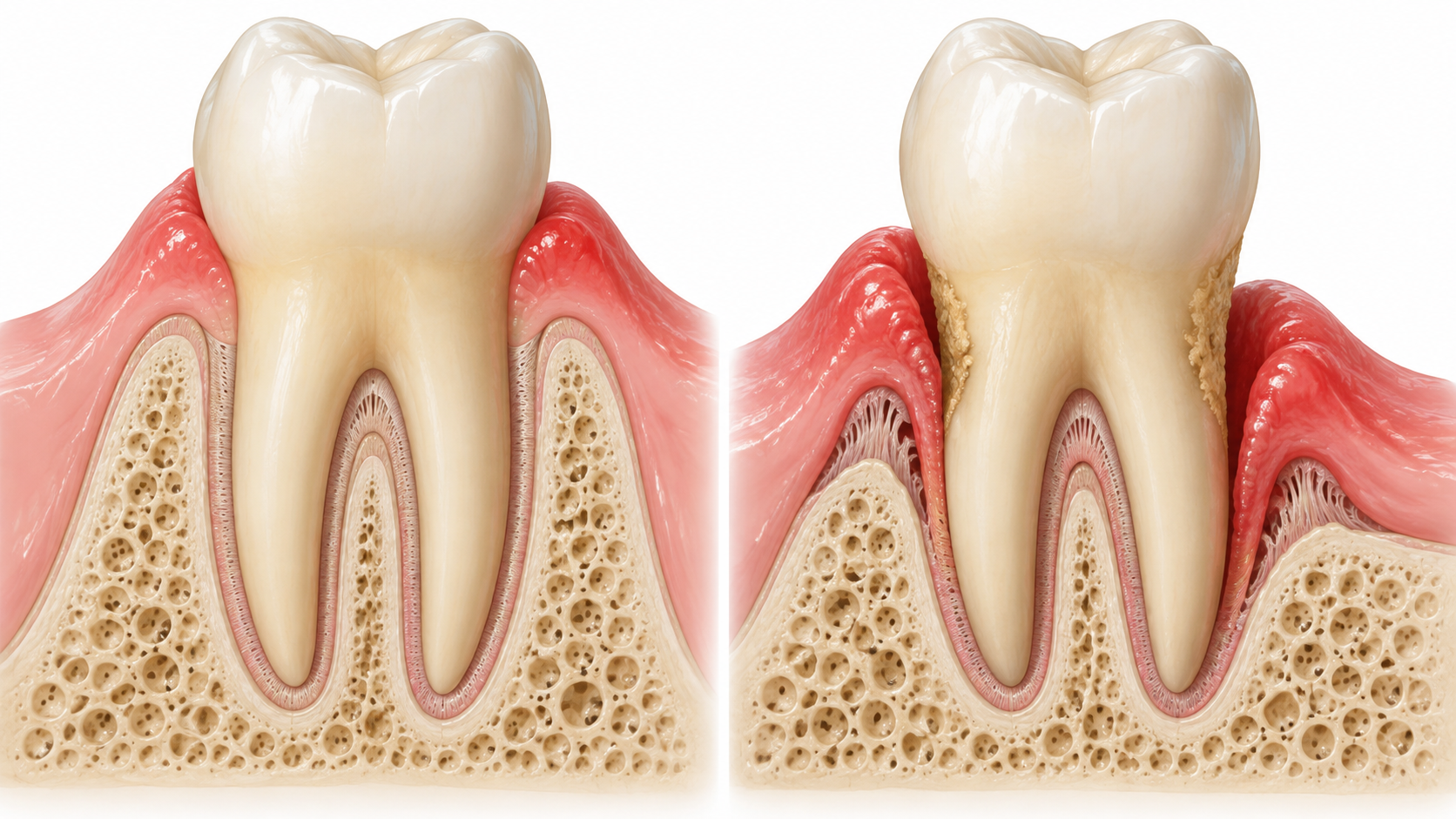
 Gum treatment removes tartar and plaque to control gum inflammation and care for tooth-supporting tissues. Scaling, root planing, or periodontal curettage is chosen by how far gingivitis or periodontitis has progressed. Covers the process, pain, anesthesia, health insurance, aftercare, and preserving natural teeth.
1. If Your Gums Bleed or Swell, Do You Need Gum Treatment?
Bleeding gums do not always mean periodontitis.
When inflammation is limited to the gums, it is called gingivitis. With gingivitis, removing tartar and improving oral hygiene can allow the gums to return to a healthy state.
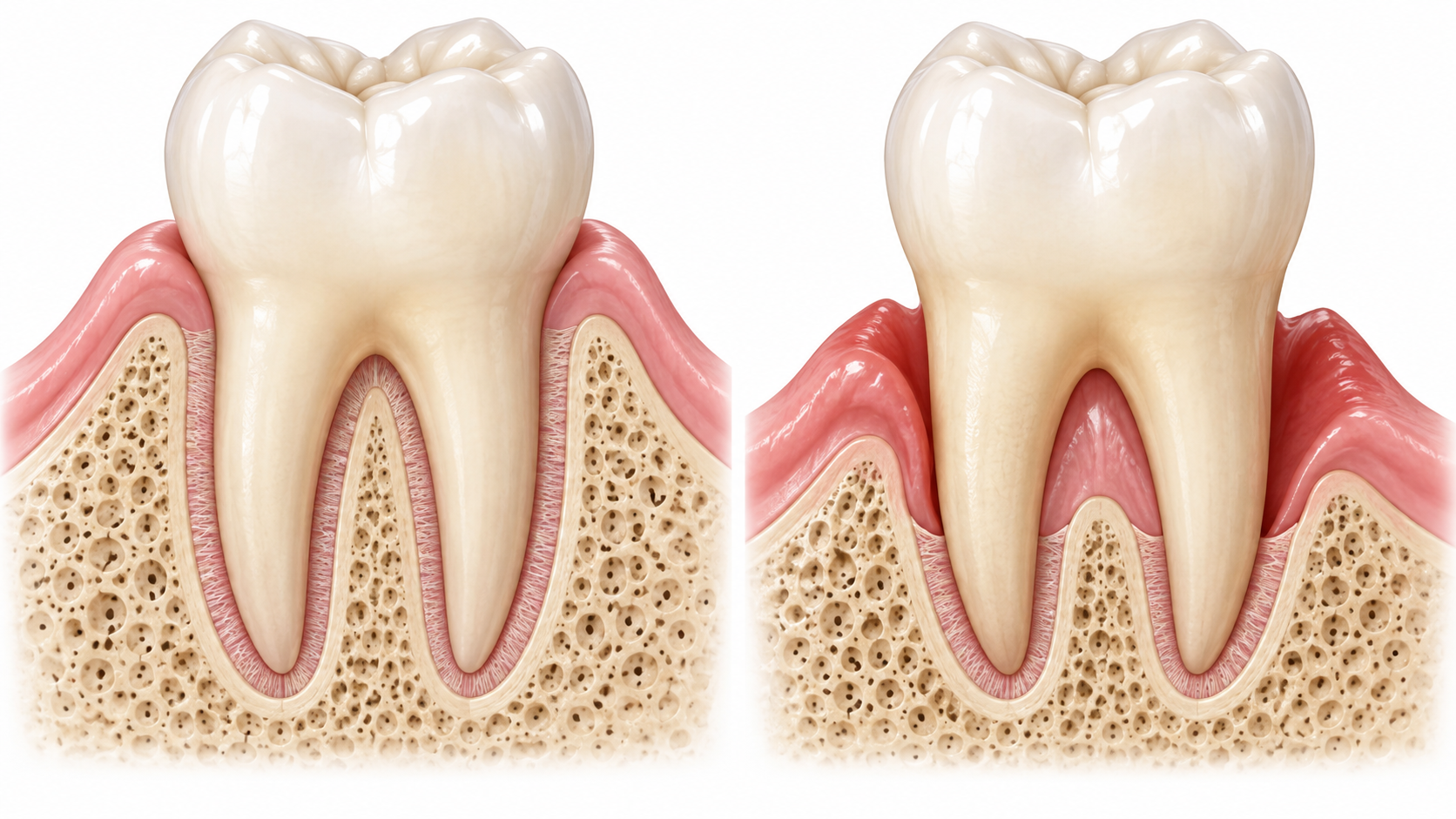
Periodontitis, on the other hand, is a condition in which inflammation has damaged the alveolar bone (gum bone) and surrounding tissues that support the teeth. It is what is commonly called gum disease.
Gingivitis vs. Periodontitis
| Category | Gingivitis | Periodontitis |
|---|---|---|
| Extent of inflammation | Limited to the gums | Gums and tooth-supporting tissues |
| Gum bone damage | None | May occur |
| Care and treatment | Tartar removal and improved oral hygiene | Treatment below the gumline may be needed |
Your gums may bleed or swell, and bad breath or pus may appear. As gum disease progresses, teeth may also become loose.
The problem is that the gum bone can be damaged even when there is little pain.

I compare a tooth to a tree and the gum bone to the ground the tree grows in. Just as a tree sways when the ground sinks, a tooth can become loose when the gum bone shrinks.
That is why gum disease can quietly dissolve bone, and sometimes people only notice it once a tooth starts to loosen.
At Yonsei Gunho Dental Clinic, we check for gum bleeding and tooth mobility, and examine the condition of the gum bone with panoramic and periapical X-rays.
Clinical examinations such as periodontal pocket depth are also important, and intraoral photos, Q-ray, CBCT, and other tools may be used as supplementary aids when needed.
If pus has formed in the gums, other causes besides periodontitis, such as inflammation at the tip of the tooth root, also need to be ruled out.
2. How Is Scaling Different from Gum Treatment?
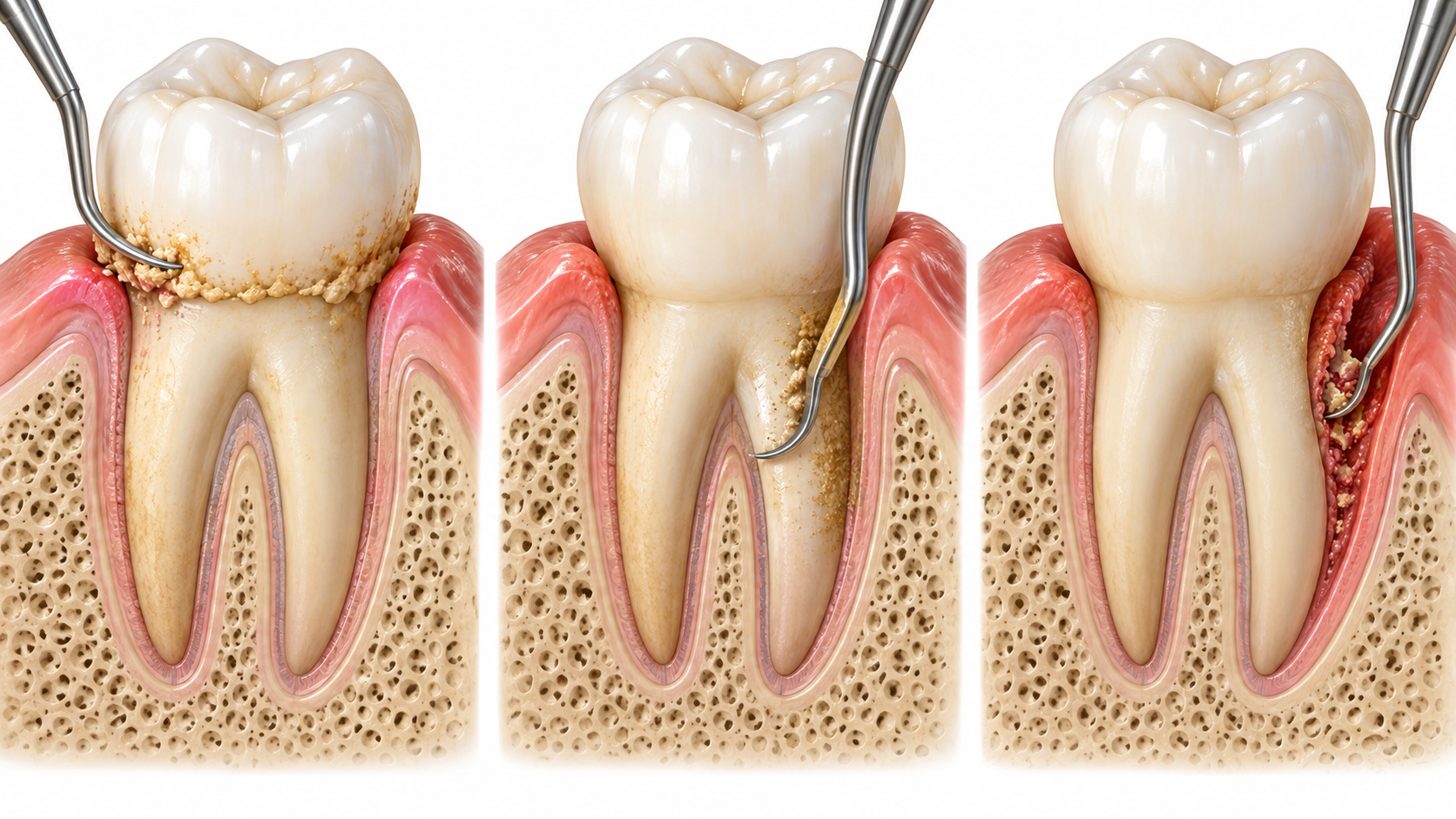
Scaling is also a type of gum treatment. However, if inflammation has progressed below the gumline, additional treatment may be needed.
I often compare scaling and gum treatment to cleaning.
If scaling is like removing tartar the way you clean the visible areas day to day, then clearing out tartar and inflammation built up deep below the gumline is closer to a deep clean.
Here is how the treatment methods compare.
| Category | Scaling | Root planing | Periodontal curettage |
|---|---|---|---|
| Main purpose | Removing tartar and plaque | Removing tartar and contaminants from the root surface and smoothing it | Removing inflamed tissue and other material inside the periodontal pocket |
| Main area | Mainly above the gumline and accessible areas | Root surface below the gumline | Inflamed periodontal pockets |
| Treatment decision | Tartar and gum condition | Periodontal pocket depth and root surface condition | Inflammation and periodontal tissue condition |
This does not mean that everyone needs regular deep gum treatment.
If scaling is enough, there is no need for additional treatment.
3. How Is Periodontitis Treated?
Periodontitis treatment is a process of removing the cause of inflammation and then re-examining the gums after treatment.
General Steps in Periodontitis Treatment
1. Checking gum condition
First, we check gum bleeding, periodontal pocket depth, tooth mobility, and the extent of gum bone damage.
2. Providing the necessary treatment
Then, depending on the condition, we perform scaling or treatment below the gumline. If tartar has built up deep below the gumline, root planing or periodontal curettage may be performed under anesthesia.
3. Checking condition after treatment
If deep periodontal pockets or inflammation remain even after non-surgical treatment, gum surgery may be considered.
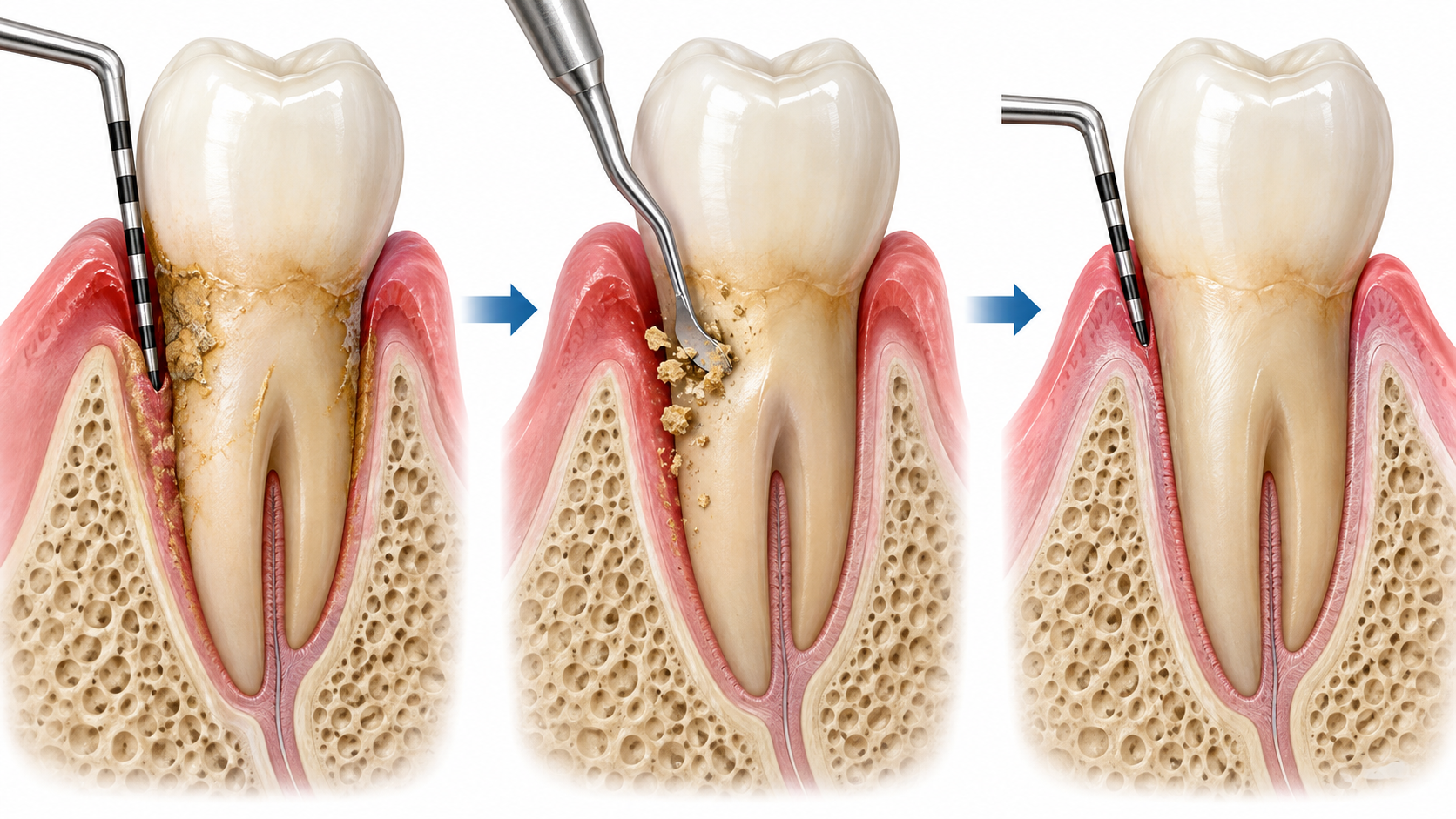
The two treatments are not necessarily performed in a set order. The necessary procedure is chosen based on the periodontal pockets and the state of inflammation.
However, having periodontitis does not mean everyone needs surgery.
If deeper treatment is not needed, regular check-ups and oral hygiene care may be the appropriate choice.
4. Does Gum Treatment Hurt? Why Is It Split into Several Visits?
When treating below the gumline, local anesthesia is used to reduce pain.
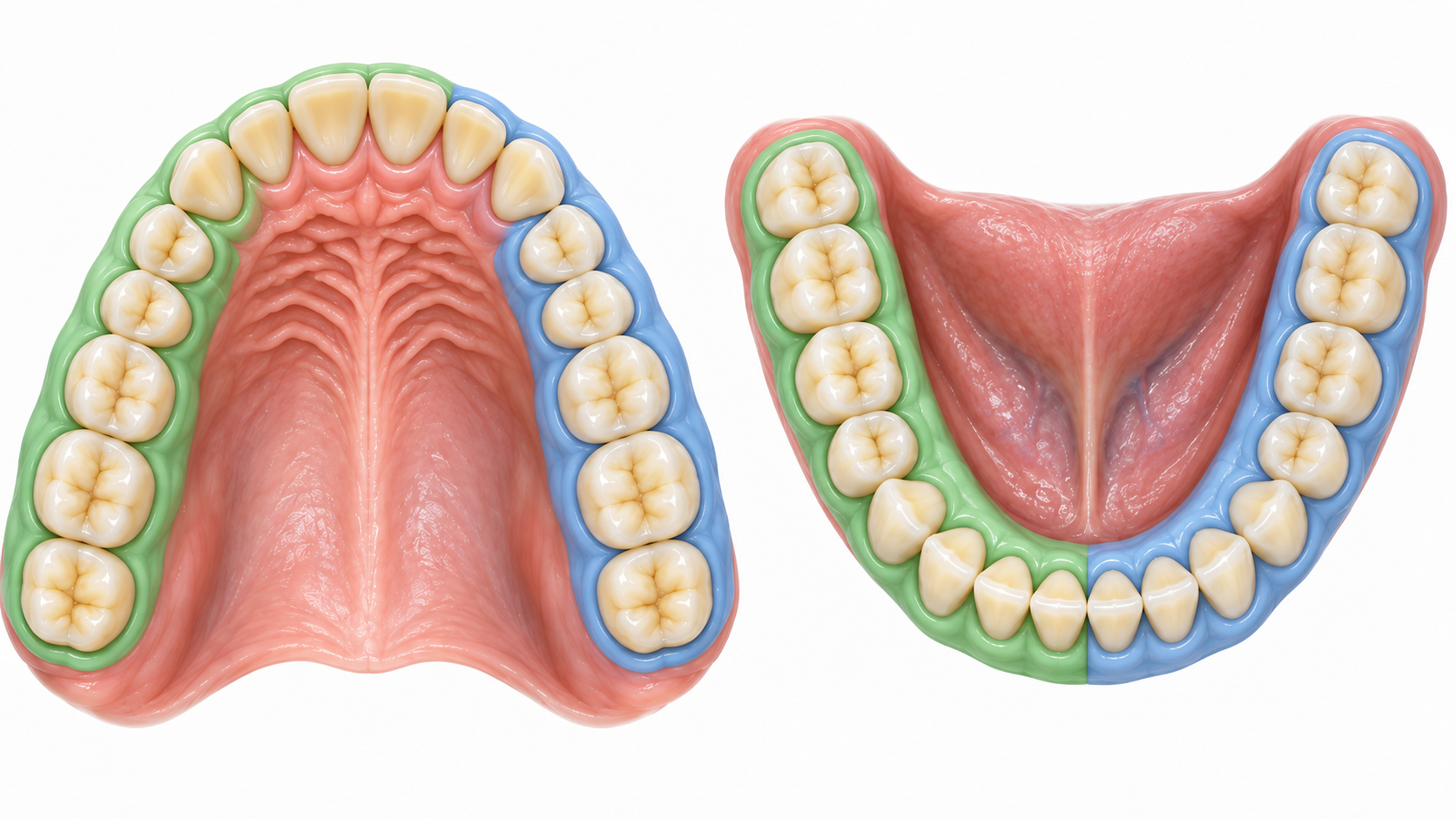
At Yonsei Gunho Dental Clinic, we also use anesthesia for gum treatment, and treatment is usually split into about 2 visits. Depending on gum condition, it may be split into 3 visits.
However, the actual number of visits depends on the extent of inflammation and the patient's gum condition.
Treatment is split into several visits because the areas and extent to be treated differ. In some cases, treating section by section also takes into account the burden on the patient.
You may still feel pressure after anesthesia, and sensitivity or discomfort may occur after treatment. These reactions vary from person to person.
5. How Should You Eat and Brush After Gum Treatment?
If you had anesthesia, it is best to eat after sensation has fully returned.
Chewing before the anesthesia wears off can cause you to bite your lip or cheek.
Points to keep in mind after treatment:
- Eating: If the treated area is sensitive, it is best to avoid foods that are too hot or hard, as well as spicy or irritating foods.
- Temporary changes: Temporary bleeding or sensitivity may occur after gum treatment. Also, as swollen gums settle, the gaps between teeth may look wider than before or parts of the tooth roots may become exposed.
- Brushing: Even so, you should not stop brushing. Brush gently so as not to irritate the treated area, and use floss or interdental brushes as suited to your condition.
If bleeding, pain, or swelling gets worse or continues, your condition should be checked again.
6. How Are Gum Treatment Costs and Health Insurance Coverage Determined?
The cost of gum treatment depends on the extent of treatment, the type of procedures needed, and how far the inflammation has progressed.
Korean National Health Insurance coverage criteria differ depending on which treatment you receive.
| Category | Health insurance details |
|---|---|
| General scaling | For patients aged 19 or older whose treatment ends with full-mouth tartar removal alone, without follow-up periodontal treatment, generally covered by health insurance once a year |
| Scaling for treating periodontal disease | Coverage criteria differ from general scaling |
| Root planing, periodontal curettage, etc. | Covered items and items not covered by Korean National Health Insurance may vary depending on the treatment provided |
Therefore, before looking at costs, it is important to determine which treatment your current gum condition requires.
7. Will Periodontitis Not Come Back After Gum Treatment?
Periodontitis can progress again even after treatment.
Even after tartar and inflammation below the gumline have been cleared, inflammation can recur if plaque builds up again or risk factors persist.
In particular, gum bone that has already been damaged does not fully return to its original state with general gum treatment alone.
That is why the following remain important after treatment:
- Checking bleeding and periodontal pocket condition
- Preventing plaque buildup through brushing and interdental cleaning
- Maintenance care based on how far periodontitis has progressed and on oral hygiene
- Setting a care schedule that considers individual risk factors such as smoking or diabetes
Please keep in mind that with gum treatment, the care that follows is as important as the treatment itself.
8. If Periodontitis Makes a Tooth Loose, Does It Have to Be Extracted?
A loose tooth does not necessarily have to be extracted.
We need to look together at how much gum bone remains, how loose the tooth is, and whether the inflammation can be controlled.
Depending on the condition, the tooth can be monitored while the inflammation is managed with gum treatment.
Conversely, if the gum bone is so severely damaged that it can hardly support the tooth, considering extraction may be more appropriate than forcing the tooth to stay.
Under certain conditions, such as when the gum bone has a deep vertical defect, periodontal regeneration therapy may be considered. However, it cannot be applied to every type of gum bone damage.
Details are covered on the Periodontal Regeneration · Emdogain page.
Also, when deciding on extraction, damage to the tooth itself must be examined, not just the gums. You can find related information in the article 4 Tooth-Preserving Treatments to Check Before Extraction.
I believe in being proactive where it can work and honest where it is difficult.
Saving a tooth at all costs is not the right answer, and neither is extracting it easily. What matters is thoroughly checking the current condition and making the choice that suits that tooth.
In Closing
Getting more gum treatment does not make it better treatment.
The first step is to determine whether scaling is enough, whether treatment below the gumline is needed, and how to care for your gums after treatment.
To keep your natural teeth for a long time, it is important to receive the treatment you need, reduce unnecessary treatment, and keep checking your gum condition.
Reviewed by: Dr. Park Ji-ho, board-certified oral and maxillofacial surgeon
References
- Korea Disease Control and Prevention Agency (KDCA), National Health Information Portal. Gum Disease (Periodontal Disease).
Differences between gingivitis and periodontitis, symptoms, examinations, and treatment methods.
https://health.kdca.go.kr/healthinfo/biz/health/gnrlzHealthInfo/gnrlzHealthInfo/gnrlzHealthInfoView.do?cntnts_sn=5716 - National Institute of Dental and Craniofacial Research (NIDCR), USA. Periodontal (Gum) Disease.
Causes, symptoms, diagnosis, treatment, and prevention of periodontal disease.
https://www.nidcr.nih.gov/health-info/gum-disease - National Health Insurance Service (NHIS). Guide to Health Insurance Coverage for Scaling.
Eligibility and frequency criteria for health insurance coverage of scaling.
https://www.nhis.or.kr/static/html/wbma/c/wbmac0218.html