
 Conscious sedation eases dental fear and tension. It is an option for dental phobia, a strong gag reflex, or implant and wisdom tooth care, but not everyone needs it. Dr. Park Ji-ho, oral and maxillofacial surgeon at Yonsei Gunho Dental Clinic, explains its principles, need, side effects, safety and precautions.
1. What Is Conscious Sedation? How Is It Different from General Anesthesia?
Conscious sedation is a way of carrying out dental treatment while sedative medication lowers anxiety and tension.
Unlike general anesthesia, it does not aim for a complete loss of consciousness. You may feel deeply drowsy, but at an appropriate level of sedation you can respond when the dental team calls you or gives a stimulus.

Put simply, it is closer to "greatly lowering tension" than to "making you unconscious."
However, sedation itself does not remove pain. Local anesthesia is used together with it for pain control, and the actual depth of sedation and response can differ from person to person.
2. Who Might Need Conscious Sedation?
Conscious sedation can help people with severe dental phobia, a strong gag reflex, or a heavy burden about the treatment process.
On the other hand, if you can be treated comfortably with local anesthesia alone, there may be no need to add sedation.
| Category | When it may help | When local anesthesia may be enough |
|---|---|---|
| Dental phobia | You have put off necessary treatment for a long time because of fear | You have been treated under local anesthesia before |
| Gag reflex | You gag severely when instruments touch the inside of your mouth | Discomfort from the gag reflex is not significant |
| Treatment scope | Complex surgery is planned, such as implants in several areas or bone grafting | Relatively simple treatment is planned |
| General health | Tension raises your blood pressure significantly, so a prior assessment is needed | Your health is stable and you can manage your tension |
This table shows general criteria. Whether sedation is suitable must be judged by looking at your actual health status and treatment plan together.
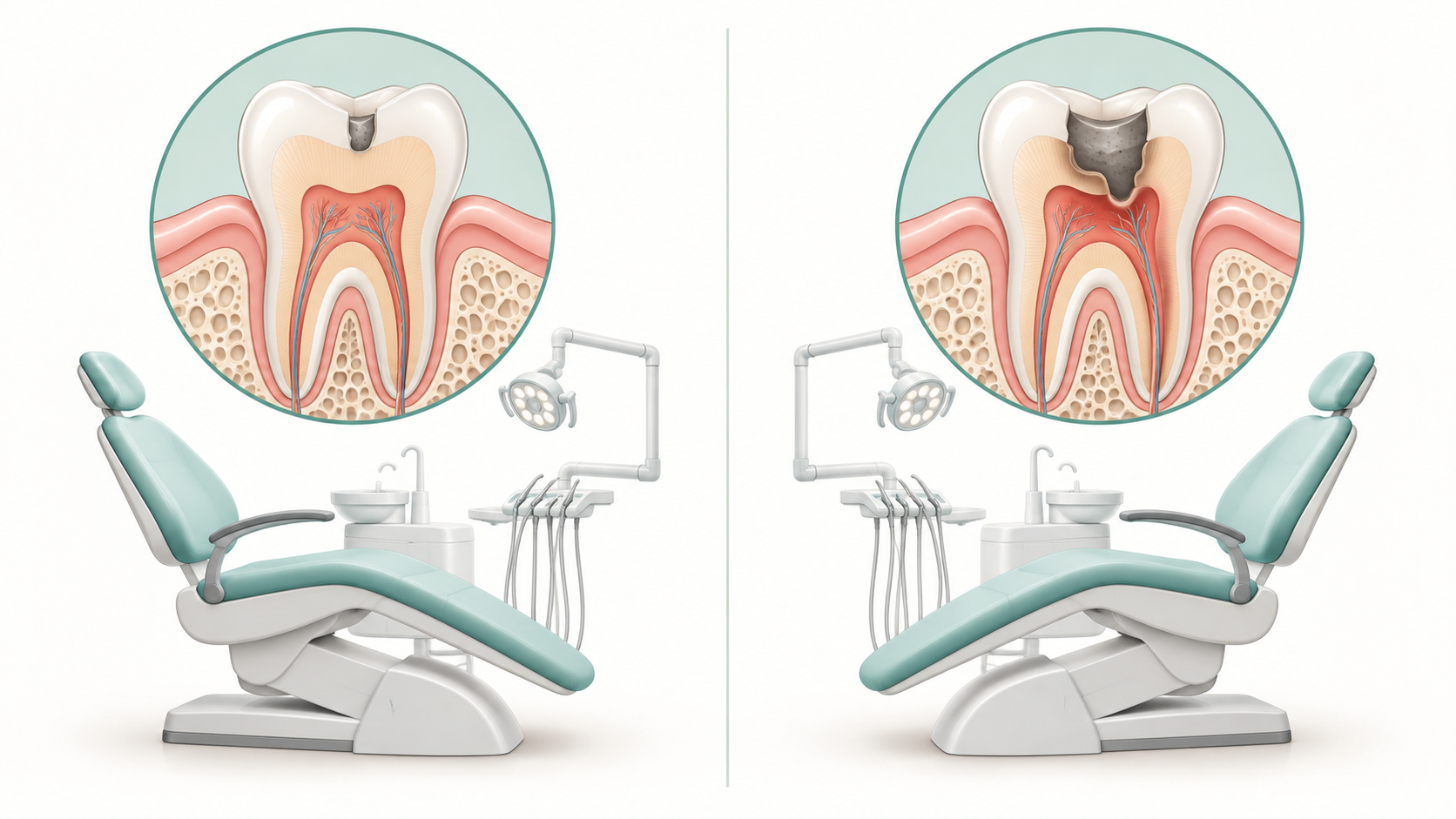
In particular, placing a single implant does not necessarily require conscious sedation. Many cases are done with local anesthesia alone, but the decision may change if fear is severe or there are other medical considerations.
There is also a point that should not be overlooked.
Just because sedation makes it possible to carry out several treatments together does not mean treating everything at once is always better. A wider treatment scope can also mean more discomfort and a greater recovery burden after surgery.
The criteria for using conscious sedation with implants are explained in more detail in the Conscious Sedation for Implants Guide.
3. Is Conscious Sedation Safe? What Side Effects Can It Have?
Conscious sedation also has side effects and risks.
During sedation, blood pressure may drop or the pulse may slow, and breathing and oxygen saturation may also change. It is also necessary to be prepared for sedation becoming deeper than expected.
That is why I believe what preparation and management take place from before treatment through recovery matters as much as which medication is used.
As a board-certified oral and maxillofacial surgeon, I have experienced a wide range of surgeries and emergencies at a university hospital, including oral cancer, orthognathic surgery, and facial trauma. I completed rotation training in anesthesiology and dental anesthesiology, and I am a full member of the Korean Dental Society of Anesthesiology.
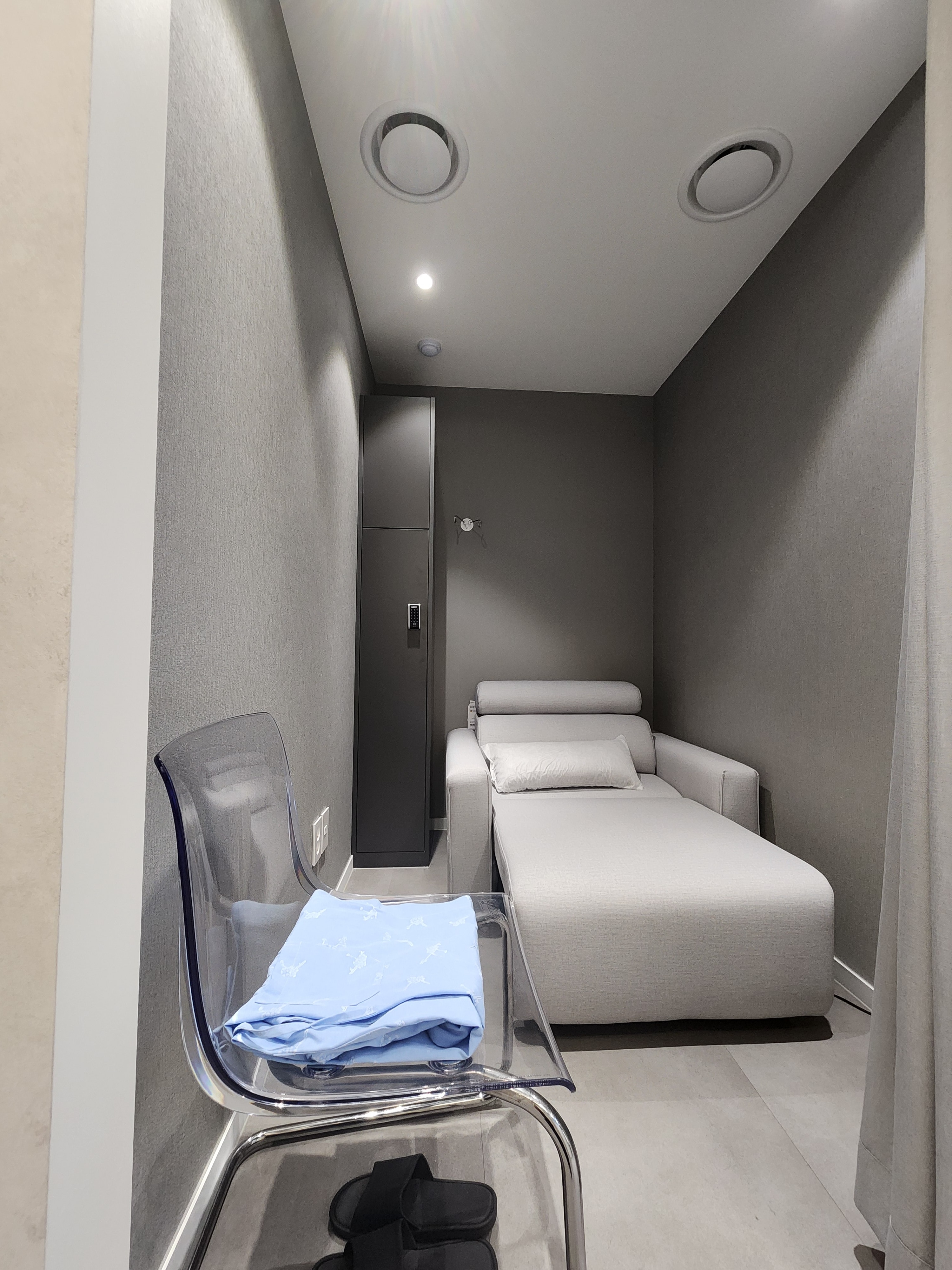
Yonsei Gunho Dental Clinic has a separate surgery room for conscious sedation care and monitoring equipment that checks the patient's condition in real time.
In addition to the surgery room, we operate a central monitoring system that allows the patient's condition to be checked from the director's office, treatment rooms, and front desk. We have oxygen supply equipment and an emergency kit, as well as a separate recovery room for checking recovery after treatment.

During sedation, we observe the patient's responses, breathing, oxygen saturation, blood pressure, pulse, and more. During recovery, we also check whether consciousness and vital signs are returning appropriately.
These facilities and preparations do not eliminate every risk. Because risk can vary with a patient's underlying conditions and health status, assessing in advance whether sedation is appropriate comes first.
4. How Much Pain and Memory Remain During Conscious Sedation?
Conscious sedation does not make pain or sensation disappear completely.
Sedative medication mainly lowers tension and anxiety, while pain during treatment is controlled with local anesthesia. So you may still notice sounds or touch during treatment.
Memory also differs from person to person. You may remember the treatment only vaguely or not remember parts of it, but not all memory disappears.
Remembering parts of the treatment does not by itself mean the sedation was not done properly. The purpose of sedation and the patient's response have to be considered together.
Even with the same sedation method, some people stay relatively alert, while for others it can be difficult to achieve sufficient sedation.
If you regularly take tranquilizers or psychiatric medications, or if a past sedation did not work as well as expected, we evaluate the drug response more carefully. Body size, degree of obesity, level of anxiety, and the complexity of treatment are also factors to consider.
If needed, we may consider combining medications that work in different ways and adjusting the amount of each, but this is not applied to everyone.
I try to adjust sedative medication carefully, only as much as needed, while watching the patient's condition and response. As the amount of medication increases, the possibility of side effects must also be considered, and dizziness or fatigue during recovery varies from person to person.
5. How Is Conscious Sedation Managed from Before Treatment Through Recovery?
Conscious sedation is not care that is managed only at the moment medication is given. It is a process that runs from the pre-treatment assessment through checking recovery.
1. Pre-sedation assessment
We check underlying conditions, current medications, past sedation experience, whether you have fasted, and more. Considering your health status, we decide whether sedation is an appropriate method.
2. Sedation and dental treatment
The depth of sedation is adjusted according to the patient's response, and the necessary local anesthesia is given at the same time. We also review in advance which treatments will be done and how far they will go.
3. Monitoring during treatment
We check level of consciousness, breathing, oxygen saturation, blood pressure, pulse, and more. If the depth of sedation or the patient's condition changes, we decide on the necessary measures.
4. Checking recovery
After treatment, we watch the patient's consciousness, breathing, vital signs, and more in the recovery room. After confirming recovery and the criteria for going home, we explain the precautions to follow.
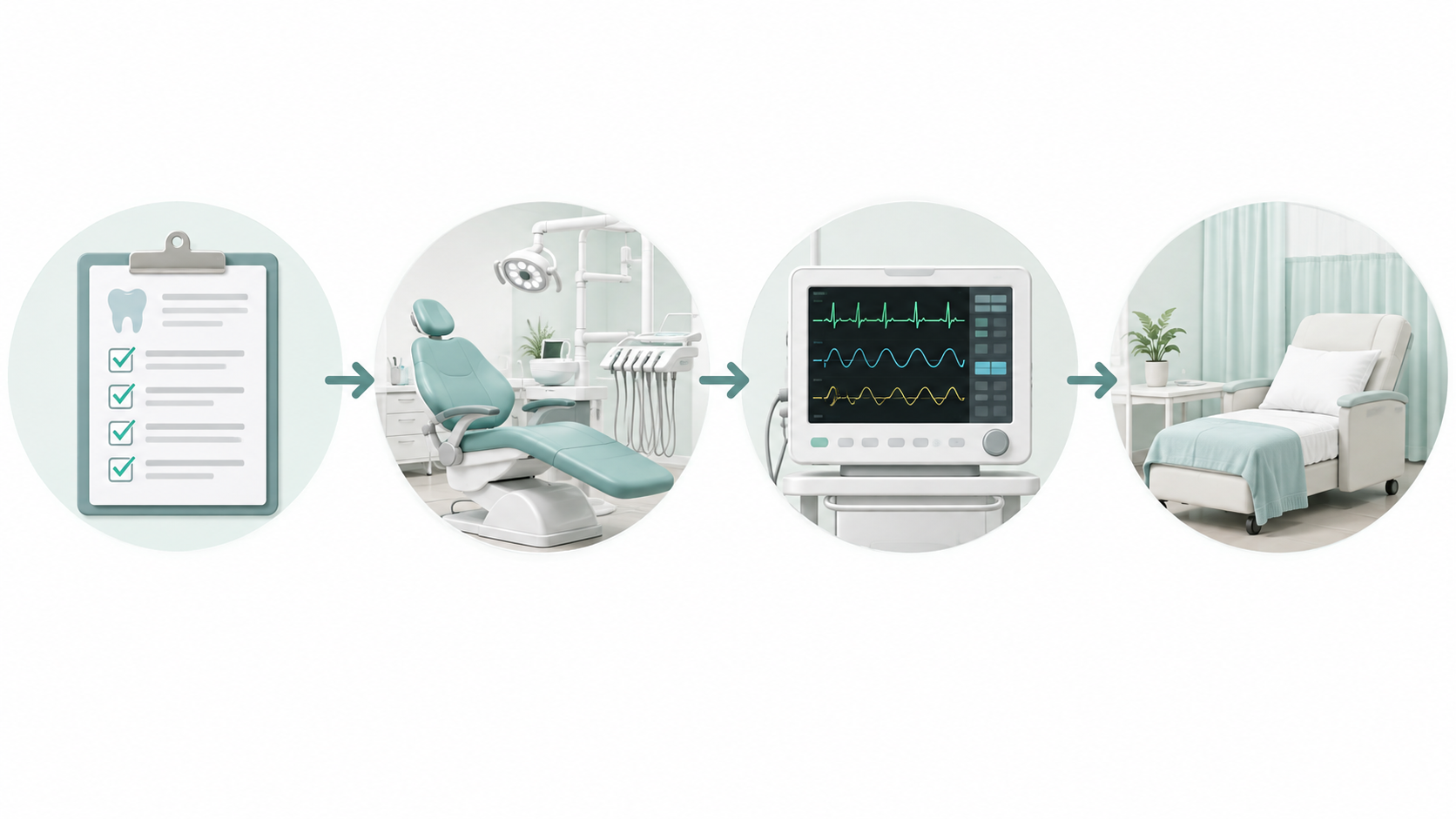
What matters in this process is not simply maintaining a sedated state, but watching for changes in the patient and responding to them.
6. What Precautions Should You Take Before and After Conscious Sedation?
When planning conscious sedation, checking fasting and current medications is important. The effects of sedative medication can remain after treatment, so care is needed when going home and in daily activities.
How Are Fasting and Current Medications Checked Before Sedation?
Fasting instructions can vary with the type of food and drink, your health status, and the sedation plan. It is important to follow the criteria given by the dental team.
The medications you take regularly also need to be checked. Tranquilizers, sedatives, and psychiatric medications in particular can affect the response to sedation.
If you use GLP-1–type weight-loss injections, this is also checked in advance. This class of medication can slow how quickly food leaves the stomach, so additional preparation may be needed depending on digestive symptoms or dosing status.
However, not everyone needs to stop their medication. Whether to continue or adjust medications, and how to fast, should be decided by assessing each person's individual risk.
What Should You Keep in Mind About Having a Companion and Going Home After Treatment?
After sedation, even if you appear awake, the medication may still affect your judgment and reaction speed.
It is therefore advisable to follow the instructions about having a companion and support for getting home. Driving, drinking alcohol, and important contracts or decisions should also be avoided for the period the dental team advises.
Recovery speed differs from person to person. When to return to daily activities should also be judged based on your recovery and the precautions you were given.
7. How Is the Cost of Conscious Sedation Determined? Is It Covered by Health Insurance?
Conscious sedation is generally described as not covered by Korean National Health Insurance, but whether insurance applies in a specific case can vary depending on the treatment and the relevant criteria.
The cost can be affected by the preparation and management needed for sedation, the treatment scope, and the monitoring and recovery process required for the patient's condition.
It is also important to understand the cost of conscious sedation separately from the cost of the dental treatment itself, such as implants or wisdom tooth extraction.
In Closing
I value "treatment that is appropriate to do" over "treatment that can be done."
For people who put off necessary treatment because they fear dental care, conscious sedation can help. But there is no need to recommend it to everyone simply because sedation is possible.
What matters is not sedation itself, but accurately judging what treatment is needed now and considering the patient's burden and risks along the way.
This has been Park Ji-ho, board-certified oral and maxillofacial surgeon at Yonsei Gunho Dental Clinic in Jamsil.
Reviewed by: Dr. Park Ji-ho, board-certified oral and maxillofacial surgeon
References
- American Dental Association (ADA). Guidelines for the Use of Sedation and General Anesthesia by Dentists.
Standards for providing sedation and general anesthesia in dentistry.
https://www.ada.org/-/media/project/ada-organization/ada/ada-org/files/resources/library/oral-health-topics/ada_sedation_use_guidelines.pdf - American Dental Association (ADA). Anesthesia and Sedation.
Levels of dental sedation and safety management.
https://www.ada.org/resources/ada-library/oral-health-topics/anesthesia-and-sedation - Australian Dental Association. Policy Statement 6.17 – Conscious Sedation in Dentistry.
Definition of conscious sedation in dentistry and the conditions for providing it.
https://ada.org.au/policy-statement-6-17-conscious-sedation-in-dentistry - Surgical Endoscopy (2024). Multi-society clinical practice guidance for the safe use of glucagon-like peptide-1 receptor agonists in the perioperative period.
Recommendations on pre-procedure fasting and stopping medication for GLP-1–type drugs.
https://link.springer.com/article/10.1007/s00464-024-11263-2