
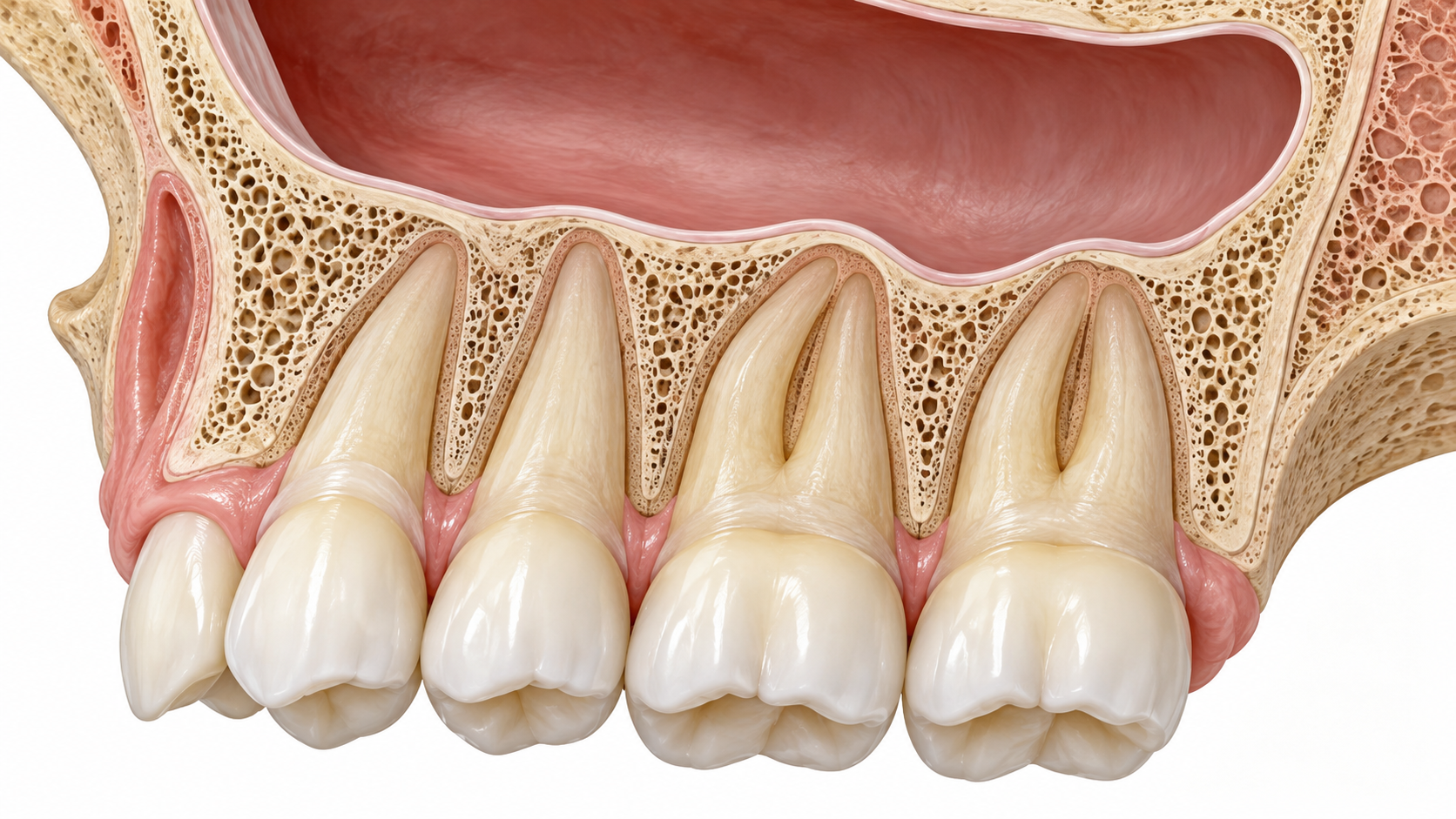
 A sinus lift is considered when there is not enough bone to place an upper molar implant. CT of the remaining bone height and sinus condition shows whether it is needed. A board-certified oral and maxillofacial surgeon explains lateral vs. crestal approaches, pain, side effects, recovery time, and aftercare.
1. What Is a Sinus Lift? Why It Is Needed for Upper Molar Implants
The maxillary sinus is an air-filled space inside the upper jaw on either side of the nose. The roots of the upper molars often sit close to the floor of this sinus.

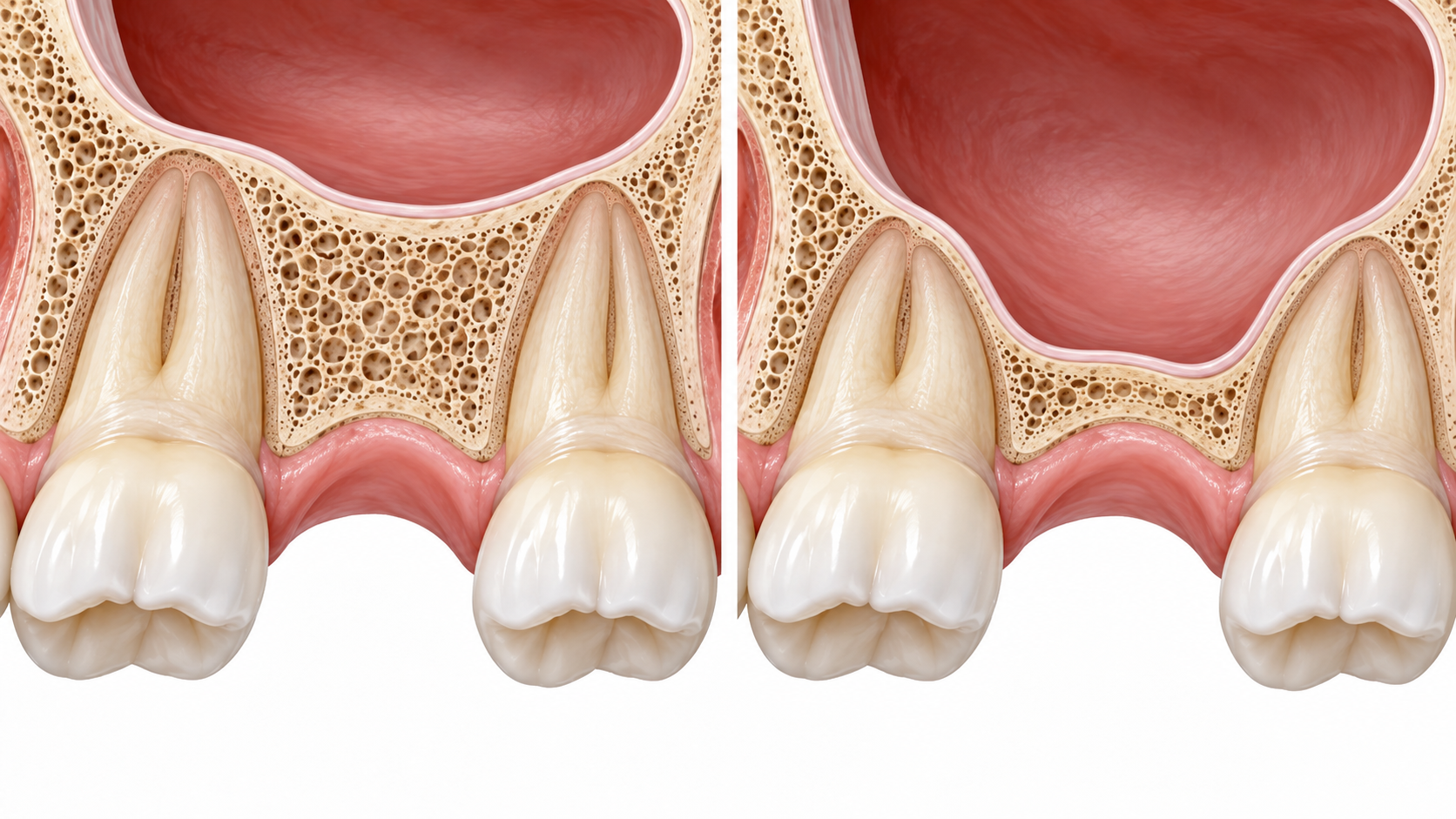
As time passes after tooth loss, the jawbone can shrink or the maxillary sinus can expand downward, leaving too little bone to support an implant.
In that case, the sinus membrane, the thin membrane lining the sinus floor, is carefully lifted, and a bone graft is performed at the same time when needed.
The name may make it sound like nose surgery, but the purpose is to create space for bone for an upper molar implant.
Of course, not every upper molar implant requires this procedure.
2. Do I Really Need a Sinus Lift? Criteria Checked on CT
Whether a sinus lift is needed is decided after checking, on CT, the height and thickness of the remaining bone below the maxillary sinus and the condition of the sinus.
A panoramic X-ray is useful for seeing the overall structure, but it is hard to assess bone thickness three-dimensionally with it.
That is why I look at the following points based on CT.
1. I check how much bone remains between the sinus floor and the site where the implant will be placed.
2. I check whether sinus inflammation is suspected and whether inflammation at the root tip of an upper molar is close to the sinus.
3. I consider how firmly the implant will be held when first placed (primary stability) and what chewing forces the restoration will bear.
If there is active sinusitis, its cause may need to be evaluated and any necessary treatment considered first.
You may wonder whether using a short implant could let you avoid a sinus lift.
In fact, a short implant can be an alternative in some cases. However, the bone condition, primary stability, and chewing forces discussed above must be considered together.
A principle I consider important is 'bone grafting only where it is needed, and only as much as needed'.
The same applies to a sinus lift. Rather than only asking whether surgery can be done, the first step is to judge whether it is truly needed given the current bone condition.
Whether bone grafting is needed in general is covered in more detail in the Implant Bone Graft guide.
3. Sinus Lift Methods: How Do the Lateral Window and Crestal Approaches Differ?
A sinus lift is divided into the lateral window approach and the crestal approach, depending on the direction from which the sinus membrane is reached.
Neither method is always better. The choice depends on how much bone remains and how much space needs to be created.
Lateral window approach — access from the side of the upper jawbone
An access window is made in the side wall of the upper jawbone, and the sinus membrane is lifted through it.
It may be considered when the height of the remaining bone is very insufficient or when a relatively wide area needs to be lifted.
Crestal approach — access from the implant placement direction
The sinus floor is approached from the site where the implant will be placed.
It is considered in cases such as when a relatively small lift is needed and the implant can be held firmly enough.
| Category | Lateral window approach | Crestal approach |
|---|---|---|
| Access direction | Side of the upper jawbone | Implant placement site |
| When it is considered | When bone is very insufficient or a wide area needs to be lifted | When a relatively limited lift is needed |
| Main decision criteria | Remaining bone, internal sinus structure, extent of the lift | Remaining bone, extent of the lift, likelihood of primary stability |
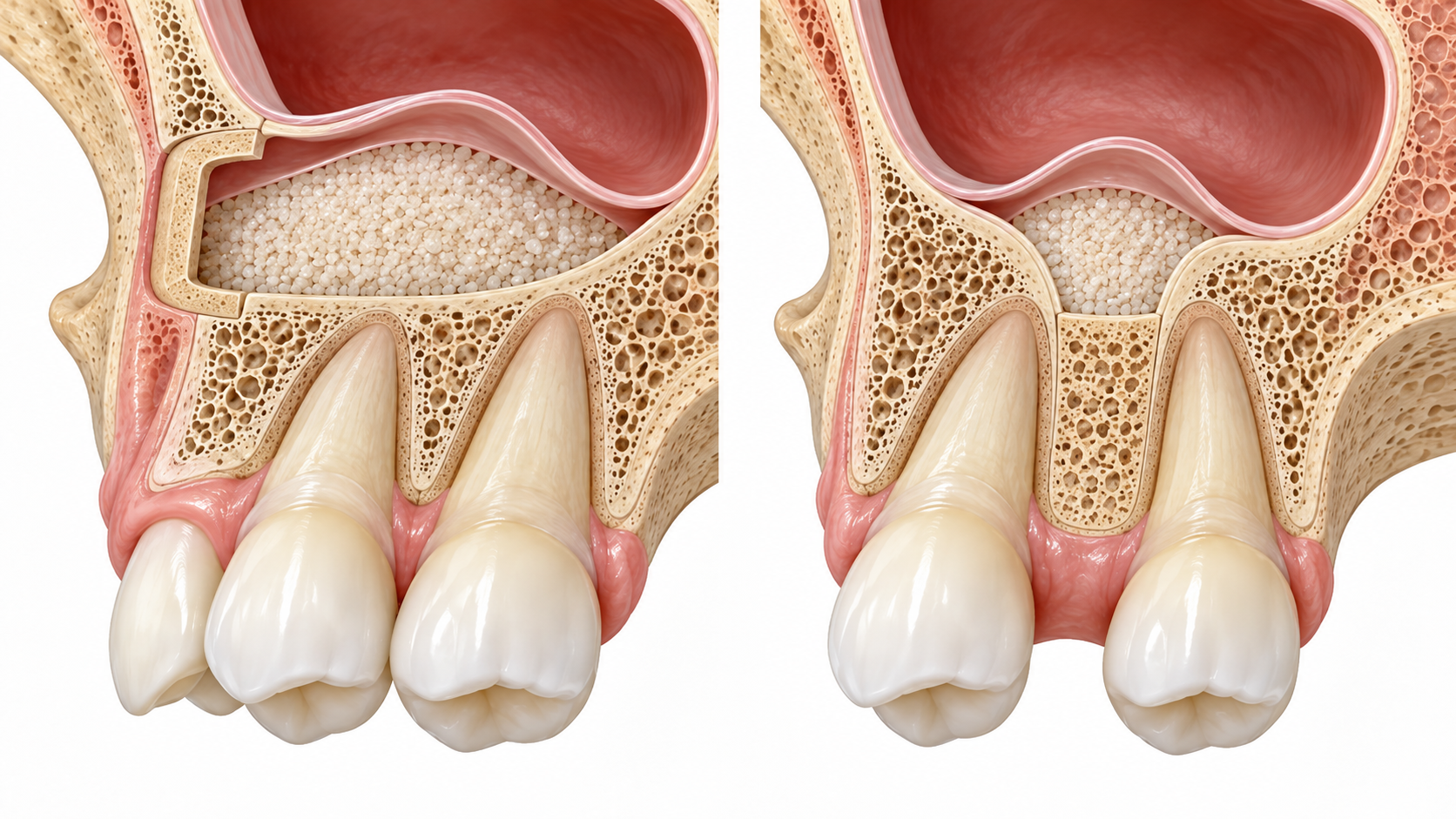
Which method is suitable depends on the sinus structure and bone condition seen on CT and on the overall surgical plan.
4. Can a Sinus Lift and an Implant Be Done at the Same Time?
If the remaining bone alone can hold the implant firmly enough, the sinus lift and implant placement are sometimes performed at the same time.
Conversely, if stability is difficult to achieve, the lift is performed first, and placing the implant after confirming how the bone has healed is considered.
There is one more important point here.
An implant does not end with placing it in bone. You also have to think about where the tooth on top of it should sit and how it will meet the opposing teeth.
At Yonsei Gunho Dental Clinic, the surgical and prosthetic plans are reviewed together as follows.
1. As a board-certified oral and maxillofacial surgeon, I examine the bone, the maxillary sinus, and the difficulty of the surgery.
2. Dr. Kim Kunmin, a board-certified prosthodontist, reviews the position of the final restoration and the bite together with me.
3. Following the surgical plan, the two doctors carry out a virtual surgery together in front of the screen and, when needed, make a navigation guide directly with the in-house 3D printer.
This is so that everything from deciding the surgical position to the appearance of the final teeth is considered together.
5. How Much Pain, Swelling, and Nosebleeding Are There After a Sinus Lift?
A sinus lift is generally performed under local anesthesia. Even under anesthesia, you may feel pressure or vibration.
After the anesthesia wears off, pain, swelling, or bruising may occur, and a small amount of blood may appear from the nose.
However, the degree of discomfort differs depending on the extent of surgery and individual recovery.
When several implants, bone grafting, and a sinus lift are performed together and the surgery takes longer, conscious sedation is sometimes considered.
It is not necessary for every patient, and overall health and suitability for sedation need to be evaluated as well.
More details are available in the Conscious Sedation Implant guide.
I tend to explain in advance the discomfort that may occur after surgery. At Yonsei Gunho Dental Clinic, swelling, bleeding, mouth opening, and similar points are checked during post-operative follow-up.
6. What Precautions Should I Take After a Sinus Lift?
After a sinus lift, it is important to avoid sudden increases in pressure in the nose and mouth.
This is because blowing your nose or sneezing, which normally cause no problem, can put strain on the maxillary sinus right after surgery.
Precautions for blowing your nose, sneezing, straws, and flying
| Activity | Precaution |
|---|---|
| Blowing your nose | Do not blow your nose forcefully. |
| Sneezing | Sneeze with your mouth open, without pinching your nose. |
| Straws | Avoid them in the early period after surgery, as they can change the pressure in your mouth. |
| Flying · scuba diving | Changes in air pressure can have an effect, so check the restriction period after surgery. |
| Vigorous rinsing · spitting | Take care not to put pressure on or irritate the surgical site. |
Precautions for smoking, alcohol, exercise, and eating
| Activity | Precaution |
|---|---|
| Smoking | Avoid it, as it can hinder wound healing and bone formation. |
| Alcohol | Limit it, as it can affect bleeding, swelling, and medication. |
| Strenuous exercise | Avoid it during early recovery, as it can worsen bleeding or swelling. |
| Eating | Choose soft foods and do not chew hard on the surgical side. |
How long these activities should be avoided differs depending on the surgical method and recovery. The individual instructions you receive after your actual surgery take priority over general precautions.
7. What Are the Side Effects of a Sinus Lift? Sinus Membrane Perforation and Sinusitis
Complications such as sinus membrane perforation, bleeding, infection, and sinusitis can occur with a sinus lift.
Sinus membrane perforation means that the thin membrane covering the sinus floor is damaged and a hole forms.
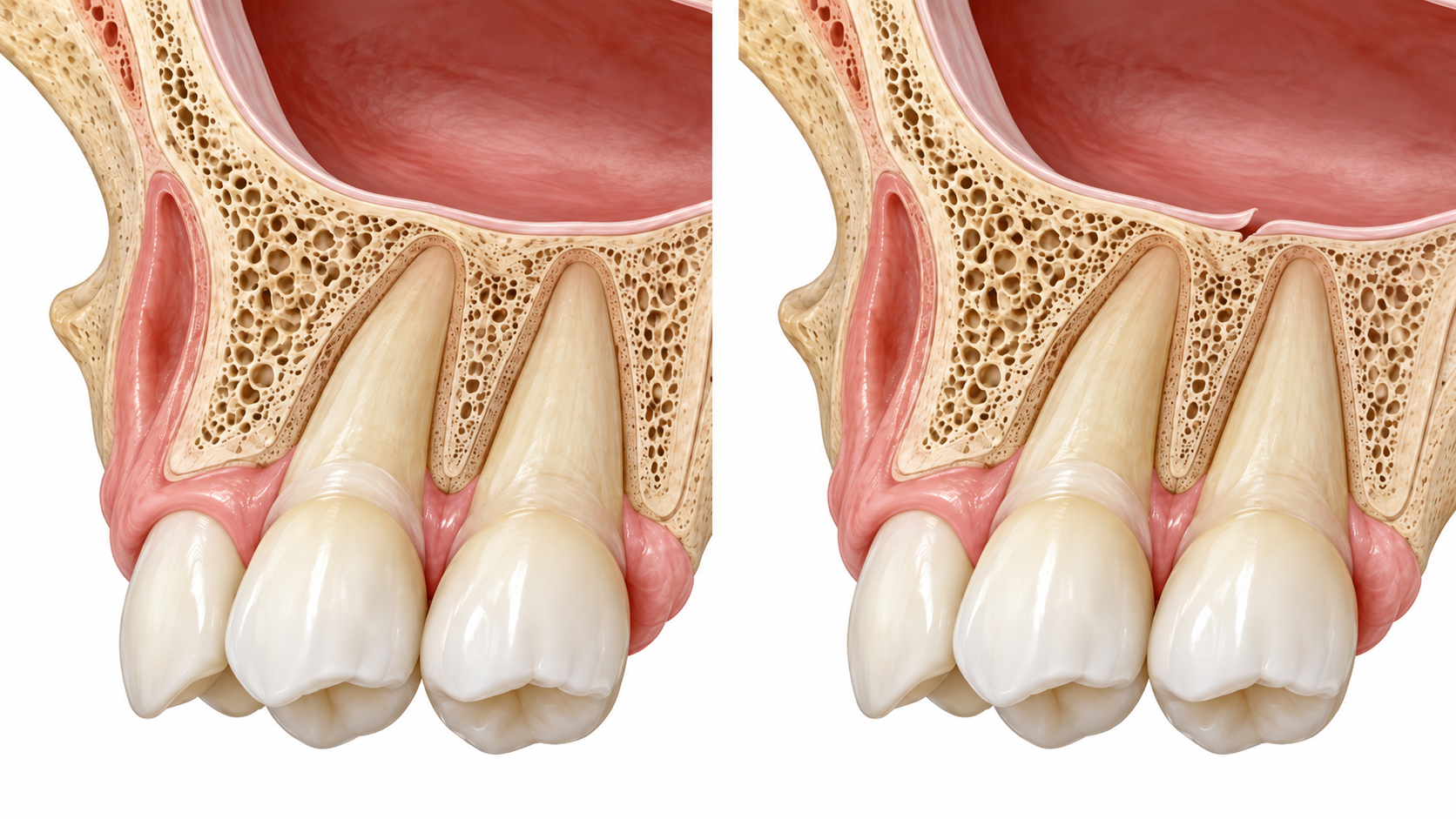
A damaged membrane does not necessarily cause a serious problem. Depending on the size and location of the damage, the membrane may be reinforced or the surgical plan adjusted.
However, depending on the perforation, risks such as infection or sinusitis must be considered.
If the following symptoms appear after surgery, it is important not to dismiss them as normal recovery symptoms.
- Pain or swelling that keeps getting worse
- Fever or foul-smelling nasal discharge
- Bleeding that continues
- A feeling that air or liquid is passing between the mouth and nose
If these symptoms appear, you should have your condition evaluated promptly at the clinic where the surgery was performed.
8. How Long Does Recovery from a Sinus Lift Take?
It helps to understand recovery from a sinus lift as two separate processes: the healing of the gum wound and the healing of the bone inside.
Recovery can generally be divided as follows.
1. Initial wound healing
Early discomfort such as pain and swelling decreases over time.
2. Bone healing
The bone at the graft site may need more time to heal than the initial wound.
3. Implant placement and prosthetic planning
If the implant was placed at the same time, its integration with the bone is checked; if the procedure was staged, the timing of placement is decided after checking how the sinus area has healed.
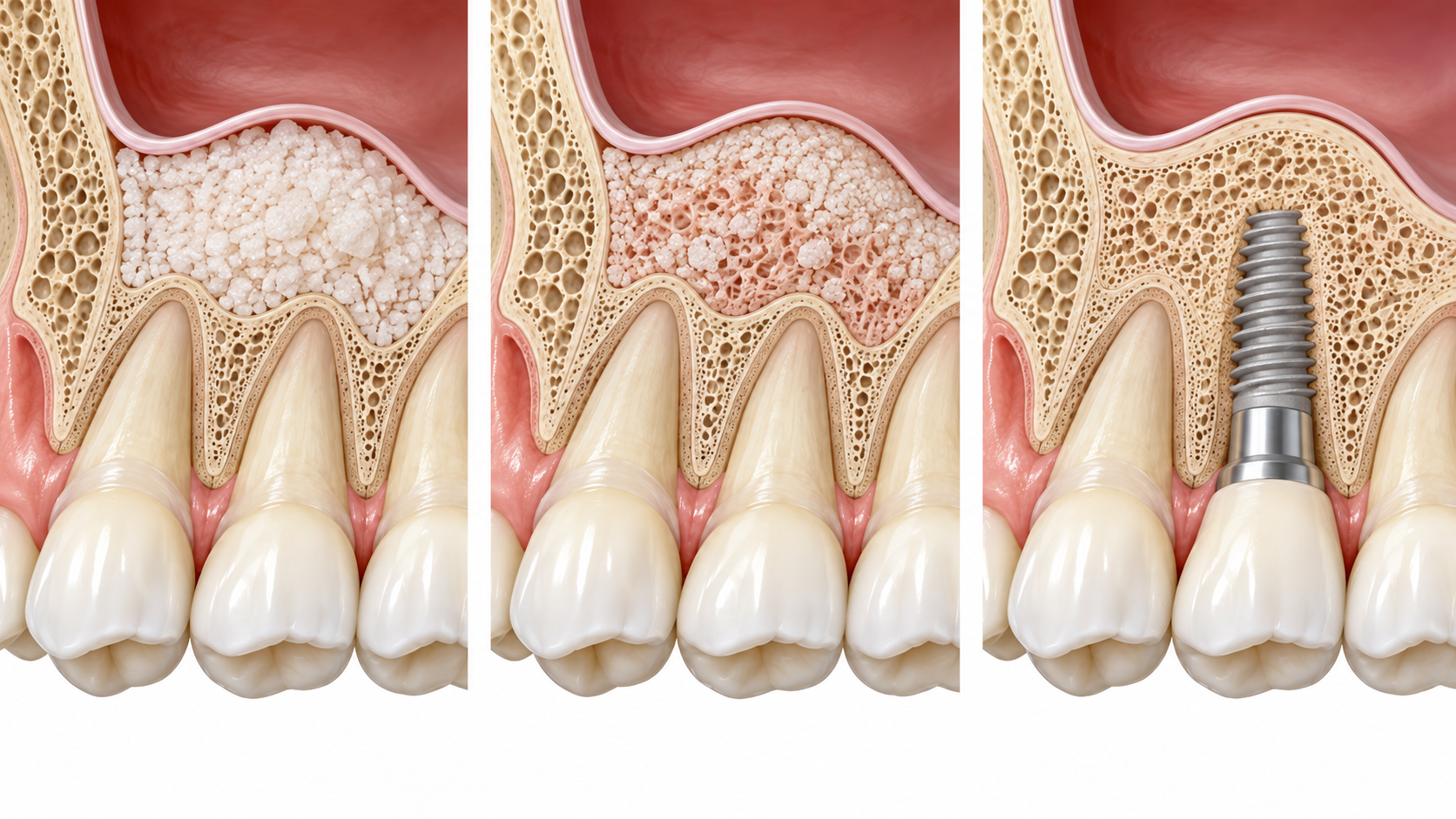
Even for the same sinus lift, the recovery period can vary depending on the bone condition, extent of surgery, presence of inflammation, and overall health.
9. What Determines the Cost of a Sinus Lift?
The cost of a sinus lift is not the same in every case. It can vary depending on the extent of surgery, the approach, whether a bone graft is needed, and other factors.
The main determining factors are as follows.
- Extent and approach of the sinus lift
- Whether a bone graft is needed and the materials required
- Extent of implant placement
- Whether a navigation guide is made
- Whether your own blood is drawn or your own teeth are used
Even for the same upper molar implant, the necessary steps can differ if the bone and sinus conditions differ.
Whether Korean National Health Insurance applies also depends on the actual treatment and the coverage criteria.
So when looking at the cost, it is helpful to review which steps are included and why each one is needed.
In Closing
A sinus lift is one treatment option for upper molar implants, but it is not needed in every case.
What I consider important is first checking the bone and sinus condition on CT, then deciding on the necessary surgery while also considering the position of the final restoration and chewing forces.
Choosing the treatment that should be done rather than the treatment that can be done, and treating only where needed, only as much as needed. This is the treatment principle I strive to uphold.
Reviewed by: Dr. Park Ji-ho, board-certified oral and maxillofacial surgeon
References
- International Team for Implantology (ITI). Bone Augmentation Procedures in Extended Alveolar Ridge Defects. Consensus Statement.
Bone augmentation methods, including sinus lifts, for extensive alveolar bone defects.
https://academy.iti.org/academy/consensus-database/consensus-statement/-/consensus/bone-augmentation-procedures-in-extended-alveolar-ridge-defects/1211 - Clinical Implant Dentistry and Related Research (2022). Complications of sinus floor elevation procedure and management strategies: A systematic review.
A systematic review of sinus lift complications and how to manage them.
https://pubmed.ncbi.nlm.nih.gov/35737681/ - International Journal of Oral & Maxillofacial Implants (2023). The Impact of Sinus Floor Elevation Techniques on Sinus Membrane Perforation: A Systematic Review and Network Meta-analysis.
A systematic review of sinus membrane perforation according to surgical technique.
https://pubmed.ncbi.nlm.nih.gov/37669518/ - McGill University, Oral and Maxillofacial Surgery. Bone Graft/Sinus Lifts: Post-Operative Instructions.
Post-operative instructions after a sinus lift.
https://www.mcgill.ca/omfs/patient-info/bone-graftsinus-lifts