
"I'm considering dental implants. Would it be better to choose a clinic that uses Straumann implants?"
When exploring dental implant options, you may come across several brands, including Osstem and Straumann.
Straumann is a Swiss-origin dental implant brand with an extensive history of clinical research into implant materials and surface technologies.
But if two dental clinics use the same Straumann implants, will their treatment outcomes be similar?
Not necessarily.
While the implant brand matters, treatment outcomes are also influenced by how the patient's jawbone condition is assessed and where the implant is placed.
Today, we'll discuss three important factors to consider when choosing a dental clinic for Straumann implants.
3 Key Factors When Choosing a Straumann Implant Clinic
- Does the clinician have sufficient surgical experience and provide a thorough diagnosis?
- Is there a clear reason for choosing a particular Straumann implant?
- Does the treatment plan consider the final restoration and long-term follow-up care?
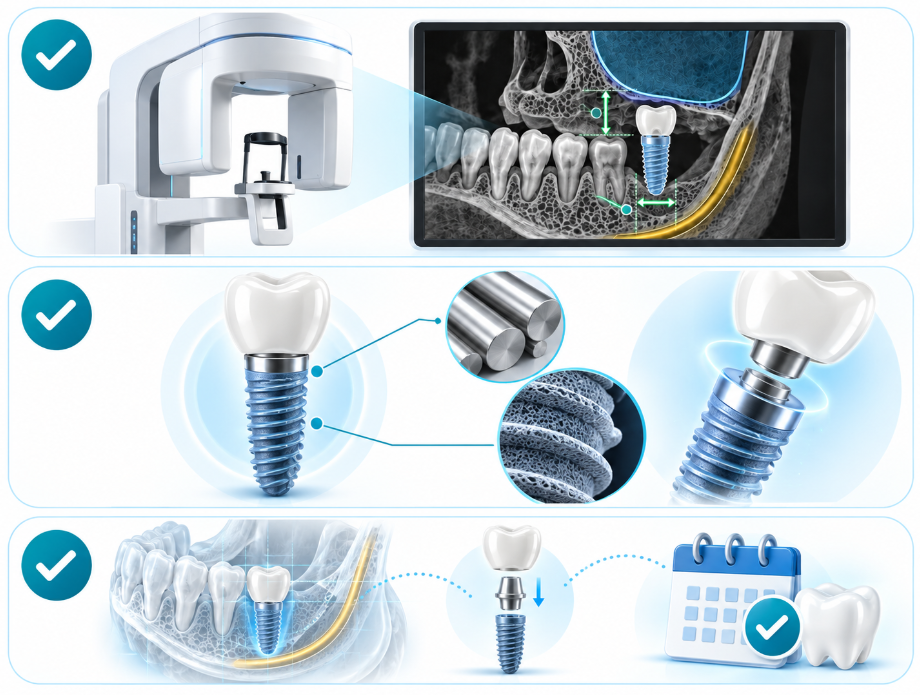
1. Does the clinician have sufficient surgical experience and provide a thorough diagnosis?
Successful implant planning involves more than simply placing an artificial tooth root into the jawbone.
Determining the appropriate implant location, diameter, length, and angle is equally important.
The lower molar region contains nerves responsible for sensation, while the upper molar region is close to the maxillary sinus.
Therefore, surrounding anatomical structures and jawbone conditions need to be evaluated before implant surgery.
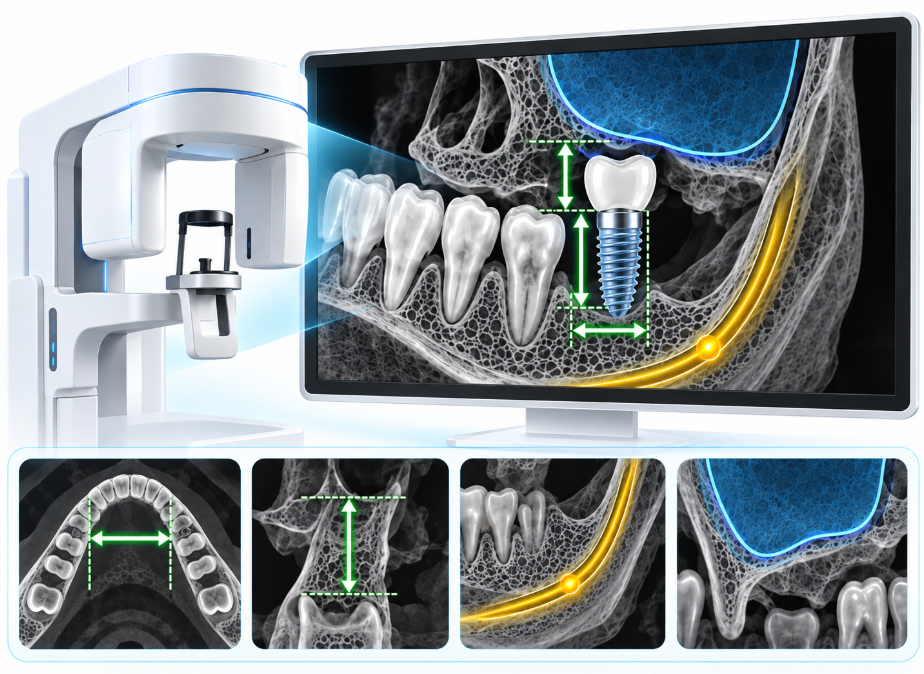
When necessary, three-dimensional CT imaging is used.
CT scans can help assess the following factors and guide implant placement:
- Jawbone width and height
- Distance from the nerve canal or maxillary sinus
- Planned implant placement position
There is one important point to understand.
Insufficient jawbone does not automatically mean bone grafting is necessary. Likewise, choosing a narrower implant does not always eliminate the need for bone grafting.
The amount and shape of remaining bone, along with the possibility of achieving initial implant stability, must be considered together.
At Yonsei Gunho Dental Clinic, Green CT imaging is used to plan implant positioning and dimensions. Surgical guides are designed and used when appropriate.
A surgical guide helps the clinician place the implant according to the planned position and direction.
However, the same surgical approach is not used for every patient.
What matters most is not the equipment itself, but how the examination findings are interpreted and incorporated into the treatment plan.
2. Is there a clear reason for choosing a particular Straumann implant?
It is easy to assume that all Straumann implants are the same, but the brand offers several different product lines.
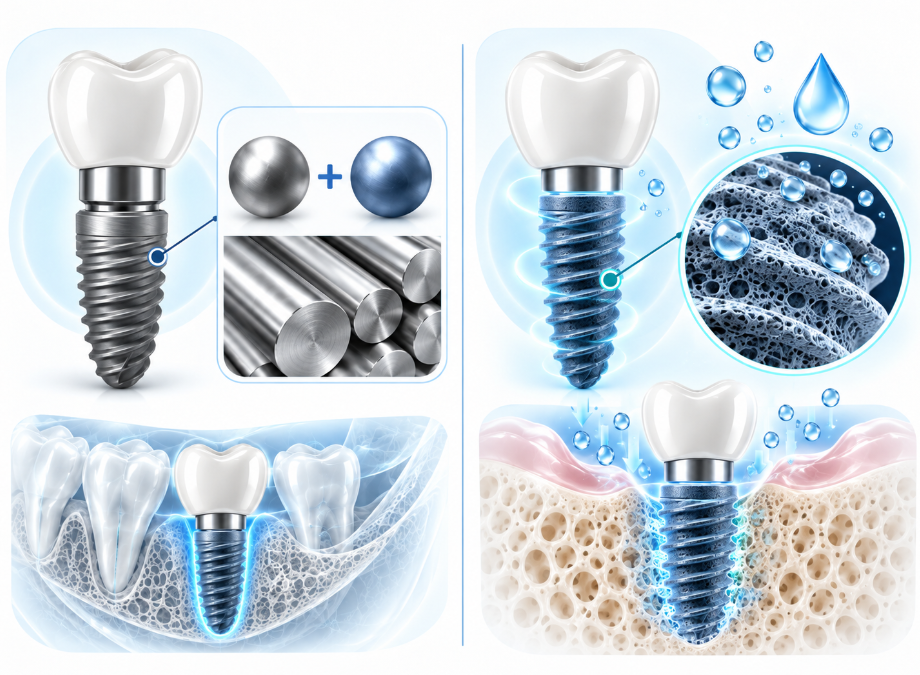
Two of its notable technologies are Roxolid material and the SLActive surface.
| Category | Roxolid | SLActive |
|---|---|---|
| Technology type | Implant material | Implant surface technology |
| Key feature | Titanium-zirconium alloy | Technology that increases surface hydrophilicity |
| Development purpose | Material designed with strength in mind | Promotion of early osseointegration |
Roxolid is an alloy combining titanium and zirconium, developed with mechanical strength in mind.
Because of these properties, implants with relatively small diameters may be considered as a treatment option when jawbone width is limited.
SLActive is a surface technology developed to increase implant surface hydrophilicity and promote early osseointegration.
Osseointegration refers to the biological bonding process between an implant and the surrounding bone.
However, not every Straumann implant incorporates both technologies in the same way.
Choosing Straumann also does not guarantee better outcomes for every patient or mean that bone grafting can always be avoided.
In clinical practice, domestic implant brands may be suitable for many treatment plans. In other cases, implants with specific materials or dimensions may need to be considered.
Rather than focusing on brand recognition, it is important to understand which implant is being used and why it is appropriate for the patient's oral condition.
3. Does the treatment plan consider the final restoration and follow-up care?
Dental implant treatment does not end when an artificial tooth root is placed into the jawbone. A tooth-shaped restoration must also be attached to restore chewing function.
An important consideration is planning where the final tooth will be positioned before the implant is placed.
An area with sufficient bone is not necessarily the best location for attaching the final restoration.
This is particularly important in molar regions, where considerable chewing forces are applied. Both restoration positioning and bite alignment need to be considered.
At Yonsei Gunho Dental Clinic, an oral and maxillofacial surgery specialist performs implant surgery, while the final prosthetic plan is reviewed collaboratively with a prosthodontic specialist.
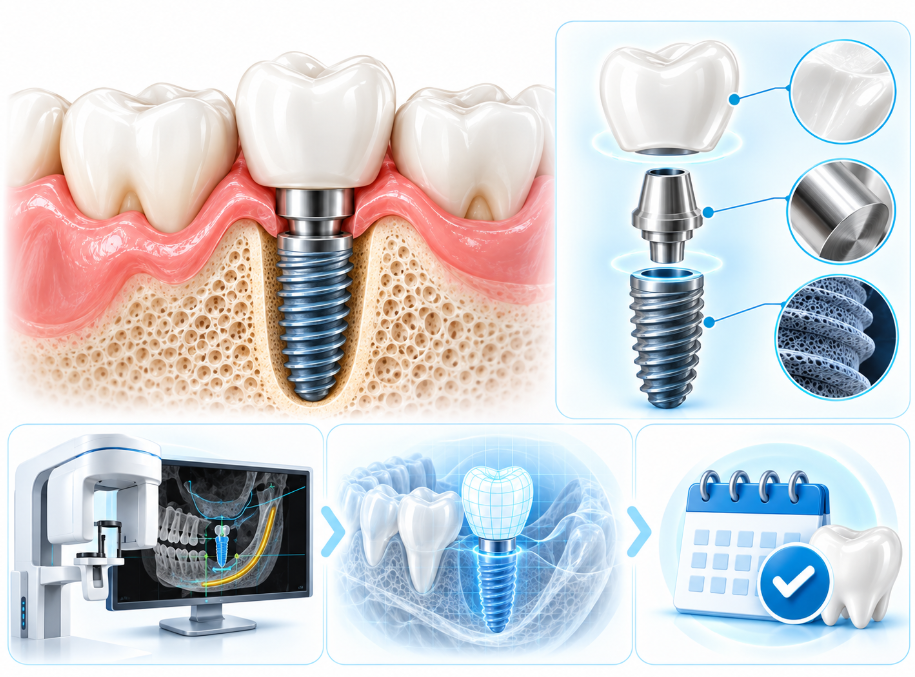
Care after implant placement is equally important.
Although the implant itself cannot develop tooth decay, inflammation can occur in the surrounding gum tissue. Over time, the restoration or connecting screw may also require inspection.
Regular examinations and good oral hygiene are therefore essential throughout the time an implant is in use.
Key Stages to Consider in Dental Implant Treatment
- Surgical planning: Determining the implant's position and direction
- Prosthetic planning: Considering the final tooth position and bite alignment
- Follow-up care: Regularly checking the surrounding gums and restoration
Final Thoughts
Straumann is an implant system supported by accumulated research into implant materials and surface technologies.
However, even a well-known implant system is not necessarily suitable for every patient.
What I consider important is assessing the current jawbone condition accurately and selecting an appropriate treatment approach before deciding on a brand.
And there is something even more important to check first.
Does the tooth truly need to be extracted, or is there still a possibility of preserving the natural tooth?
Whether a tooth can be preserved or requires extraction followed by implant treatment depends on the patient's oral condition.
Ultimately, choosing a Straumann implant clinic should be based not simply on the brand, but on the entire treatment process, from diagnosis and surgical planning to prosthetic restoration and follow-up care.
This is Park Ji-ho, Specialist in Oral and Maxillofacial Surgery at Yonsei Gunho Dental Clinic in Jamsil.