
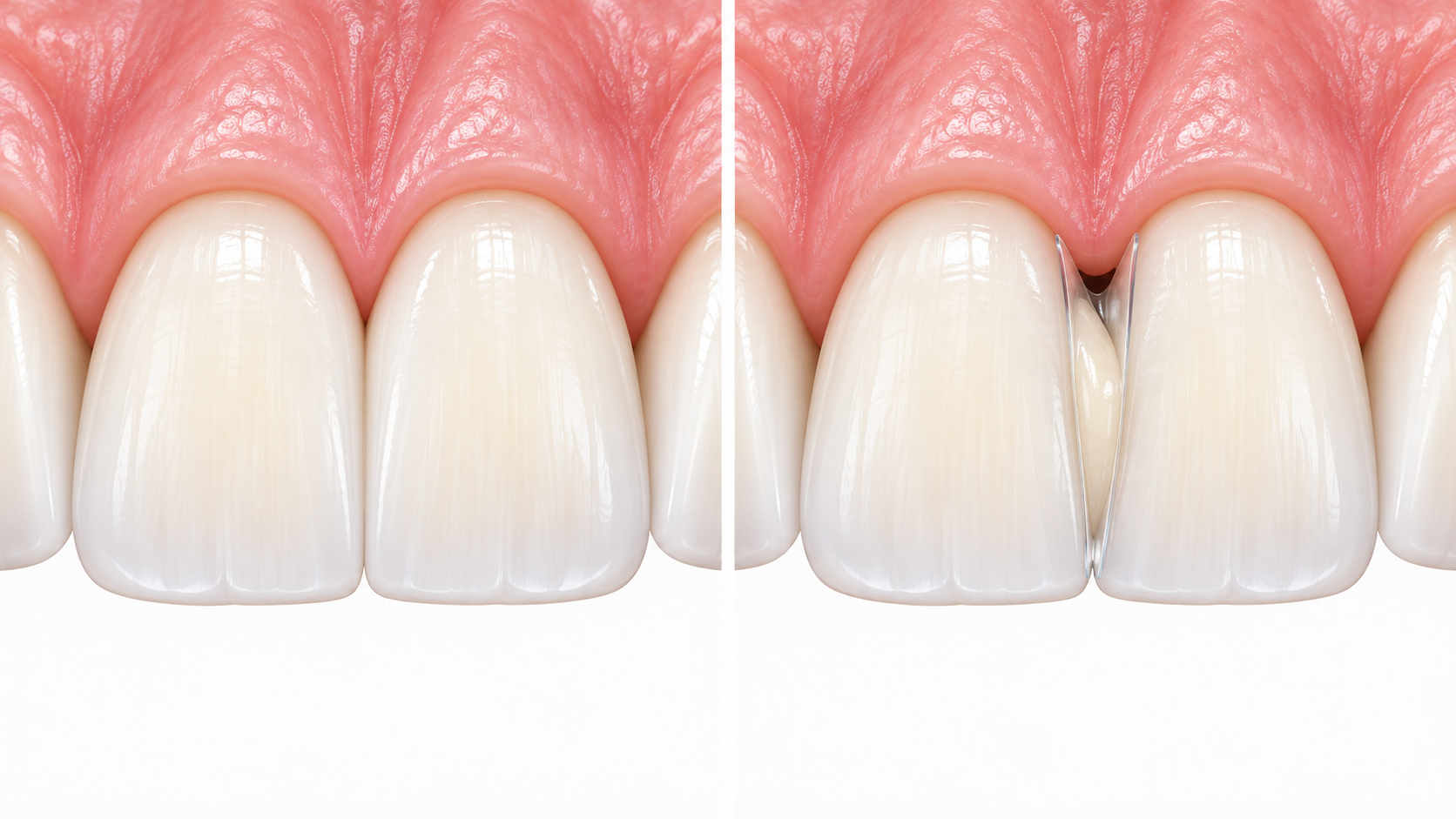
 Bioclear uses a dedicated clear matrix and composite resin to reshape gaps or black triangles between front teeth. It can sometimes reduce tooth reduction but does not suit every front tooth. This covers how it differs from conventional resin and veneers, the process, drawbacks and upkeep, and uninsured cost factors.
1. What Is Bioclear? How Is It Different from Conventional Resin?
Bioclear is not a completely different material from conventional resin; it is a resin restoration method that uses a dedicated matrix to shape the area between the teeth.
With conventional front tooth resin, the material is applied directly and then trimmed to create the shape. With Bioclear, a clear matrix is fitted between the teeth and then resin is applied to create the curved contour between the teeth.
It can be especially useful for areas that are tricky to shape by hand, such as a dark triangular space that forms near the gums.

| Category | Conventional Front Tooth Resin | Bioclear Resin |
|---|---|---|
| Material | Composite resin | Composite resin |
| Treatment method | Resin applied directly and trimmed to adjust the shape | Shape adjusted using a dedicated clear matrix |
| Main uses | Chipped teeth, small defects, gaps between front teeth, etc. | Gaps between front teeth, black triangles, reshaping between teeth, etc. |
| Tooth reduction | Depends on the tooth's condition | Reduction may be minimal or unnecessary |
| Key points | Bonding and tooth shape | Bonding, plus the curvature and margin shape between the teeth |
Of course, conventional resin can also use a matrix when needed. What sets Bioclear apart is its use of a dedicated matrix and a matching restoration technique; it does not mean the resin itself is always superior.
Chipped front teeth and conventional resin treatment are covered separately on the Front Tooth Resin page.
2. When Is Bioclear a Good Fit?
If the gap between the front teeth is not large and the gums are stable, a resin restoration method such as Bioclear may be considered.
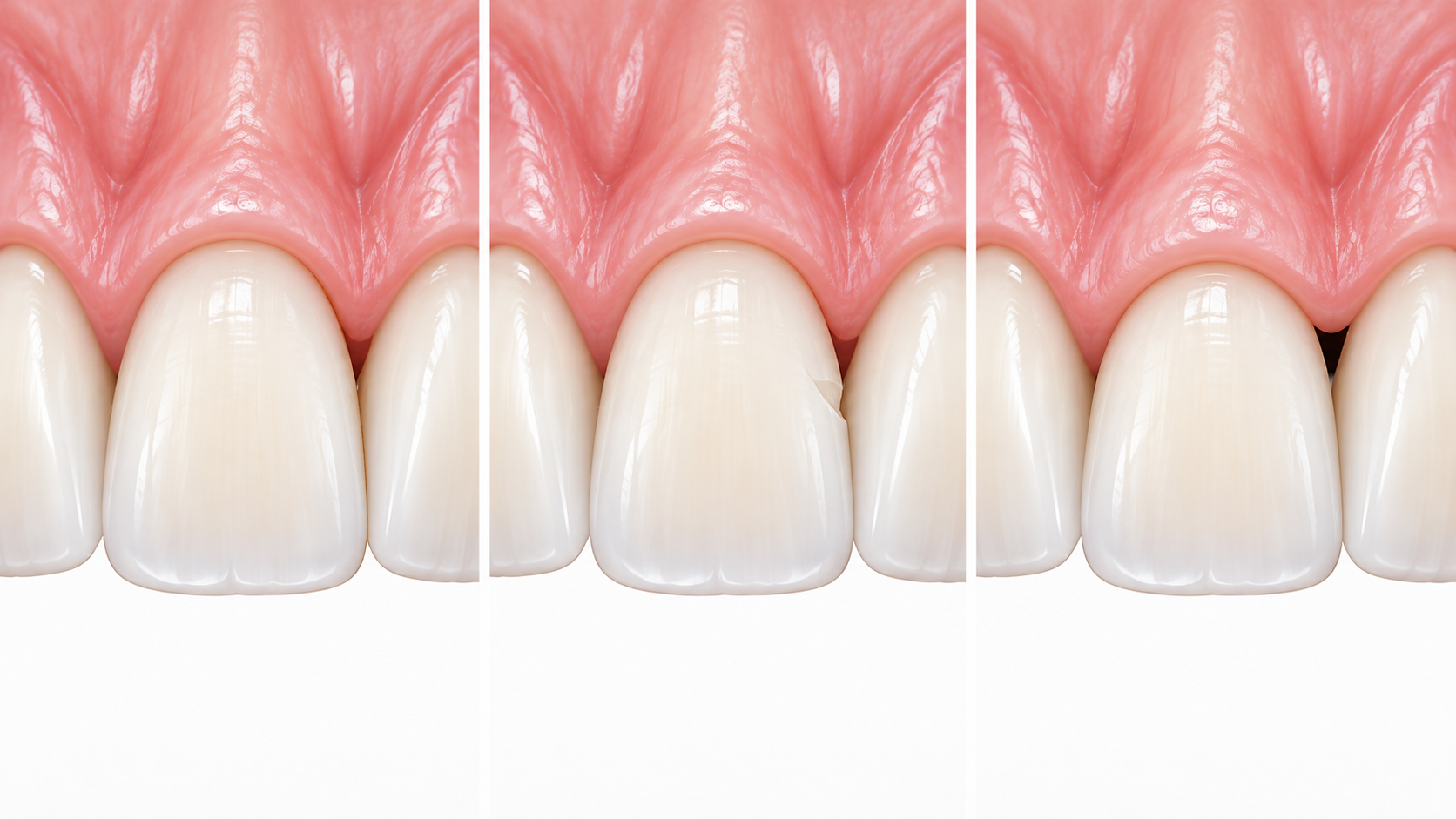
Typical cases include a small gap between the front teeth, black triangles, or wanting to partially adjust the contour between the teeth.
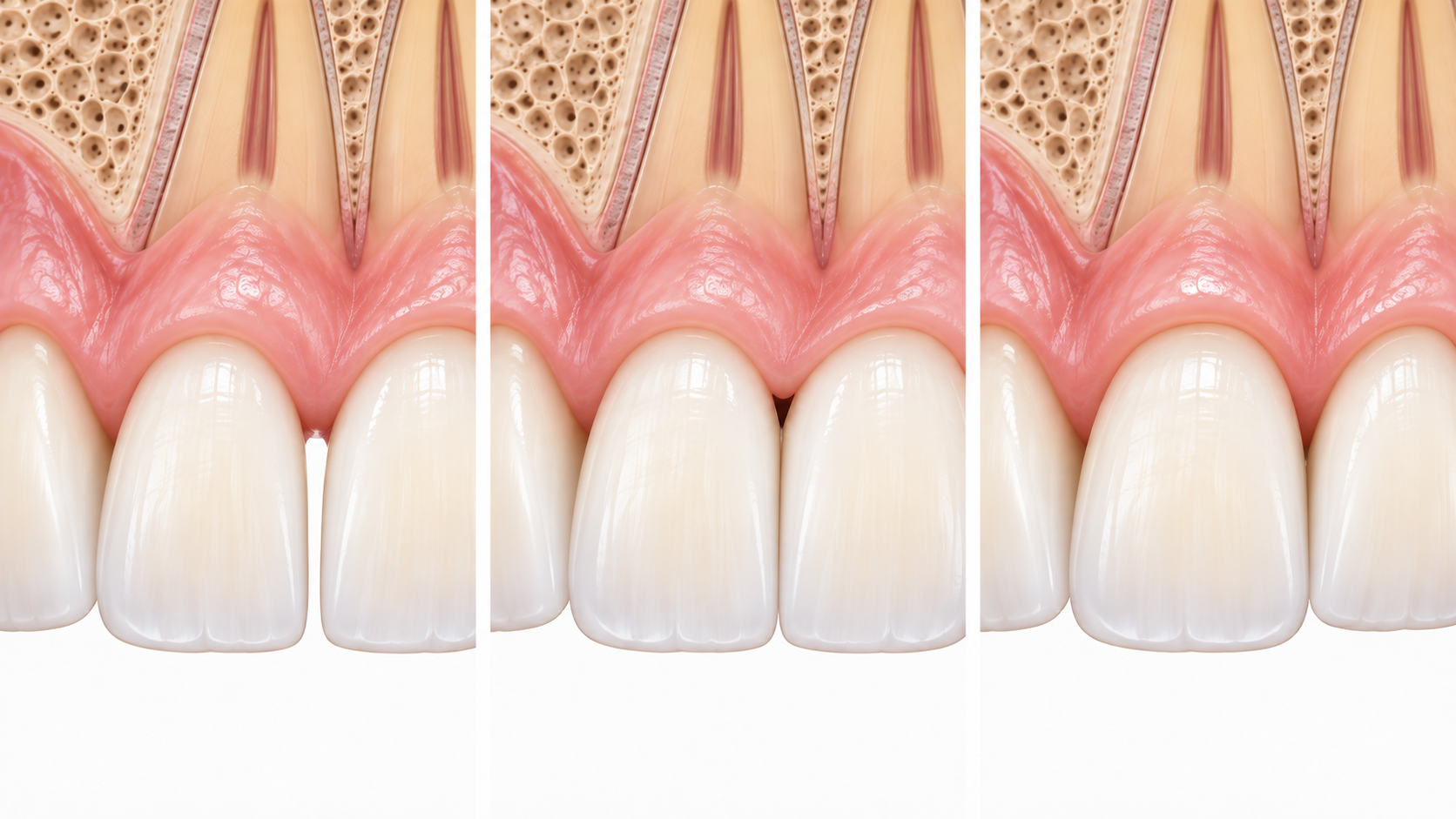
However, filling an empty space does not automatically make it look natural.
For example, even if the front teeth are only slightly apart, adding a lot of resin to both teeth can make them look too wide. You also need to consider whether it suits the gum line when you smile.
Front teeth differ in color between the part near the gums and the tip, and they also differ in how much light passes through. So I also check whether the color blends with the neighboring teeth and whether the overall proportions look natural.
Gum condition matters too. If periodontitis or jawbone loss is suspected, the gums should be checked before filling the space with resin. When needed, I examine this together with Dr. Park Ji-ho, a board-certified oral and maxillofacial surgeon.
If the gap is wide or the tooth alignment itself is the main issue, an orthodontic evaluation may be needed first. Yonsei Gunho Dental Clinic does not provide orthodontic treatment.
The causes of black triangles and whether they can recover naturally are explained in detail on the Black Triangles page.
3. How Is Bioclear Different from Laminate Veneers?
Bioclear adjusts the shape by bonding resin directly to the tooth, while a laminate veneer is a thin restoration made separately and bonded to the tooth surface.
The option to consider depends on whether only a small gap needs adjusting or whether the color and overall shape of the tooth also need to change.
| Category | Bioclear Resin | Laminate Veneer | Crown |
|---|---|---|---|
| Treatment method | Direct resin restoration | Bonding a thin restoration | A restoration that covers the tooth |
| Tooth reduction | May be minimal or unnecessary | Reduction where needed, depending on condition | Relatively extensive reduction |
| Fabrication | Can be done without fabricating a separate restoration | Requires fabrication of the restoration | Requires fabrication of the restoration |
| When to consider | Small gaps, partial reshaping | Changing both color and shape | When the tooth structure is significantly weakened |
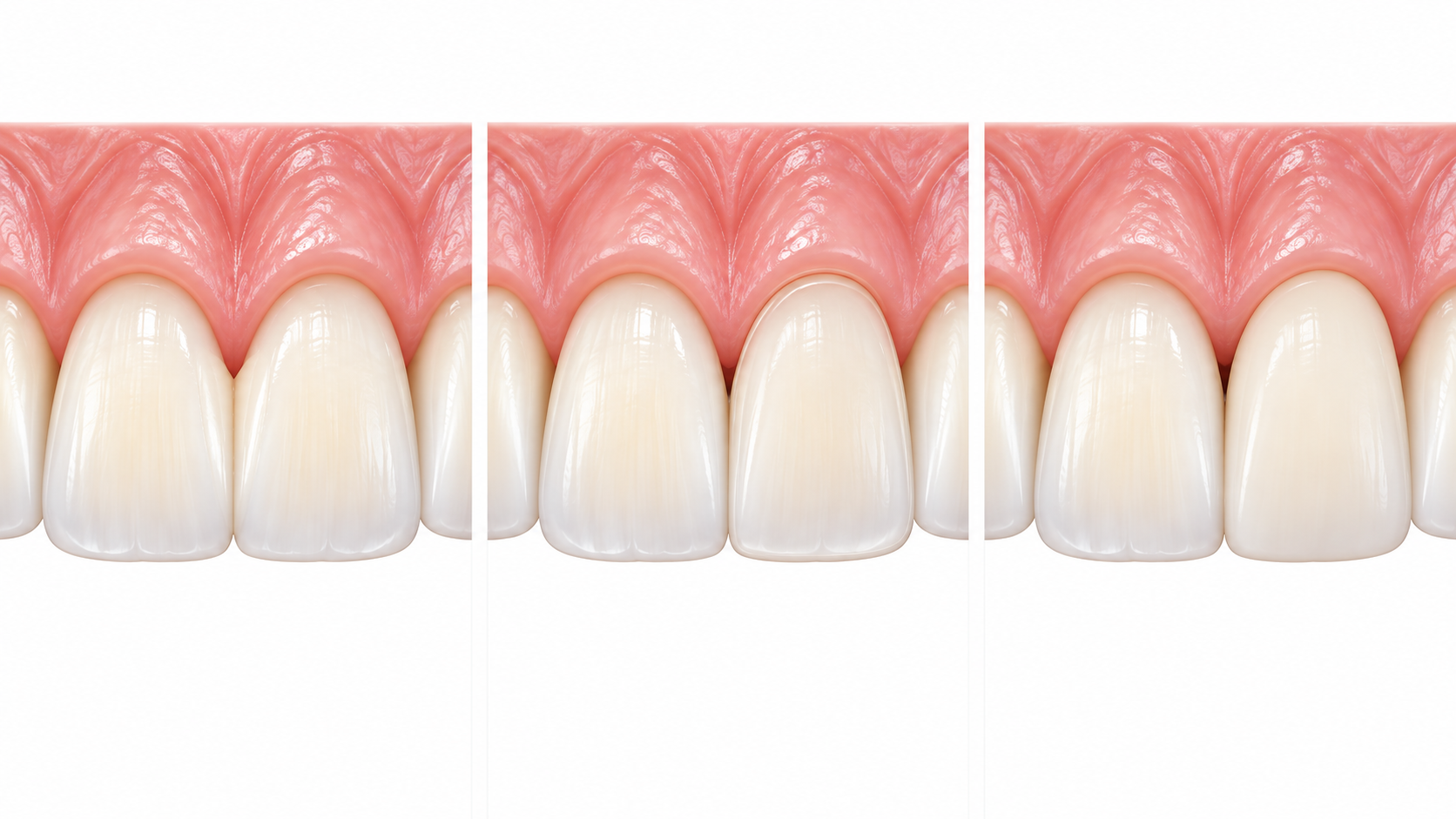
For example, if you want to keep the tooth color as it is and only close a small gap, resin restoration can be considered first.
On the other hand, if both the color and shape of the teeth need to change, a laminate veneer may be suitable. If a tooth is significantly weakened, a crown can be considered, but because it involves extensive reduction, it may not be the method to choose from the start.
In the end, what comes first is not which treatment is better but how much change your teeth actually need.
The scope of laminate veneers and the tooth reduction involved are covered on the Laminate Veneers page.
4. How Does Bioclear Treatment Proceed?
Bioclear proceeds by checking the condition of the teeth and gums, then shaping the resin with a dedicated matrix and finishing it.
The typical treatment process is as follows.
1. Checking the teeth
I look at the space between the front teeth, the gums, the tooth color, and how the upper and lower teeth meet.
2. Preparing the tooth surface
The necessary areas are cleaned up and prepared so the resin can bond.
3. Placing the matrix
A clear matrix that fits between the teeth is selected and positioned.
4. Applying the resin
After the bonding step, composite resin is applied and cured with light.
5. Finishing
The matrix is removed, the shape is refined, and then the teeth are polished and the bite is checked.
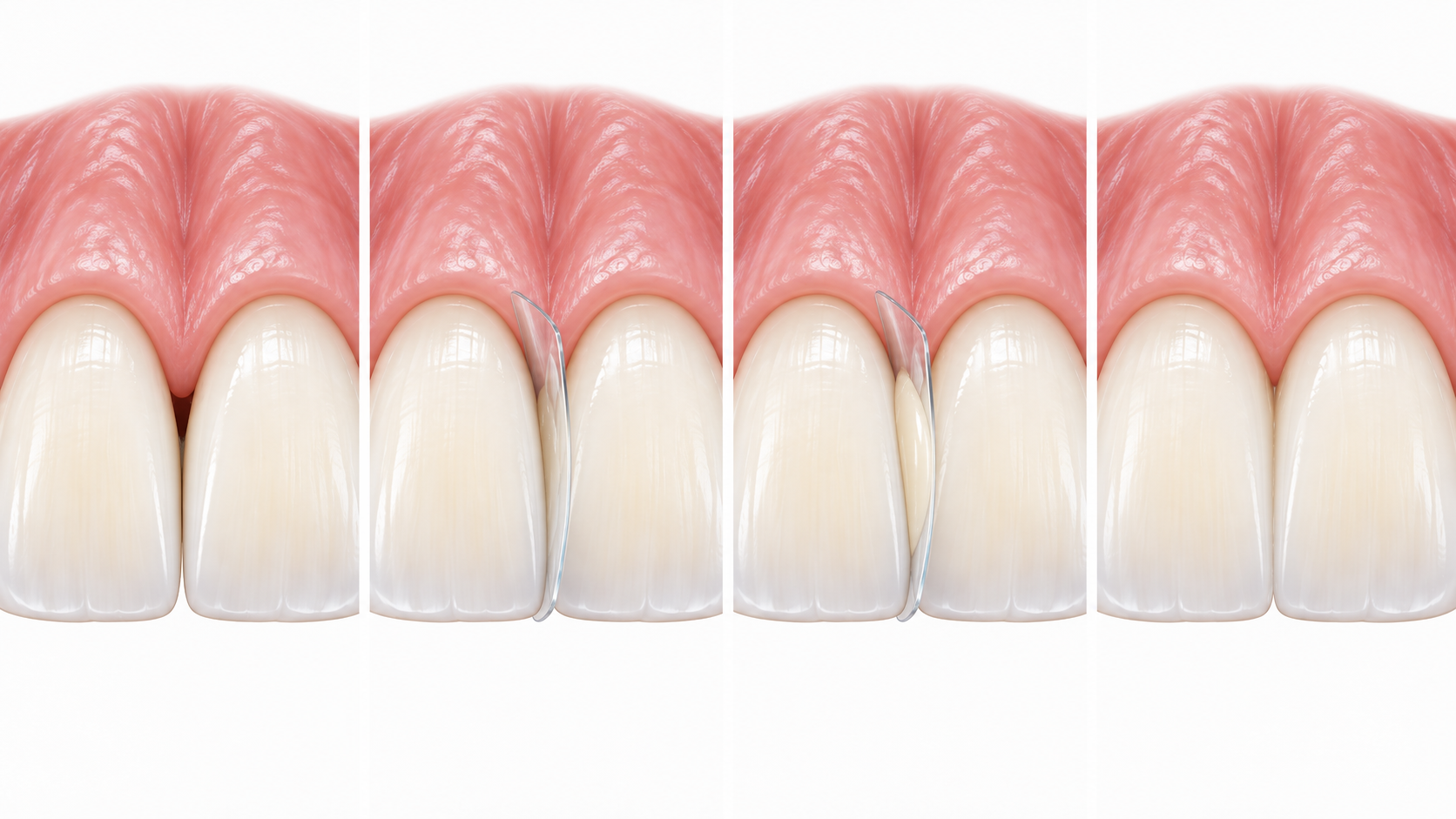
In some cases the procedure is done without significant tooth reduction, but the treatment needed can vary depending on existing restorations or the presence of cavities.
You may also be wondering about pain or anesthesia during treatment. If little tooth reduction or work around the gums is needed, it may be done without local anesthesia. On the other hand, if sensitive areas need to be treated, anesthesia may be needed.
Because Bioclear is a direct resin restoration that does not require fabricating a separate restoration, it is often completed on the day of the visit. However, the actual number of visits and time required vary depending on the scope of treatment and the condition of the teeth.
5. What Are the Disadvantages and Side Effects of Bioclear?
Because Bioclear is also a resin treatment, it can stain over time, or parts of it may chip or come off. Gum condition and biting force also affect the result.
The resin margins may pick up stains or the surface may become rough, and repeated strong forces from teeth grinding or clenching may cause chipping or debonding.
If the gums continue to recede, the space that was filled may become visible again.
Also, if the resin is made too thick near the gums, flossing and oral hygiene can become difficult and the gums may be irritated. This is why shaping the area between the teeth properly is as important as filling the space.
I tend to grind my teeth myself, so I pay close attention to biting force when treating front teeth.
If the bite on the back teeth has become lower so that force concentrates on the front teeth, or if there is a habit of clenching or chewing on only one side, the load on the resin can increase.
Whether a gap between the front teeth can be filled and whether that result can be maintained well should be considered separately.
6. How Long Does Bioclear Last? How Should It Be Cared For?
There is no fixed lifespan for Bioclear resin. It varies greatly from person to person depending on the condition of the teeth, the bonding, changes in the gums, habits such as teeth grinding and clenching, and how well it is cared for.
Over time, the resin margins may stain or wear. Depending on the condition, polishing to refine the surface again or a partial repair may be needed.
Oral hygiene, including flossing, is especially important in areas where the space between teeth has been filled. It also helps to regularly check for changes in the resin margins, gum condition, and bite.
If your front teeth are repeatedly subjected to strong forces, the overall bite should be examined as well, rather than looking at the resin alone.
How teeth grinding and clenching affect the teeth is covered in detail on the Teeth Grinding Treatment page.
7. How Is the Cost of Bioclear Determined, and Is It Covered by Insurance?
Bioclear resin treatment performed for aesthetic purposes is not covered by Korean National Health Insurance. However, if treatment for cavities or tooth damage is also needed, the insurance criteria for those treatment items must be considered separately.
The cost is not determined solely by the number of visible gaps.
Factors that affect the cost include the following.
- The number of teeth to be treated
- The extent and location of the space
- The materials used
- The difficulty of reshaping the teeth
With black triangles in particular, the shape of the teeth on both sides sometimes has to be adjusted together to reduce the space visible in the middle.
So one visible gap does not necessarily mean one treated tooth.
Depending on gum condition, separate gum treatment may be needed; you can find more about this on the Gum Treatment (Periodontal Treatment) page.
In Closing
Bioclear is one way to try to reduce the space between the front teeth without significantly reducing the natural teeth. However, having a small gap does not mean every case can be treated the same way.
What I value is treatment that conserves rather than treatment that does more.
Looking not only at the color and shape of the teeth but also at the gum condition and biting force, and treating only as much as needed. That is what should be considered first before changing the shape of the front teeth.
Reviewed by: Dr. Kim Kunmin, board-certified prosthodontist
References
- BMC Oral Health (2023). Restoring black triangle with bioclear matrix versus conventional celluloid matrix method: a randomized clinical trial.
A randomized clinical trial restoring black triangles with the Bioclear matrix versus a conventional matrix.
https://pubmed.ncbi.nlm.nih.gov/37330484/ - Journal of the College of Physicians and Surgeons Pakistan (2026). Bioclear vs. Conventional Matrices for the Management of Anterior Black Triangles.
A comparison of Bioclear and conventional matrices for restoring black triangles in the front teeth.
https://pubmed.ncbi.nlm.nih.gov/41689320/ - Journal of the Pakistan Medical Association (2025). Direct aesthetic restoration of black triangles in anterior teeth with a bio clear matrix: case series.
Cases of direct restoration of black triangles in the front teeth using the Bioclear matrix.
https://pubmed.ncbi.nlm.nih.gov/40851145/ - The Journal of Prosthetic Dentistry (2026). Clinical outcomes of anterior diastema closures with resin injection technique using a 3D printed template: A clinical study.
A clinical study restoring gaps between the front teeth with a resin injection technique (using a template different from Bioclear).
https://pubmed.ncbi.nlm.nih.gov/42203549/