
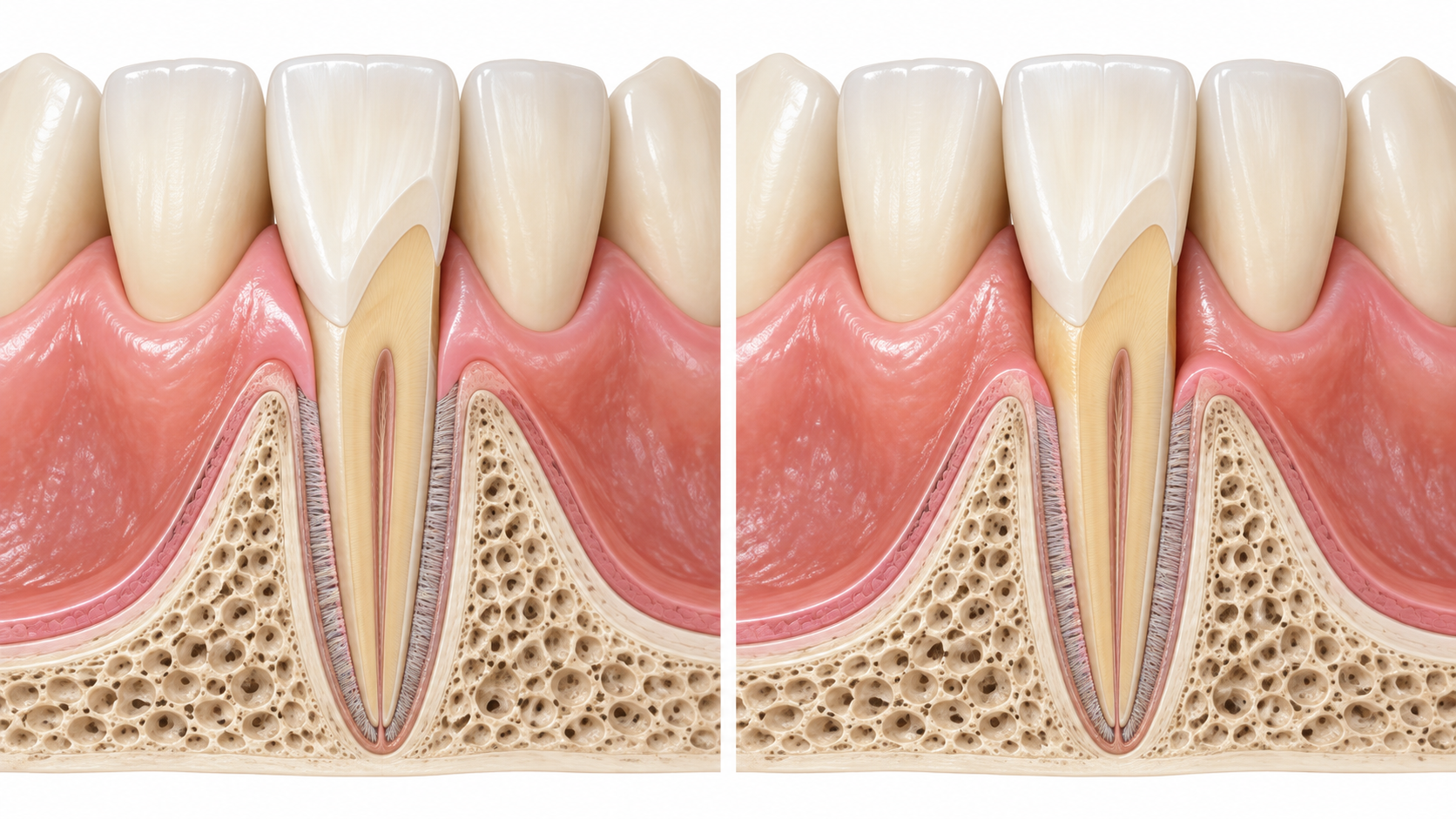
 Gum recession (gingival recession) is the gum margin shifting toward the root, exposing it. It rarely recovers naturally; monitoring, resin restoration, or a gum graft is considered by cause and gum condition. Covers causes, symptoms, how it differs from periodontitis, graft types, recovery, and treatment choice.
1. What is gum recession (gingival recession)?
Gingival recession is a condition in which the gum margin moves down toward the tooth root, exposing part of the root.
Gums can gradually shrink over the years, but receding gums are not always caused by aging.

In particular, it is important to distinguish between recession of the gum itself and a condition in which periodontitis has damaged the gum bone as well.
| Category | Gingival recession | Gum bone loss due to periodontitis |
|---|---|---|
| Main change | Gum margin moves toward the root | Inflammation damages the tooth's supporting tissues and bone |
| Symptoms | Exposed root, sensitivity, teeth look longer | Bleeding, deep periodontal pockets, gum recession, loose teeth, etc. may occur |
| Treatment approach | Managing the cause, restoring the root surface, gum graft if needed | Controlling inflammation and treatment based on the condition of the periodontal tissues |
The two can also occur together.
If a tooth is a tree, the gum bone is the ground. If the ground has collapsed, reinforcing only the gums will not solve the problem.
Periodontitis and gum bone damage are covered in detail on the Gum Treatment (Periodontal Treatment) and Periodontal Regeneration · Emdogain pages.
2. Do receded gums grow back? Why natural healing is difficult
Gums that have already receded are unlikely to grow back to their original position through brushing or lifestyle changes alone.
This is because the tissue that once covered the area has diminished.
However, managing the cause can help reduce further recession. If the gums are stable and there is no particular discomfort, monitoring may also be an option.
If the tissue needs to be reinforced, a gum graft may be considered, but whether surgery is needed depends on the condition of the gums.
3. What causes gum recession?
Gingival recession can result from a combination of several factors.
The main factors are as follows.
- The gums are naturally thin, or the tooth is positioned toward the outside
- Repeated irritation from forceful brushing
- Plaque and inflammation are present
If there is teeth grinding or clenching, I also look at wear at the tooth neck and the biting force.
However, it cannot be concluded that teeth grinding directly causes gingival recession. The causes of tooth damage and gum recession need to be assessed separately.
4. What are the early symptoms of gum recession, and how can you check for it yourself?
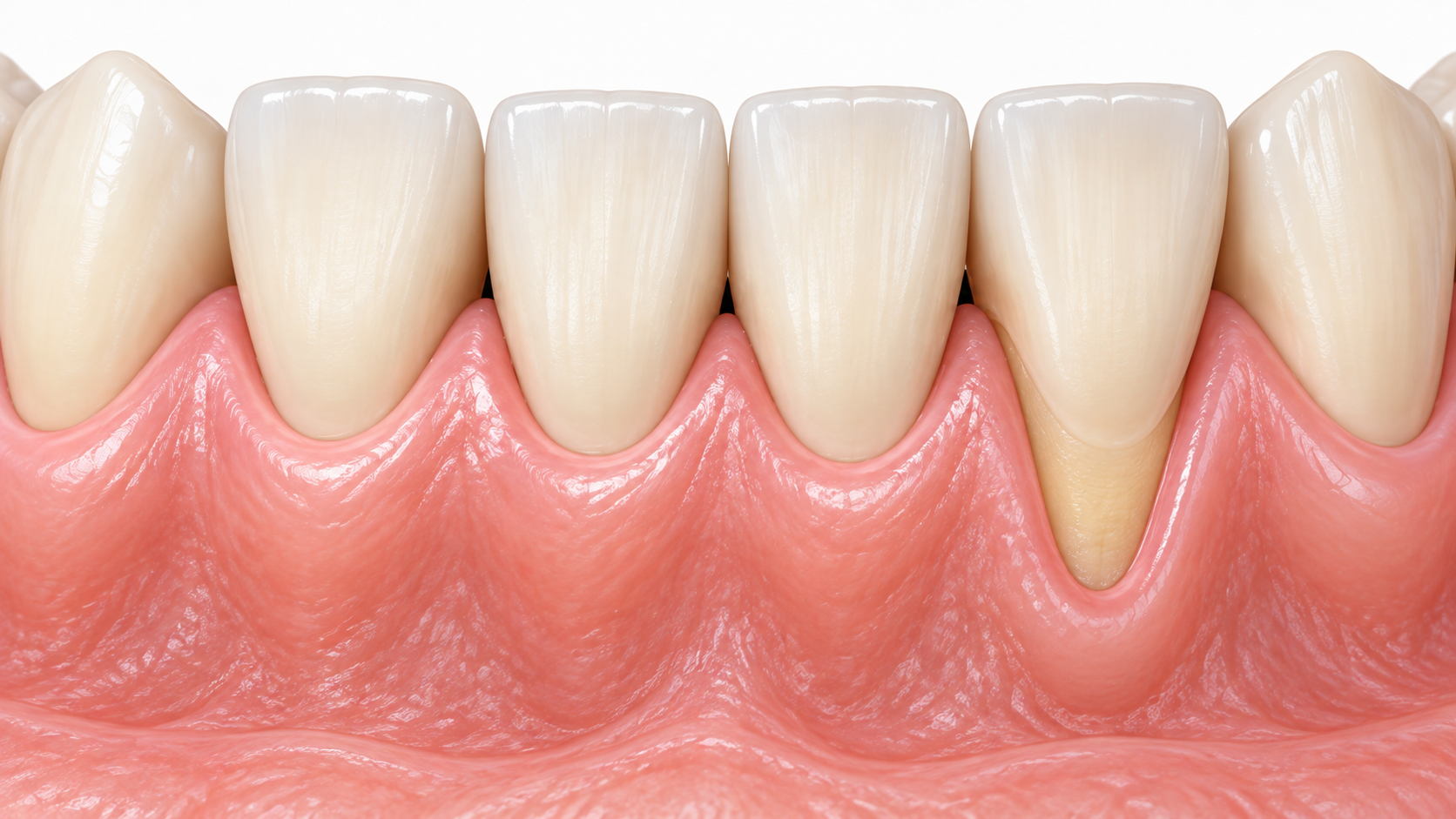
In the early stages, it may not hurt, and only the shape of the teeth may look different.
You can look for changes such as the following.
- Teeth look longer than before.
- The area near the tooth root looks yellow or dark.
- Teeth feel sensitive when touched by cold water or a toothbrush.
- The margin of an existing crown may become visible.
- The gums between teeth may shrink, leaving what looks like a black triangular space.
However, sensitivity can also occur with tooth decay, tooth wear, and other conditions.
Checking for changes in a mirror is helpful, but it does not show the condition of the gum bone, so gingival recession cannot be confirmed by self-checking alone.
5. How is gum recession treated? The difference between resin and a gum graft
Not every case of gum recession receives the same treatment.
The treatment approach is determined in the following order.
1. Checking the condition of the gums and teeth
I check the gum margin and thickness, the periodontal condition, and the extent of root exposure. As needed, panoramic X-rays, periapical X-rays, intraoral photos, and other records are referenced, and CBCT may be used when additional evaluation of the surrounding structures is needed.
2. Managing the cause and monitoring
If the recession is stable, managing the cause and monitoring are considered.
3. Choosing the necessary treatment
If there is a defect at the tooth neck, resin treatment may be considered; if the gum tissue needs reinforcement, a gum graft may be considered.
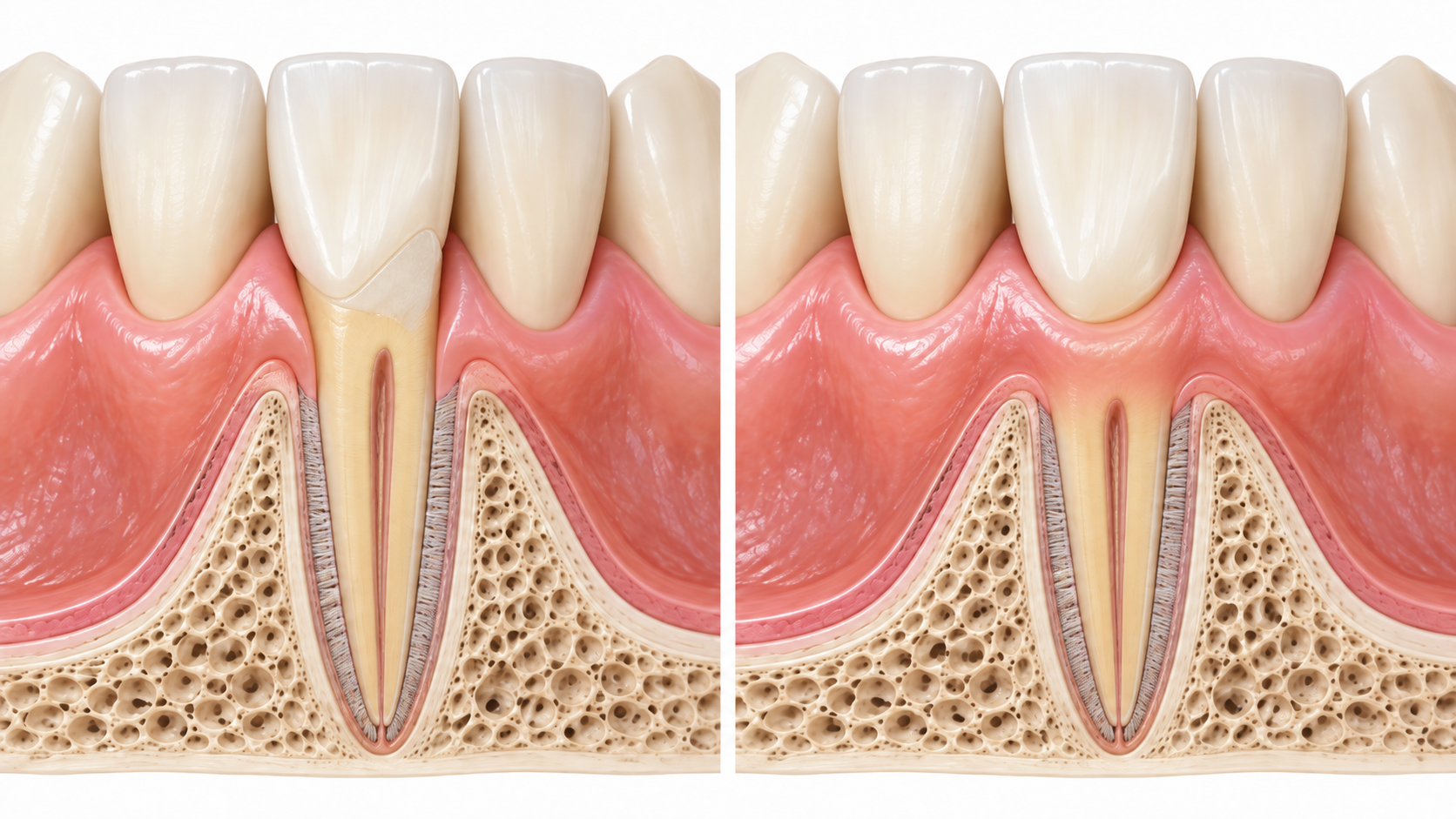
Resin and a gum graft treat different tissues and have different purposes.
| Category | Resin treatment | Gum graft |
|---|---|---|
| What is treated | Damaged or exposed tooth surface | Insufficient or receded gum tissue |
| Main purpose | Restoring tooth defects, managing sensitivity | Reinforcing the gums, root coverage depending on conditions |
| Limitations | Does not raise the gums themselves | May not cover the entire exposed root |
In particular, if there is teeth grinding or clenching, or if gum recession is ongoing, I do not simply recommend resin first.
If the tooth neck needs to be restored, I discuss that area with Dr. Kim Kunmin, a board-certified prosthodontist.
6. When is a gum graft needed? The difference between a free gingival graft and a connective tissue graft
A gum graft is considered when the gum tissue is too thin or insufficient and needs reinforcement, or when covering an exposed tooth root is the treatment goal.
Generally, tissue is taken from the palate and grafted onto the area that needs it.
| Category | Free gingival graft (FGG) | Connective tissue graft (CTG) |
|---|---|---|
| Grafted tissue | Gum tissue including the surface layer | Connective tissue beneath the surface |
| Main purpose | Securing the width of firm gum tissue | Reinforcing gum thickness and root coverage |
| Considerations | There may be a color difference from the surrounding gums | The extent of coverage depends on the condition of the surrounding tissue |
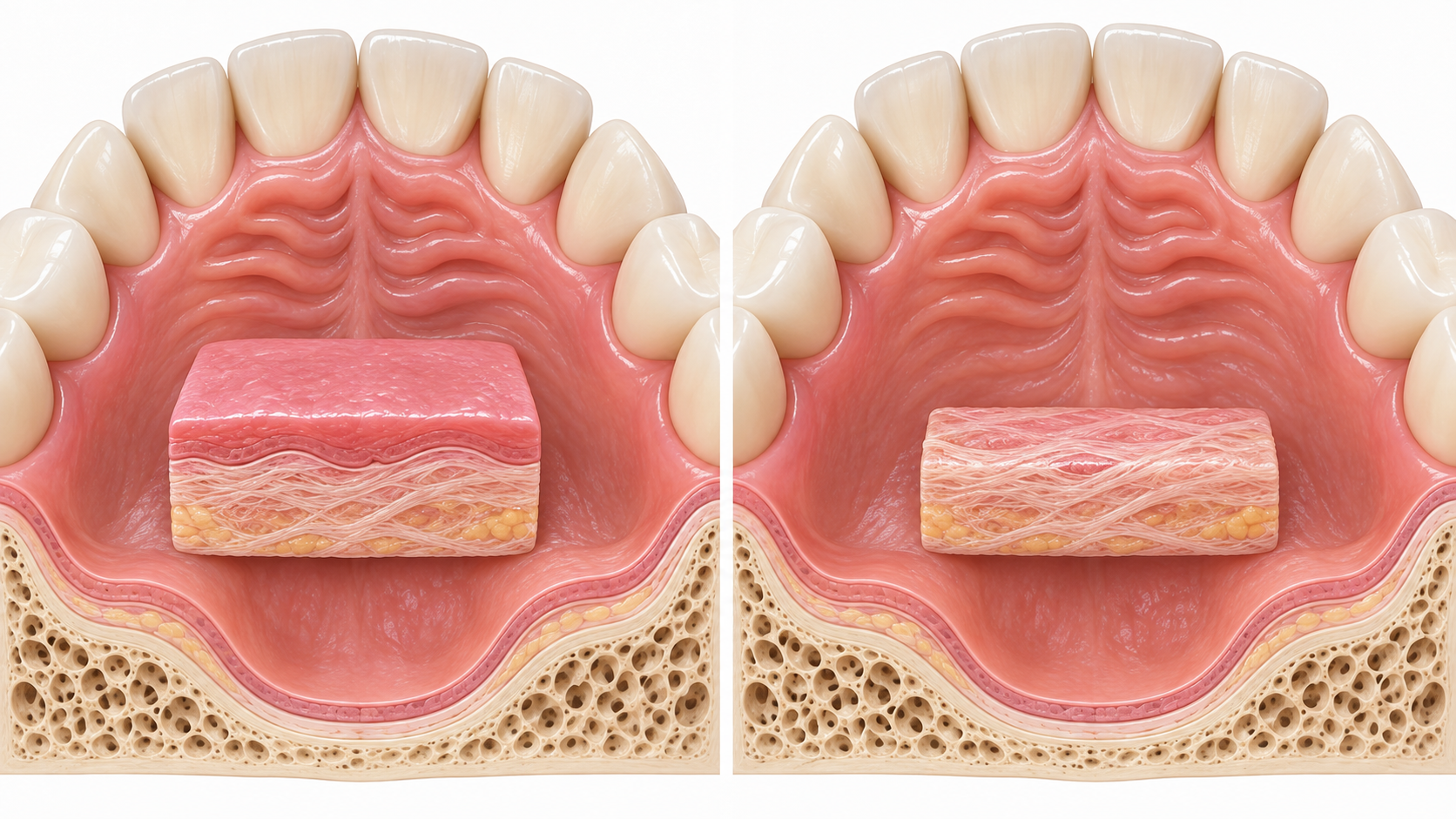
Which method is appropriate depends on gum thickness, the extent of recession, and the condition of the supporting tissue between the teeth.
In particular, if the gums and gum bone between the teeth are also damaged, it may be difficult to fully cover the exposed root.
It is important to assess not only whether surgery is possible, but also how much of the root can actually be covered.
7. Does gum graft surgery hurt? What are recovery and eating like?
A gum graft is generally performed under local anesthesia.
When the anesthesia wears off, pain, swelling, or bleeding may occur, and if tissue was taken from the palate, there may also be discomfort in that area. The degree of discomfort and the course of recovery vary from person to person.
During recovery, it is important to protect the surgical site.
- Choose soft, non-irritating foods.
- Be careful with hard foods.
- Take care to avoid brushing that rubs the surgical site directly.
I also consider it important to follow the recovery process after surgery, from managing swelling to disinfection and suture removal.
8. What happens if gum recession is left untreated?
When a tooth root is exposed, there is a risk of sensitivity or root decay, and the teeth may look longer or the margins of dental restorations may become visible.
That said, not all gingival recession keeps progressing or leads to tooth loss.
If the cause is controlled and the condition is stable, monitoring may be possible.
On the other hand, if gum bleeding or loose teeth are also present, other problems such as periodontitis should be considered.
9. How can you keep gum recession from progressing further?
Brushing cannot raise gums that have already receded, but reducing unnecessary irritation helps.
The important points in daily care are as follows.
- Use a toothbrush with soft bristles.
- Do not scrub the gums forcefully.
- Do not force floss or interdental brushes into place.
- Do not avoid brushing just because your teeth feel sensitive.
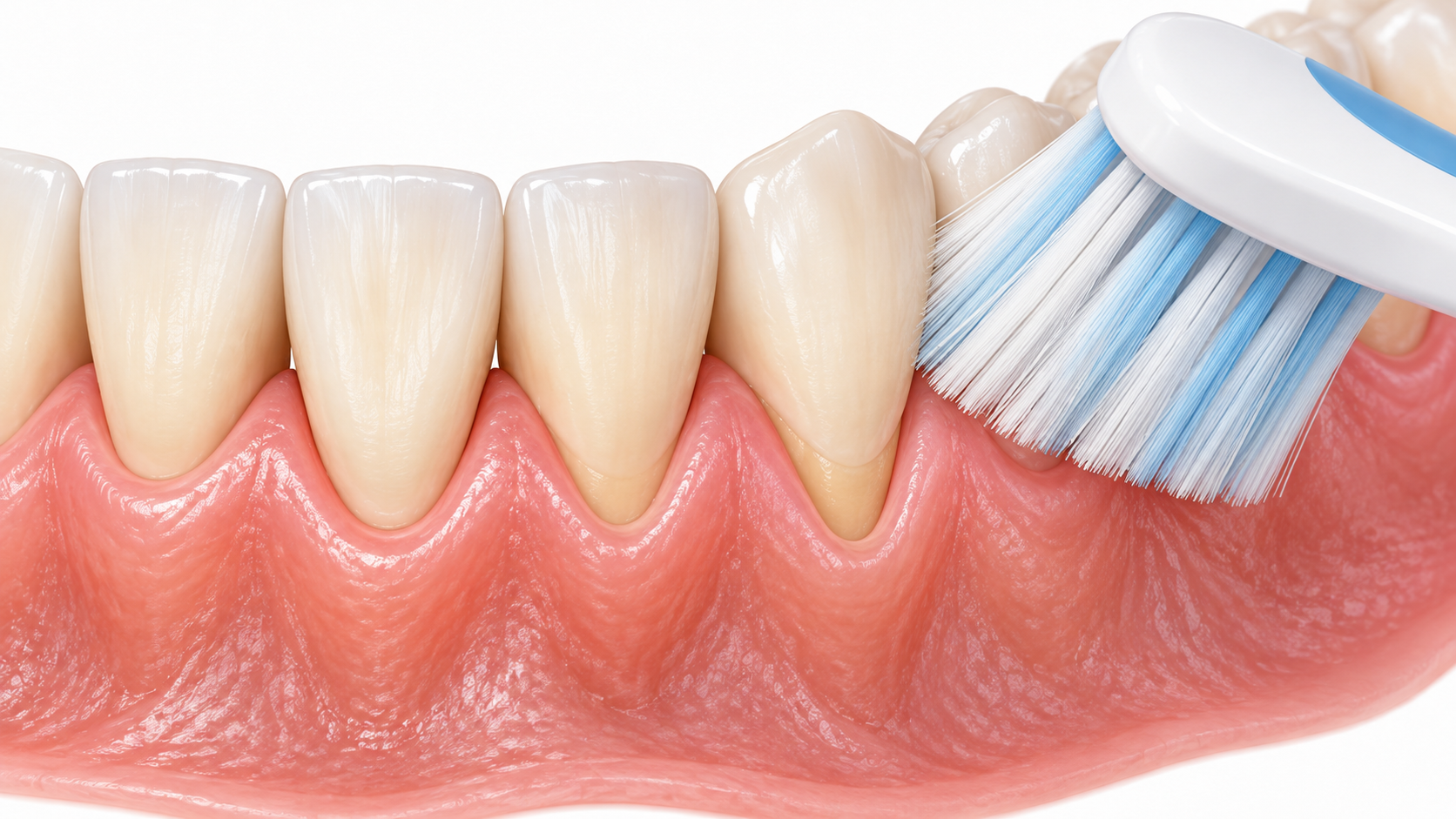
Plaque buildup can cause inflammation, so oral hygiene must be maintained while reducing irritation.
If teeth grinding or clenching is accompanied by tooth wear, separate management for it may also be considered. This is explained on the Teeth Grinding Treatment page.
10. How are the cost of a gum graft and insurance coverage determined?
The treatment involved in a gum graft varies depending on the graft site and extent, the tissue harvesting method, the surgical technique, and other factors.
Which items are covered by Korean National Health Insurance and which are not covered may also vary depending on the actual treatment provided.
Even for the same gum recession, the plan may differ depending on whether the treatment is to reinforce the gum tissue or to cover an exposed root.
In Closing
Receding gums do not automatically mean you need to think about a gum graft first.
The principle I consider important is 'not the treatment that can be done, but the treatment that should be done'.
If conditions allow the gums to be reinforced, I look at the extent needed, and if the tissue between the teeth is also damaged and treatment has limits, I believe that should be explained honestly as well.
Rather than how much of the gum can be covered, the first priority is to assess how the current gums and natural teeth can be preserved.
Reviewed by: Dr. Park Ji-ho, board-certified oral and maxillofacial surgeon
References
- American Academy of Periodontology. Surgical Procedures – Gum Graft Surgery.
Types and purposes of gum graft surgery.
https://www.perio.org/for-patients/periodontal-treatments-and-procedures/surgical-procedures/ - Scottish Dental Clinical Effectiveness Programme (SDCEP). Gingival recession – Prevention and Treatment of Periodontal Diseases in Primary Care.
Causes of gingival recession and criteria for its management and treatment.
https://www.periodontalcare.sdcep.org.uk/guidance/managing-disease/other-periodontal-conditions/gingival-recession/ - Guy's and St Thomas' NHS Foundation Trust. Recovering from gum graft surgery.
Recovery and care after gum graft surgery.
https://www.guysandstthomas.nhs.uk/health-information/recovering-gum-graft-surgery - Cleveland Clinic. Gum Graft Surgery: What It Is, Procedure & Recovery.
The gum graft process and recovery.
https://my.clevelandclinic.org/health/treatments/23504-gum-graft-surgery