
"Don't get veneers on your front teeth. You'll regret having too much of your teeth shaved down." Is that really true?
If you are considering veneers because you are unhappy with the shape or color of your front teeth, you may have come across statements like this.
Veneers are not inherently a bad treatment.
However, if a front tooth is severely fractured or has a large existing composite resin restoration, a crown may be more suitable.
Today, I will explain which front teeth may not be good candidates for veneers and why crowns might be considered instead.
1. When might it be better to avoid veneers on front teeth?
Veneers generally bond more favorably when sufficient healthy enamel remains. Therefore, teeth with extensive damage or large existing restorations require careful evaluation.
Enamel is the hard outer layer that covers the tooth.
Veneers are thin ceramic shells bonded mainly to the front surface of teeth, making the condition of the enamel particularly important.
The suitability of veneers should be carefully evaluated in the following situations.
a. Fractured or worn front teeth: When a front tooth is severely fractured or significantly worn down
b. Extensive composite resin restorations: When a large portion of the tooth has previously been restored with composite resin
c. Insufficient enamel: When much of the enamel is missing and a substantial amount of dentin is exposed
d. Strong biting forces: When teeth grinding or clenching places excessive pressure on the front teeth
In particular, teeth that have undergone multiple composite resin treatments should be evaluated to determine how much healthy tooth structure remains.
This is because bonding conditions may differ between areas where a veneer attaches to natural enamel and areas where it attaches to existing composite resin.
Clinical research has also reported a tendency toward better outcomes for ceramic veneers bonded to enamel compared with those placed on teeth with extensive dentin exposure.
Of course, these conditions do not automatically mean that veneers are impossible.
What matters is evaluating not only the appearance of the tooth but also its remaining structure and bonding conditions.
2. If a front tooth is severely damaged, is a crown more suitable than a veneer?
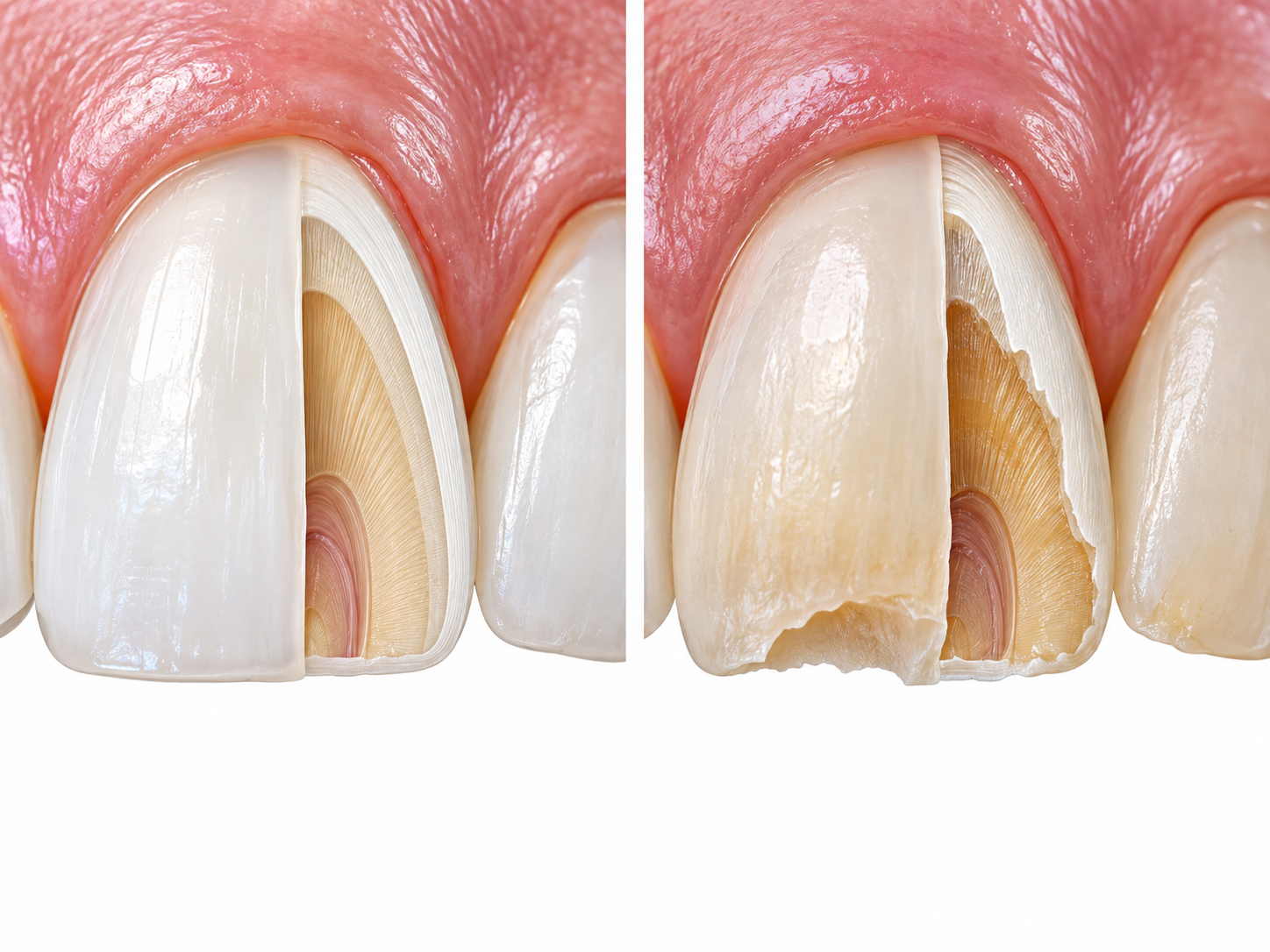
If a front tooth is severely fractured or has extensive existing composite resin restorations, a crown that covers multiple surfaces of the tooth may be considered.
Both veneers and crowns can improve the shape and color of teeth, but they differ in the extent of coverage.
Veneers mainly cover the front surface of a tooth, while crowns are designed to cover multiple surfaces to restore damaged tooth structure and chewing function.
For example, if only a small portion of the edge of a front tooth is chipped, composite resin bonding may be considered first.
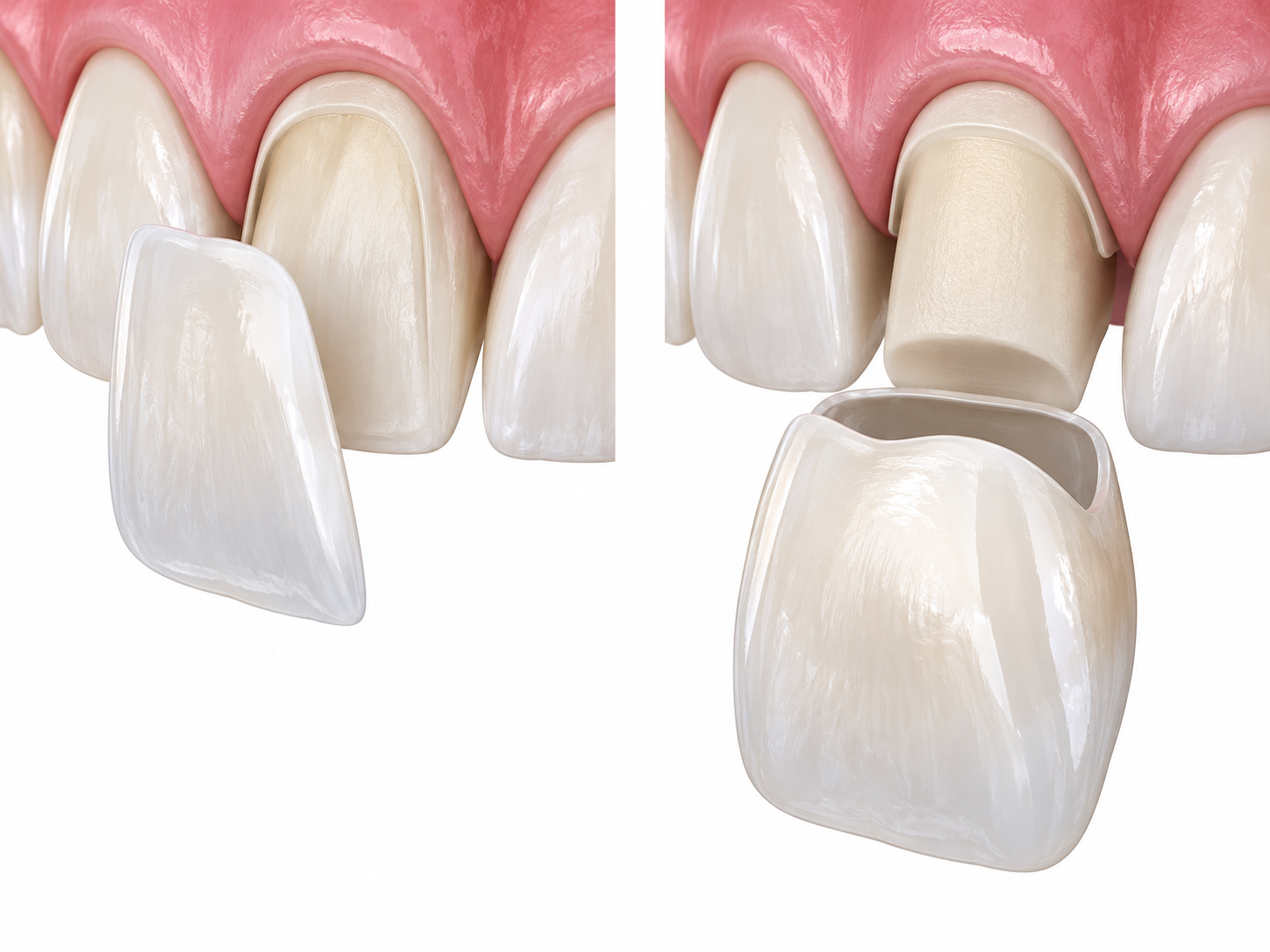
Conversely, if several surfaces of a front tooth are damaged and insufficient tooth structure remains, a crown may be appropriate.
From a prosthodontic perspective, we evaluate more than just the shape of the tooth.
We also examine the remaining tooth structure, existing restorations, and how the upper and lower teeth fit together.
Front teeth are visible when smiling, but they also experience forces when biting into food and moving the jaw.
However, it is important to understand that crowns generally require more healthy tooth structure to be removed than veneers.
Once tooth structure is removed, it does not grow back. Tooth sensitivity or complications requiring root canal treatment may also occur during or after treatment.
Therefore, rather than choosing a crown simply because it appears stronger, the actual extent of treatment required should be assessed.
The appropriate treatment depends on the extent of the fracture, remaining healthy tooth structure, existing composite resin restorations, and bite alignment.
The differences between the two treatments are summarized below.
| Category | Veneers | Front Tooth Crowns |
|---|---|---|
| Coverage | Mainly the front surface | Multiple surfaces of the tooth |
| When considered | Relatively intact tooth structure | Extensive damage or restorations |
| Tooth reduction | Generally less | Generally more |
| Main evaluation criteria | Enamel and bonding conditions | Remaining tooth structure and bite alignment |
A fractured front tooth does not automatically require a crown.
If the fracture is small and sufficient healthy tooth structure remains, composite resin bonding may be possible.
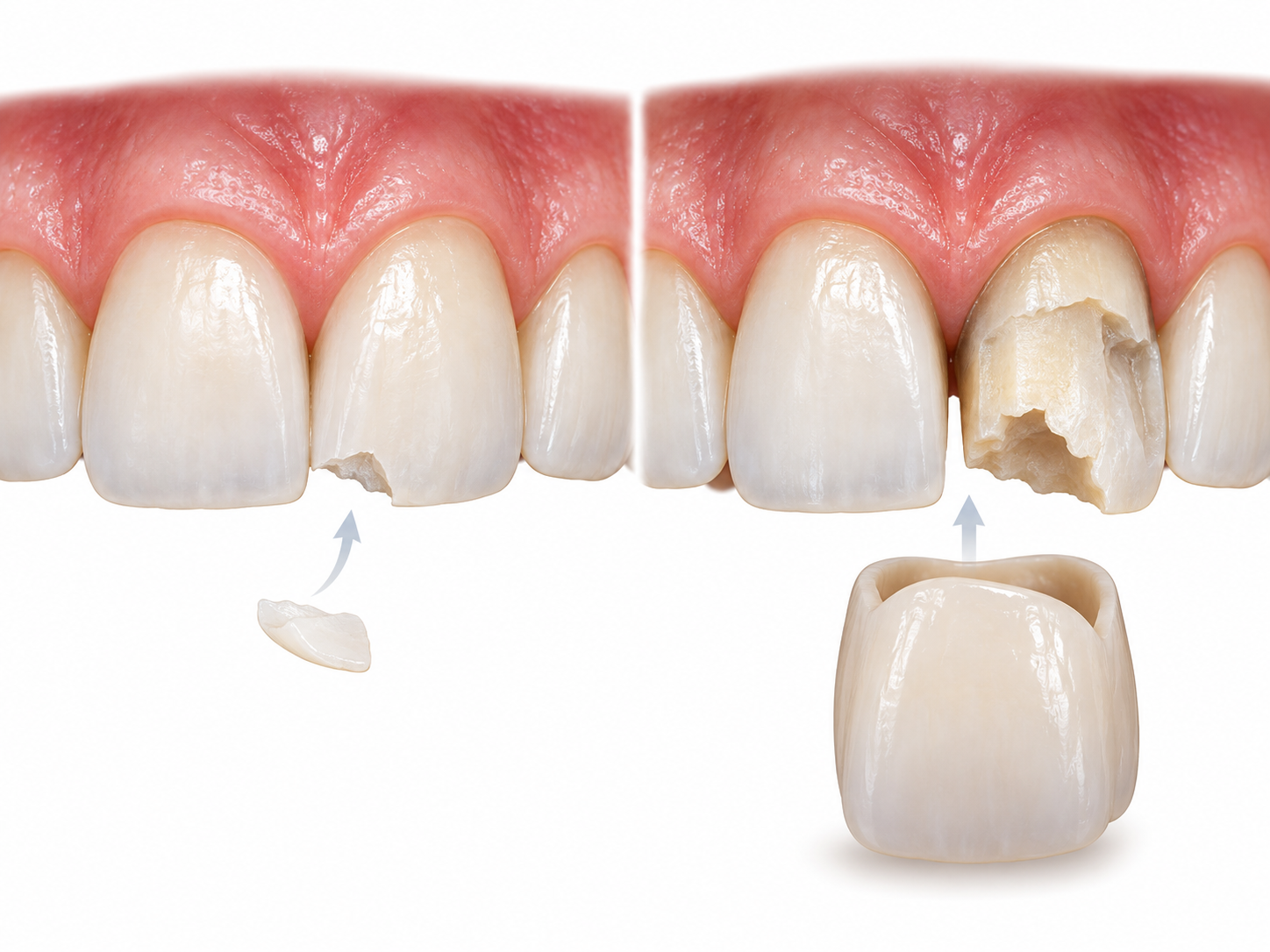
Conversely, if multiple surfaces are damaged and restoring the tooth's shape and function is difficult, a crown may be considered.
Additionally, if you grind your teeth or excessive force is concentrated on your front teeth, your bite should be evaluated along with the type of restoration.
Key factors when choosing treatment
- Extent of fracture or wear on the front teeth
- Remaining healthy tooth structure and existing composite resin restorations
- Forces applied to the front teeth and bite alignment
Ultimately, the first question is not whether veneers or crowns are better, but which treatment your tooth actually needs.
Final Thoughts
The statement "Don't get veneers on your front teeth" does not apply to everyone.
If a tooth is relatively healthy and cosmetic improvement is needed, veneers may be suitable.
On the other hand, if a front tooth is severely fractured or has extensive existing restorations, a crown may be considered to restore both its shape and function.
What I consider most important is preserving as much healthy tooth structure as possible while choosing a treatment that allows the remaining tooth to function reliably.
Front tooth treatment requires consideration not only of visible color and shape but also the extent of damage and biting forces.
This has been Kim Geon-min, a board-certified prosthodontist at Yonsei Gunho Dental Clinic in Jamsil.