
"My jaw keeps feeling tense and sore. Would Botox help?"
When looking into treatments for TMJ pain, you may come across Botox injections. You might also wonder whether they are the same as masseter Botox injections used for jawline slimming.
Hello. This is Yonsei Gunho Dental Clinic in Jamsil.
TMJ Botox is an injection treatment that temporarily reduces the activity of the chewing muscles. Although its effectiveness has been studied for certain types of muscular pain, it is not effective for every type of TMJ pain.
Today, I will explain how it works, when it may be considered, its possible side effects, and how it differs from other treatments.
1. How does TMJ Botox work to relieve pain?
TMJ Botox uses botulinum toxin to temporarily reduce contractions of the muscles that move the jaw.
The muscles around the jaw include the masseter and temporalis muscles, which are involved in chewing. Botox reduces muscle activity by inhibiting signals transmitted from nerves to muscles.
The same botulinum toxin ingredient may be used for cosmetic masseter Botox, but cosmetic treatment and pain management have different purposes.
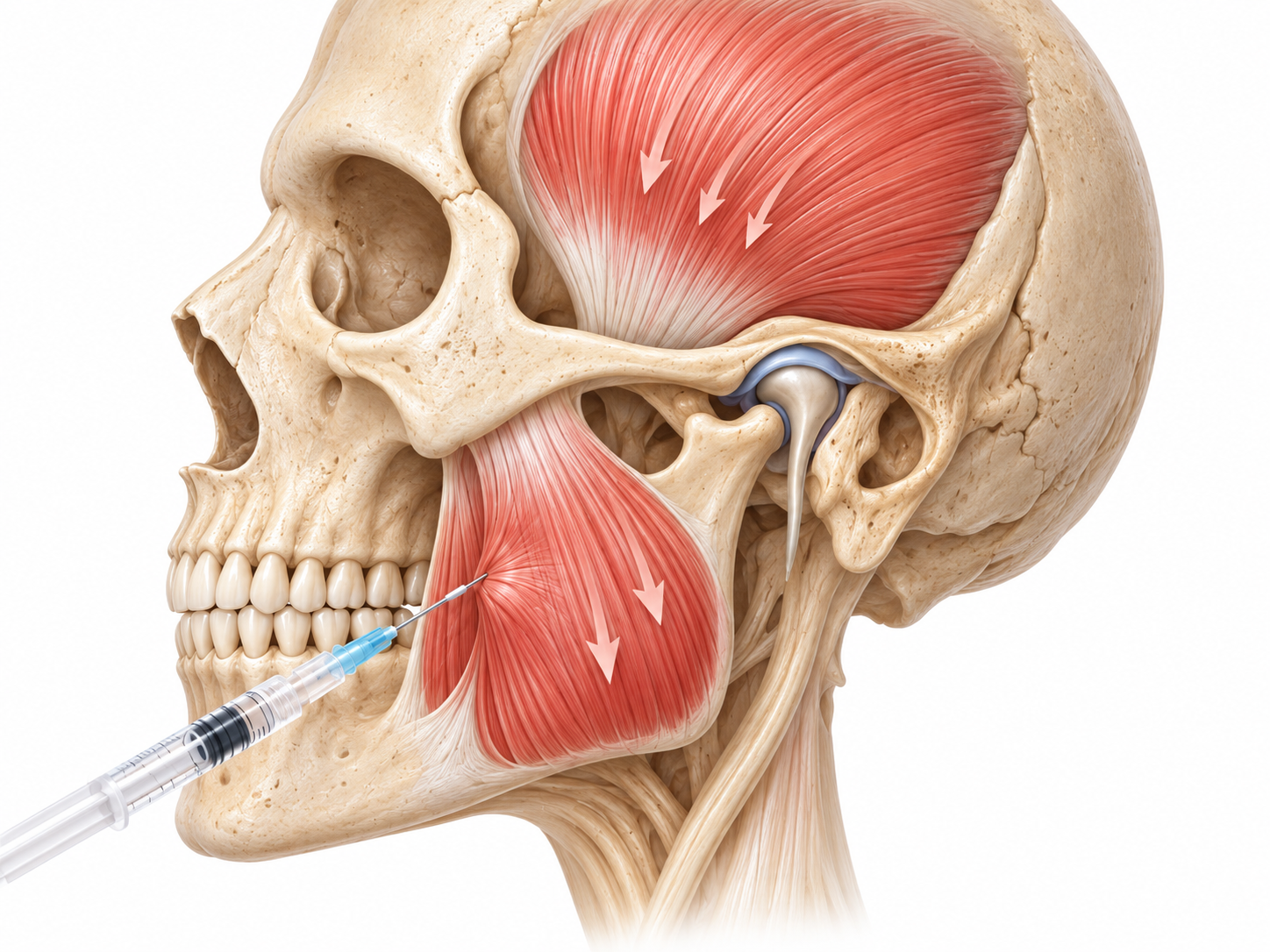
Some studies have reported potential reductions in muscular TMJ pain. However, other studies have not demonstrated clear benefits compared with existing treatments or placebo.
Reducing muscle strength does not necessarily mean that pain will improve.
2. When might TMJ Botox be considered?
TMJ Botox may be cautiously considered in certain cases where pain in the chewing muscles is the primary concern.
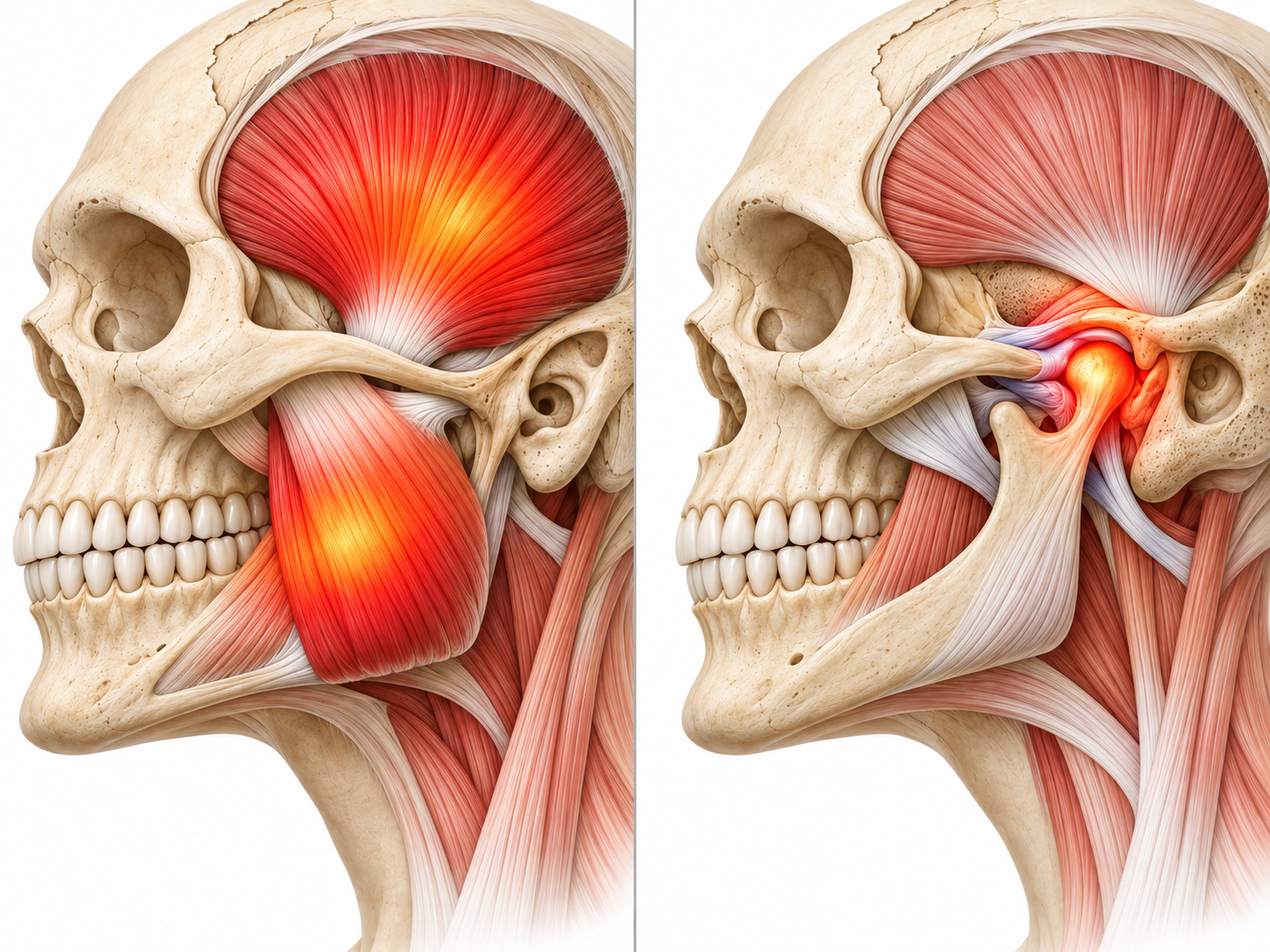
TMJ pain can originate from the muscles or from problems within the joint itself.
| Symptom | What to Evaluate |
|---|---|
| Jaw muscle pain when chewing | Whether the chewing muscles are the source of pain |
| Pain in the joint in front of the ear | Condition of the joint itself |
| Catching sensation when opening the mouth | Jaw joint movement and limitations |
| Teeth grinding or clenching | Relationship between muscle activity and pain |
Botox may reduce the force generated by the chewing muscles, but it does not eliminate the teeth-grinding behavior itself.
Before deciding on injection treatment, I believe it is important to distinguish whether the pain originates from the muscles or the joint.
3. What are the side effects of TMJ Botox, and what precautions are necessary?
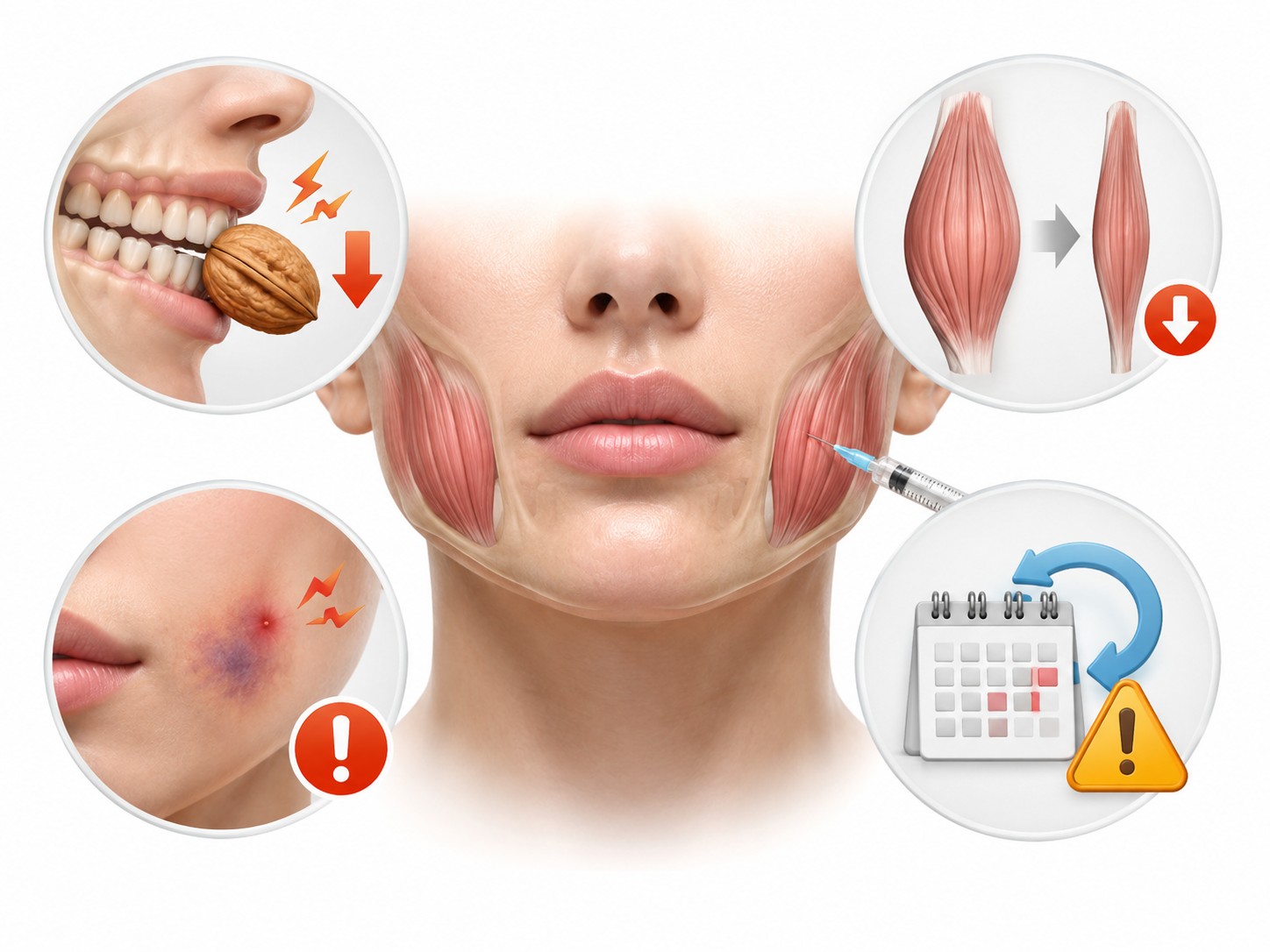
Possible side effects of TMJ Botox include reduced chewing strength, muscle weakness or atrophy, and pain or bruising at the injection site.
Research has also raised concerns about potential changes in the jaw muscles or surrounding bone associated with repeated injections. In rare cases, serious adverse reactions, such as difficulty swallowing or breathing problems, may occur.
Therefore, rather than automatically repeating injections at fixed intervals, the response to previous treatment and the potential for side effects should be evaluated.
4. TMJ Botox, splints, or physical therapy: Which treatment should be considered first?
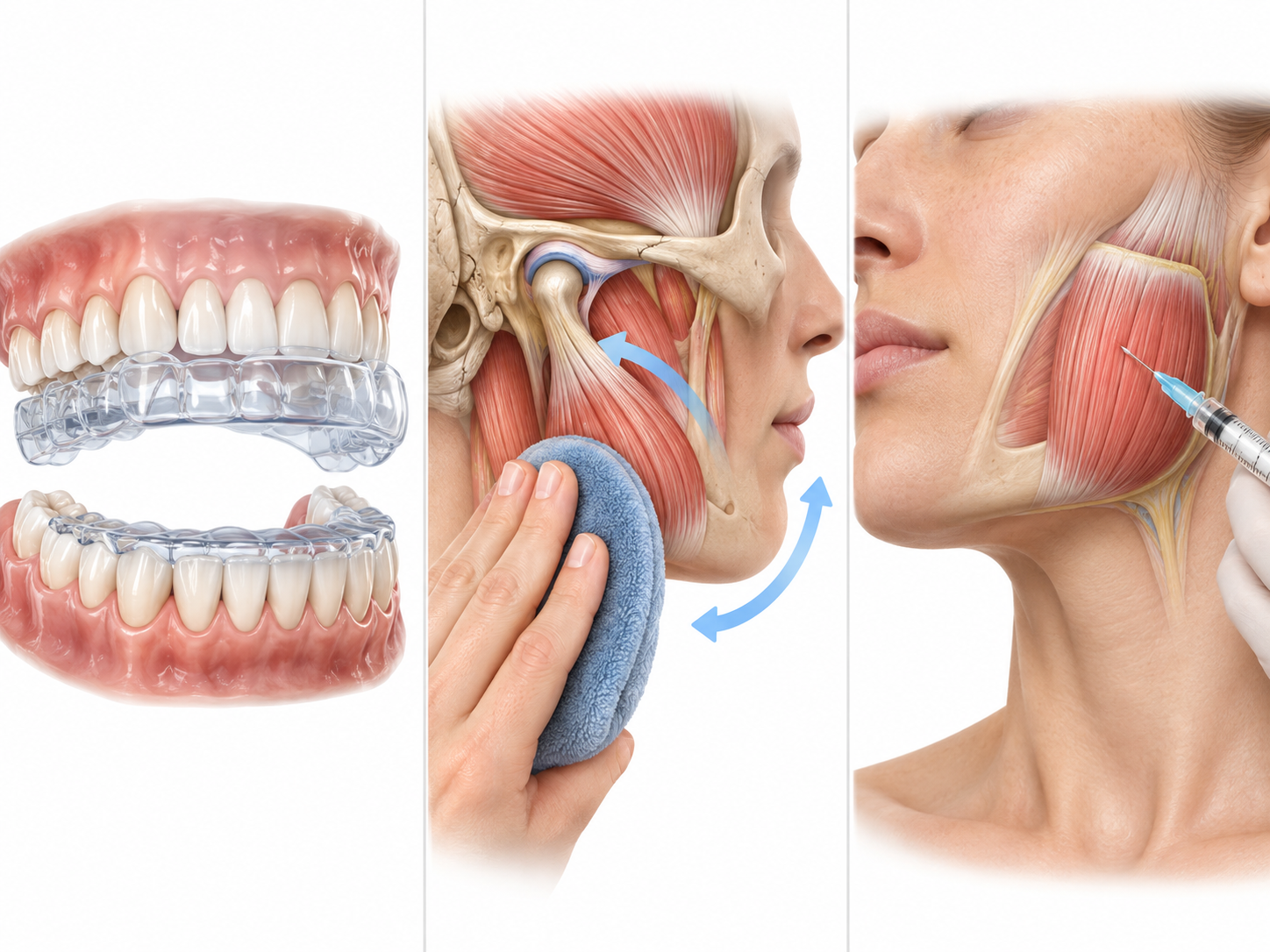
Temporomandibular disorders are generally managed initially with noninvasive treatments, such as lifestyle modifications, exercises, and physical therapy.
| Treatment | Main Purpose |
|---|---|
| Lifestyle modifications | Adjust habits that strain the jaw, such as teeth clenching |
| Physical therapy and exercises | Manage jaw movement and muscle function |
| Splints | Oral appliance therapy based on the patient's condition |
| Botox | Temporarily reduce chewing muscle activity |
I personally also experience TMJ problems and receive periodic PDRN injections according to my individual treatment plan.
However, this does not mean that the treatment I receive is appropriate for other patients. PDRN and Botox are different treatments, and the medical evidence supporting them must be evaluated separately.
If you are interested in other injection treatments, please refer to "What Are PDRN Injections for TMJ Disorders? How They Work and What to Know Before Treatment."
For more details about splints, see "TMJ Splint Therapy: When Is It Necessary?"
TMJ Botox can reduce muscle activity, but it is not an effective treatment for every type of TMJ pain.
More important than choosing a particular injection is identifying the cause of pain and selecting a treatment appropriate for your condition.
This has been Park Ji-ho, a board-certified oral and maxillofacial surgeon at Yonsei Gunho Dental Clinic in Jamsil.