
If your jaw clicks when you open your mouth or chew, you may worry about whether you need treatment.
Hello. I am Park Ji-ho, a board-certified oral and maxillofacial surgeon at Yonsei Gunho Dental Clinic in Jamsil.
Even if your jaw clicks, treatment is not always necessary as long as there is no pain or limitation in opening your mouth. What matters more than the sound itself is the symptoms that come with it.
1. Why does my jaw make a clicking sound?
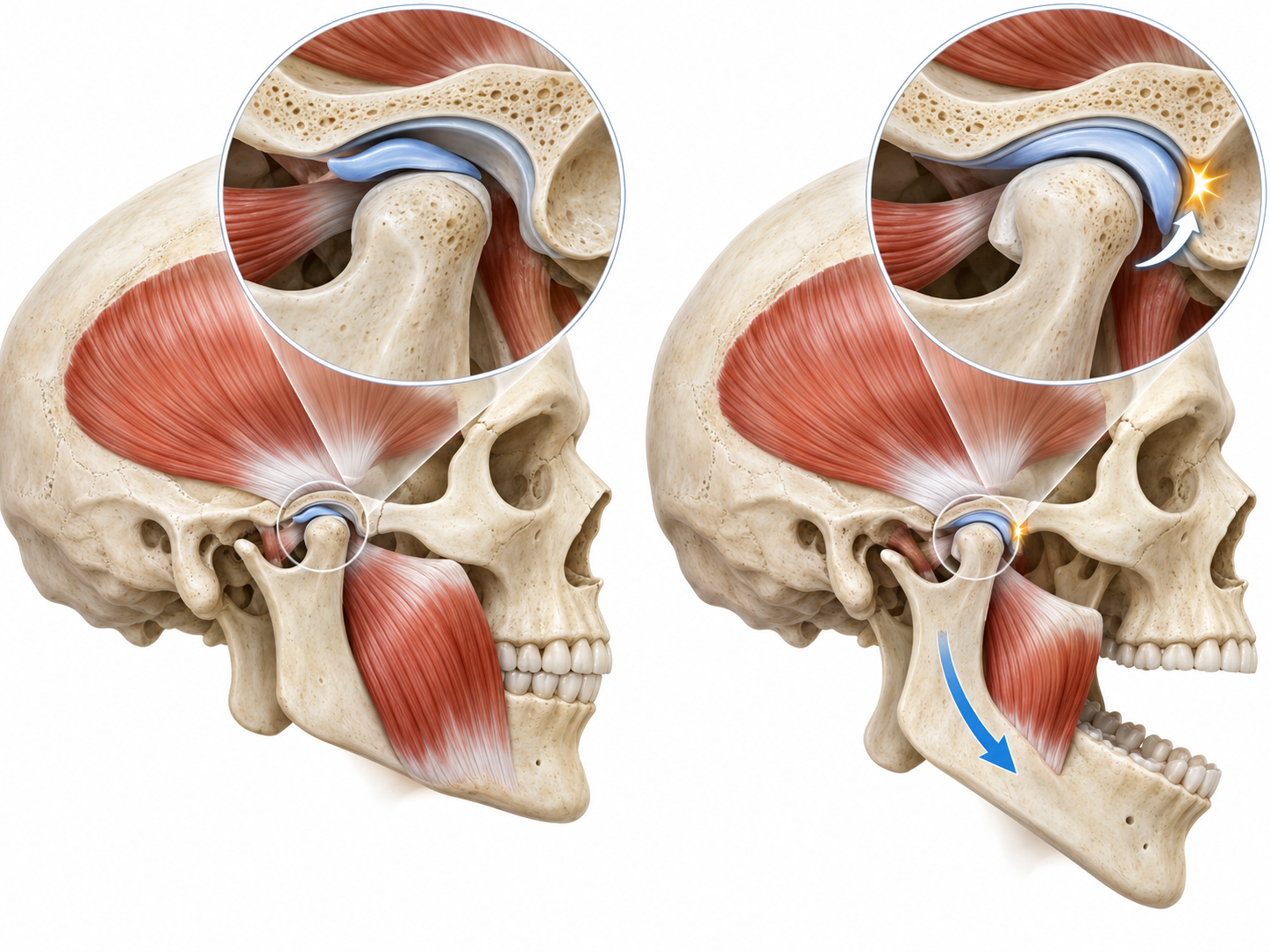
One reason the jaw clicks is the movement of the jaw joint disc.
The jaw joint in front of the ear has a disc that helps the jawbone move smoothly. When the disc slips out of place and then snaps back into position as you open your mouth, making a click, this is called 'disc displacement with reduction.'
The sound may occur when you yawn or chew, and it may come from only one side of the jaw. However, a disc problem cannot be diagnosed from the sound alone.
2. Do I need treatment if my jaw only clicks and does not hurt?
If there is only a sound, with no pain and no difficulty opening your mouth or chewing, treatment is not necessarily required.
You do not need a splint or injections just to get rid of the sound. However, if you start to feel pain or a catching sensation in the jaw that you did not have before, your condition should be checked.
3. Clicking vs. a sandy grinding sound: are the causes different?
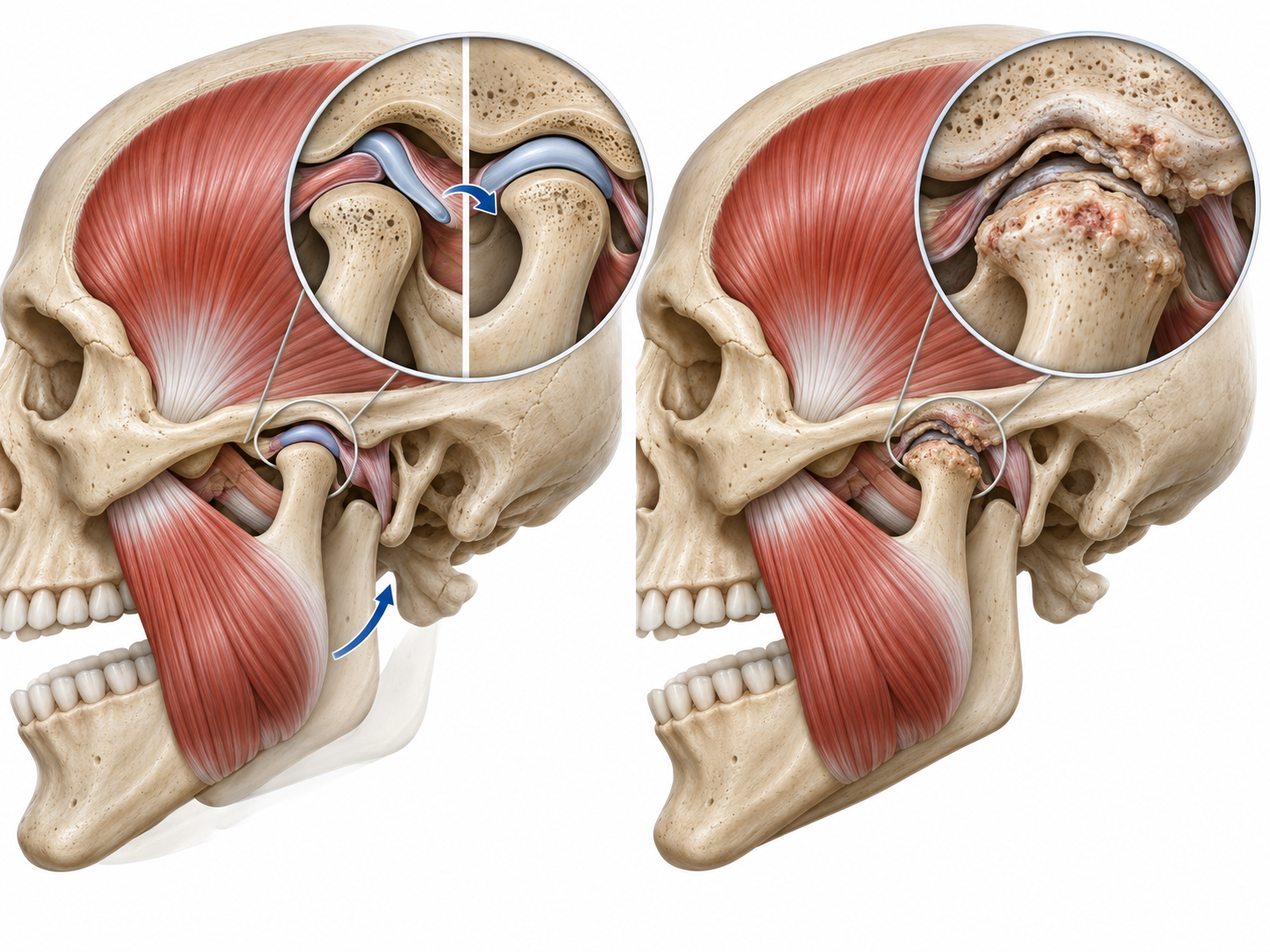
A clicking sound and a friction sound that feels like grinding sand may have different underlying causes.
| Category | Clicking sound | Sandy, grinding sound |
|---|---|---|
| Name | Click | Crepitus |
| Possible link | Disc movement | Changes in the joint surfaces |
| What to assess | Pain and movement | Pain and joint condition |
A sandy sound does not necessarily mean you have arthritis. For both sounds, the condition is assessed through examination and, if needed, imaging tests.
4. What should I do if the jaw sound comes with pain or I cannot open my mouth?
If the jaw sound comes with pain, limited mouth opening, or jaw locking, the cause should be checked through an examination.
Pay particular attention to the following changes.
- Pain that keeps returning in the jaw or in front of the ear
- Your mouth does not open as well as before
- A catching or locking feeling in the jaw
- Discomfort moving your jaw when chewing or speaking
If a clicking sound you used to have disappears and your mouth also does not open well, the movement of the disc may have changed. Do not assume it has improved just because the sound is gone.
If your jaw suddenly locks and you have severe pain or difficulty eating or speaking, prompt evaluation is needed. Jaw joint problems can be evaluated at a dental clinic that provides related care, such as oral medicine or oral and maxillofacial surgery.
5. How is jaw joint clicking treated? Do I need physical therapy or a splint?
Rather than the jaw sound itself, we check for pain and functional limitation and, if needed, start with conservative treatment.
| Treatment | Main role |
|---|---|
| Lifestyle management | Reducing strain on the jaw |
| Exercise and physical therapy | Managing movement and muscle function |
| Medication | Pain management when needed |
| Splint | Considered depending on the condition |
A splint or Botox does not necessarily make jaw sounds go away. In particular, research on whether Botox improves TMJ pain has shown inconsistent results.
Related dental article: Does Botox Help TMJ Pain? Choosing Treatment Based on the Cause of Pain
6. How should I care for my jaw at home when it makes sounds?
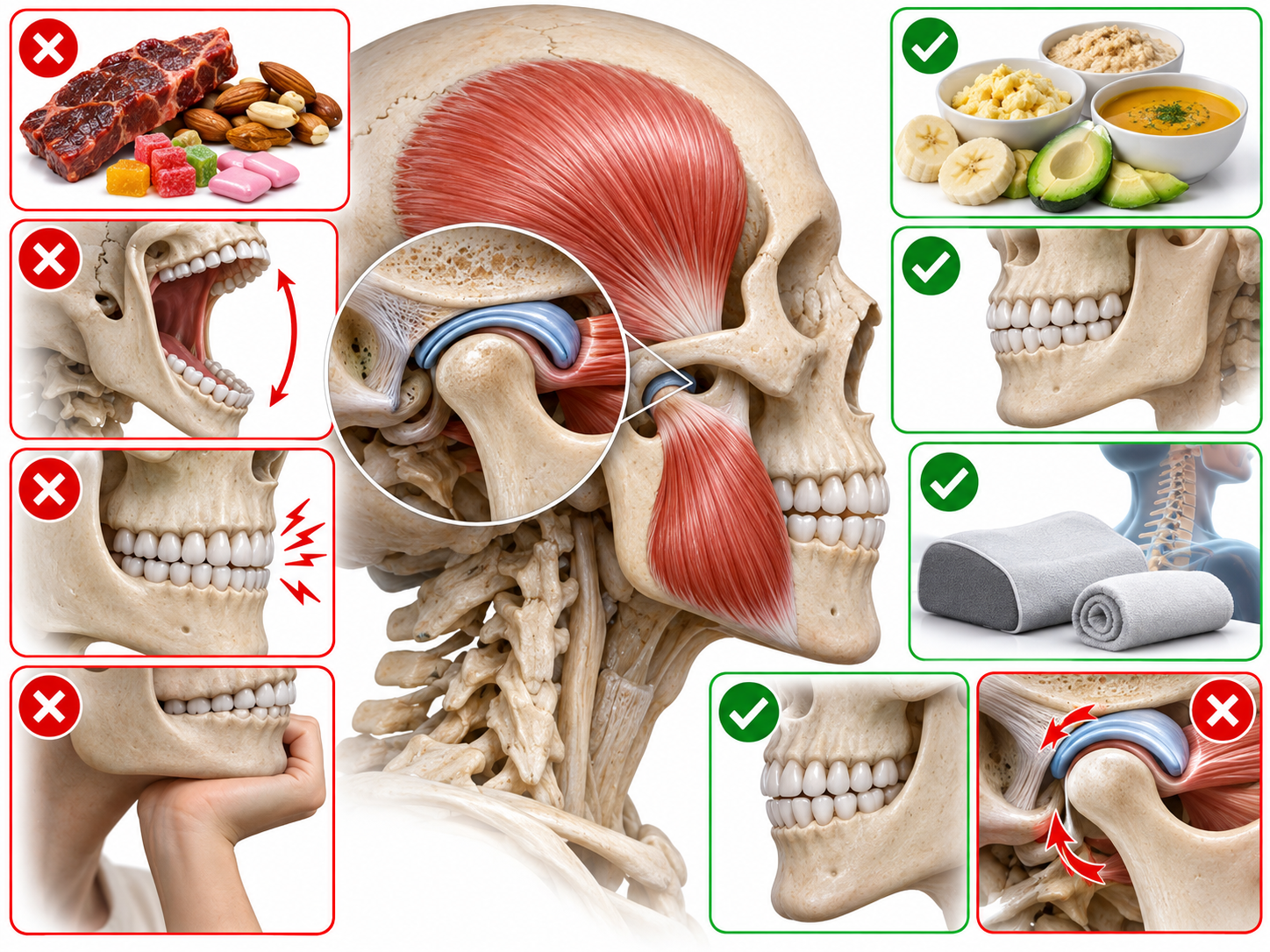
Rather than forcing your jaw to move, it is better to start by reducing habits that strain it.
- Cut down on chewy foods and gum
- Do not open your mouth too wide when yawning
- Reduce clenching and resting your chin on your hand
- Do not make the clicking sound on purpose over and over
The right way to stretch or massage depends on your condition. If you have pain or jaw locking, avoid forcing your mouth open or trying to put your jaw back in place yourself.
In closing
Not every clicking jaw needs treatment.
What matters more is whether the sound comes with pain or discomfort in moving your jaw. The care you need also depends on the condition of the jaw joint and the surrounding muscles.
This has been Park Ji-ho, a board-certified oral and maxillofacial surgeon at Yonsei Gunho Dental Clinic in Jamsil.