
If you have dental implant surgery coming up, you are probably worried about how much it will hurt, whether the surgery will take long, and when the swelling will go down.
Hello. I am Dr. Park Ji-ho, a board-certified oral and maxillofacial surgeon at Yonsei Gunho Dental Clinic in Jamsilsaenae.
What I feel when meeting patients is that the reason implants are hard to accept is not simply the pain. There is the worry that it will hurt, the fear of surgery, and the sense of loss at having lost one's own tooth, all together.
During dental implant surgery, pain is controlled with local anesthesia, and pain and swelling after surgery are reactions that can appear during the recovery process. How uncomfortable it is and when it subsides depend on the extent of the surgery and your individual condition.
1. Is dental implant surgery very painful?
During surgery, pain is controlled with local anesthesia. However, even when the pain is reduced, you may still feel pressure and vibration from the instruments.
Once the anesthesia has fully taken effect, what you notice is often a sensation of pressure on the gums or transmitted vibration rather than sharp pain. If you feel pain during surgery, please do not endure it; let us know. That way we can recheck the anesthesia and take the necessary steps.
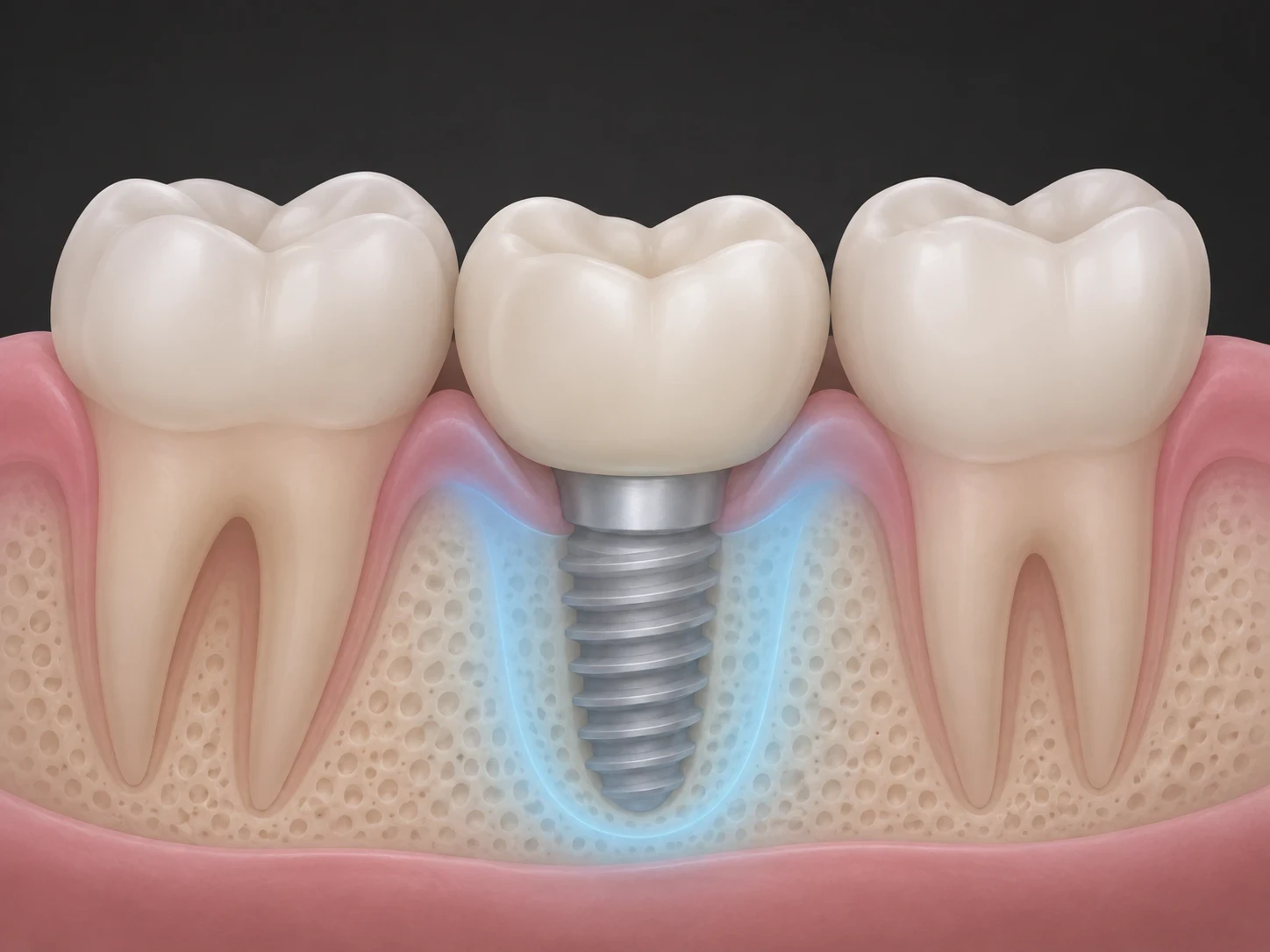
What I actually notice in practice is that, once the anesthesia has taken effect, many people are more afraid of the surgery itself than troubled by the pain.
Of course, pain after surgery is a separate matter. When the anesthesia wears off, you may feel soreness or throbbing.
The discomfort at this stage is influenced by factors such as the extent of the surgery and the degree of tissue damage, how the tissues are handled during the procedure, and the surgeon's skill.
That is why I thoroughly check the necessary extent before surgery. My principle is not to make every surgery as small as possible no matter what, but to perform the treatment that is needed without unnecessarily widening the surgical area.
2. What does dental implant surgery time depend on?
Dental implant surgery time is not determined only by the number of implants placed. It varies with the bone condition, whether additional procedures are needed, and how the gums are opened.
If you think only about placing the implant, it may seem simple, but in reality the surrounding bone and the position of the nerves must be taken into account.
| Factor | Why it affects surgery time |
|---|---|
| Number of implants placed | The procedure differs depending on placement position and number |
| Extraction performed at the same time | Condition of the extraction site and whether additional treatment is needed |
| Bone graft / sinus surgery | Additional surgical steps are required |
| Incision vs. flapless approach | Different approaches suited to the gum and bone condition |
| Use of a surgical guide | Differences between advance position planning and the actual surgical method |
Before surgery, I use CT to check the width and height of the bone and its distance from the nerve canal and the maxillary sinus. When needed, I also use a surgical guide made in-house.
Using a flapless approach or a guide does not mean every surgery will finish faster. The surgical method should be chosen to match the current bone and gum condition.
If a bone graft is needed, the recovery process may also differ. This is explained separately on the Implant Bone Graft page.
3. When are pain and swelling worst after dental implant surgery?
Pain and swelling usually appear or increase in the early stage of recovery after surgery and then gradually subside. However, the point at which pain and swelling are worst can vary, and the speed of recovery also differs from person to person.
The recovery process is easier to understand when divided into stages.
Stage 1. Right after surgery
As the anesthesia wears off, soreness or throbbing may develop. A little blood mixed in your saliva or discomfort at the surgical site are also reactions that can appear early on.
Stage 2. Early recovery
Swelling around the gums and cheeks may increase. Bruising may appear, or opening your mouth may be uncomfortable.
If a bone graft was done at the same time or the surgical area was large, the pattern of recovery may differ.
Stage 3. When the swelling subsides
In general, pain and swelling gradually decrease. However, the fact that the visible swelling has gone down does not mean that the healing of the inner gums and bone is complete.
Stage 4. When a check is needed
If pain or swelling that had been decreasing gets worse again, or if fever, pus, or persistent bleeding appears, you should let the dental clinic know.
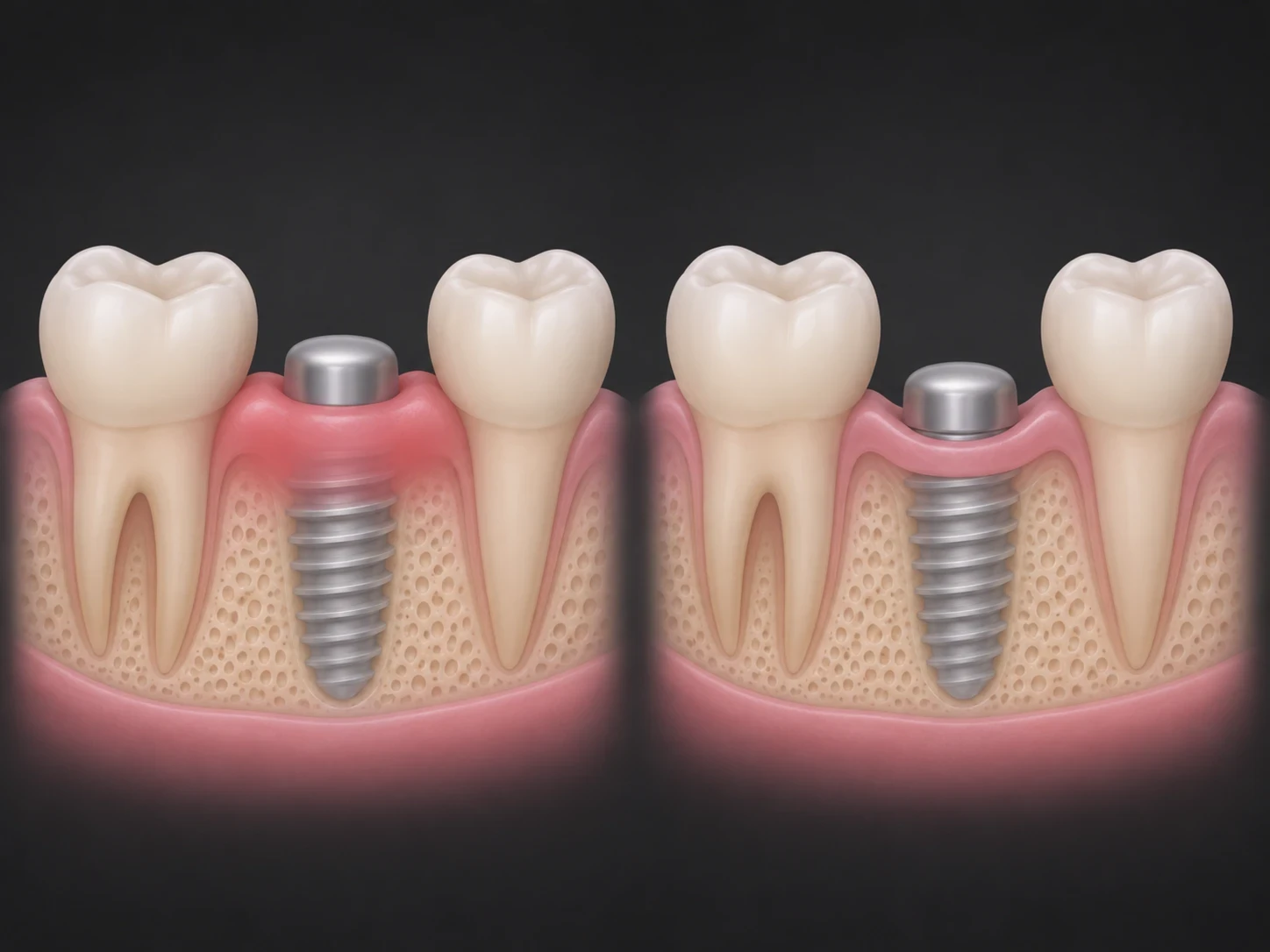
I consider it important to check the patient's condition the day after implant surgery.
This is to see whether the swelling is within the expected range, whether the bleeding has stopped, and whether the mouth opens well.
If recovery is going well, I think it is also important to tell the patient directly, "It is healing well." For patients worried about discomfort after surgery, that confirmation itself is meaningful.
4. How can I reduce pain and swelling after dental implant surgery?
In the early stage of recovery, the basics are to avoid irritating the surgical site and to take your prescribed medication as directed. A cold compress and adjusting what you eat also help reduce discomfort.
After surgery, please keep the following in mind.
- Pain medication: Take your prescribed pain medication as instructed. Do not increase the dose on your own just because the pain is severe.
- Cold compress: In the early stage of recovery, wrap a cold pack in a cloth, hold it against the outside of your cheek, and take breaks in between.
- Meals: After the anesthesia wears off, start with soft, lukewarm foods. Avoid chewing on the surgical side and avoid hot or spicy foods.
- Straws and brushing: At first, avoid using straws and rinsing vigorously. Brush your other teeth gently without rubbing the surgical site directly.
- Alcohol and smoking: Avoid them in the early stage of recovery, and before and after stitch removal follow the no-drinking and no-smoking instructions suited to the condition of the wound.
- Hard foods: Take care that chewing force is not concentrated on the healing cap that sticks out above the gums.
Alcohol and smoking in particular are points I emphasize.
In the early stage after surgery, the body needs to focus on healing the wound. Drinking and smoking work against the normal healing process and can make it harder for the wound to heal or raise the likelihood of inflammation problems.
You should also avoid chewing hard foods on the implant healing cap that sticks out of the gums. If excessive force is transmitted, it can interfere with the process of the implant bonding to the bone.
5. When are implant stitches removed and when is second-stage surgery done?
Stitches are removed based on how well the gum wound has healed. Second-stage surgery is the process of exposing the connecting component above the gums after the implant has bonded to the bone, and it is not needed for every patient.
When the stitches are removed after dental implant surgery depends on the condition of the gums and the type of suture material.
Having the stitches removed does not mean the implant has fully attached to the bone. This is because the healing of the gums and the bonding of the bone to the implant are separate processes.
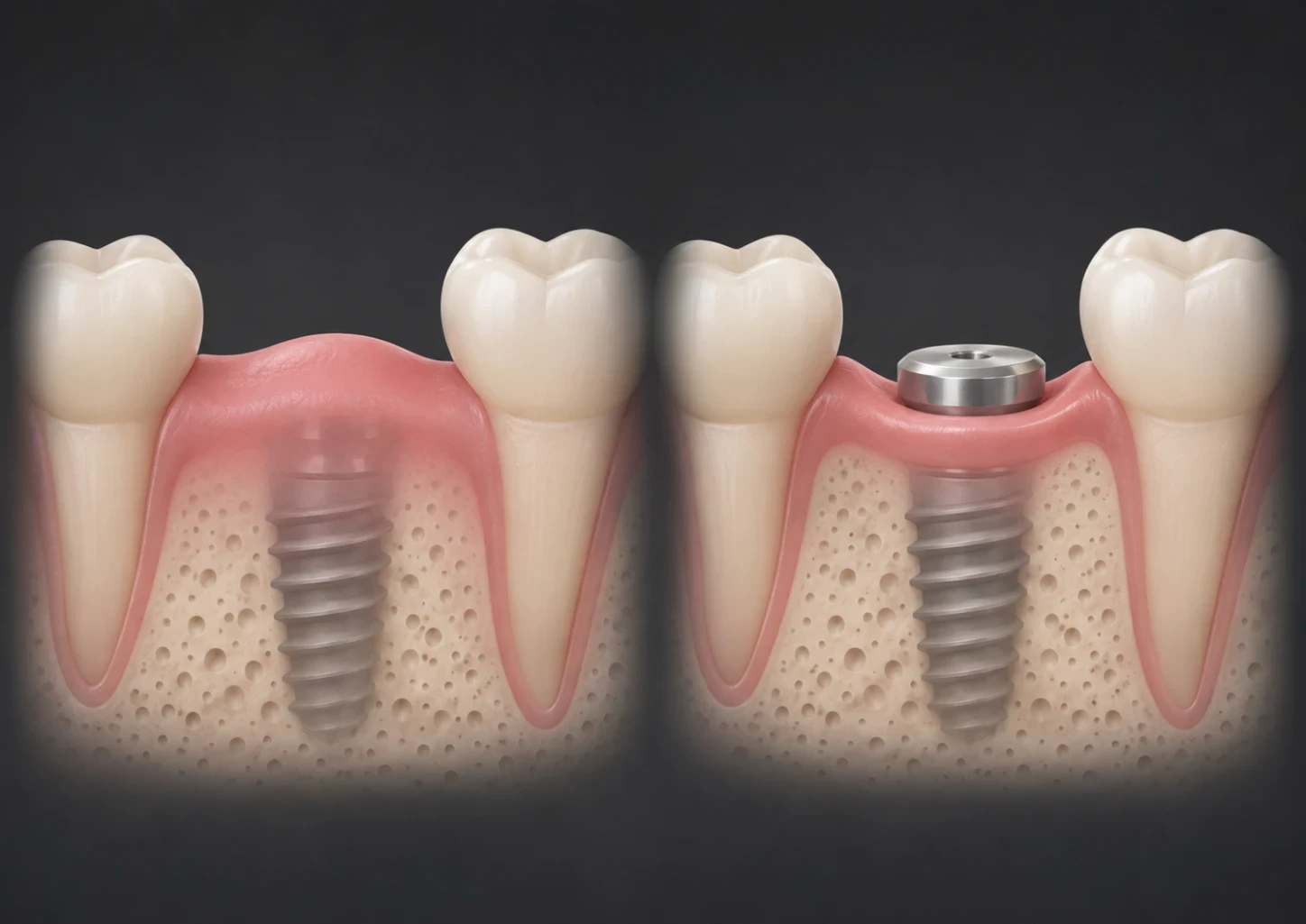
Depending on the surgical method, a healing cap may be connected above the gums from the start.
Alternatively, the implant may be left covered beneath the gums, and after confirming that it has bonded to the bone, the gums are opened and a healing cap is connected. This is dental implant second-stage surgery.
Before surgery, I decide which approach to take by considering the bone condition and the primary stability of the implant.
The process from implant placement to connecting the final tooth is covered in detail in Implant Treatment Process.
6. What if I am worried about implant pain and afraid of the dentist?
If you are afraid of surgery, it helps to understand in advance the anesthesia method and the sensations you may feel during surgery. Besides local anesthesia, there is conscious sedation to help manage anxiety, but whether it is used must be decided based on the patient's condition.
Some people are afraid of the anesthetic injection itself.
In such cases, a topical anesthetic gel that reduces sensation on the gum surface can be used, or a computer-controlled anesthetic delivery device that controls the injection speed of the anesthetic can be used to help reduce the stimulation of the injection.
When needed, the location and method of delivering the anesthetic may also be changed, as with intraosseous anesthesia.
At our clinic, too, we use topical anesthetic, an anesthetic delivery device that controls injection speed, an intraosseous anesthesia device, and other options depending on the patient's condition.
If your fear of the dentist is strong, conscious sedation may be considered.
However, conscious sedation is a method for easing anxiety, not a replacement for local anesthesia. It requires an assessment of your condition before the procedure and monitoring of vital signs such as breathing and oxygen saturation during sedation.
Yonsei Gunho Dental Clinic has a separate operating room and intraoperative monitoring equipment, and during conscious sedation we also observe the patient's condition and use oxygen supply equipment as needed.
You can find the specific methods and precautions in Conscious Sedation and When the Dentist Feels Too Scary.
I always begin by telling patients that an implant is clearly a surgery.
I believe things that can follow surgery, such as pain, swelling, and bruising, should be explained in advance. Knowing what reactions to expect can make the discomfort after surgery feel a little less overwhelming.
In Closing
With dental implant surgery, fear can sometimes feel bigger than the pain. Knowing in advance what sensations you may feel during surgery and what changes during recovery can help reduce vague fears.
I think first about the treatment that should be done rather than the treatment that can be done, and I try to perform surgery only to the extent that is necessary. I also consider checking the swelling, bleeding, and mouth opening the day after surgery to be part of post-operative care.
This was Dr. Park Ji-ho, board-certified oral and maxillofacial surgeon at Yonsei Gunho Dental Clinic in Jamsilsaenae.