
When you lose a front tooth, the gap that shows when you smile and the sense of loss at no longer having your own tooth can weigh on you even more than the inconvenience of chewing.
Hello. I am Dr. Kim Kunmin, a board-certified prosthodontist at Yonsei Gunho Dental Clinic in Jamsilsaenae.
A front tooth implant does not end with placing a screw in the bone. You need to think ahead about what kind of tooth will be placed on it later, how the gum shape will be created, and how a temporary tooth will be used during treatment.
As a prosthodontist, I would like to explain what I check first when planning a front tooth implant.
1. How Is a Front Tooth Implant Different from a Molar Implant?
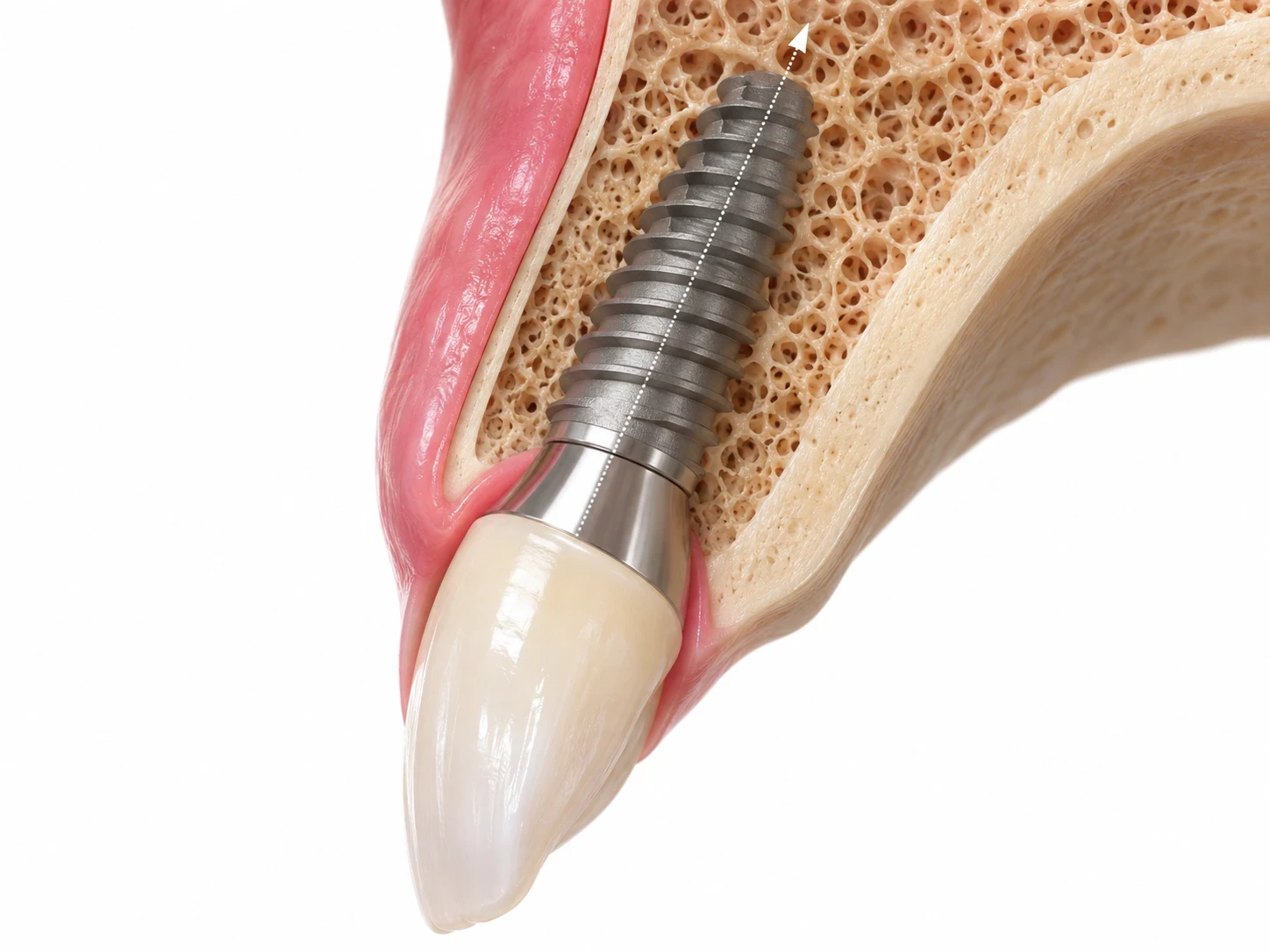
A front tooth implant requires looking not only at chewing function but also at the tooth's position and angle, the gum line, and its harmony with the neighboring teeth. In particular, the buccal (outer) bone of the front teeth is often thin, so the implant position must be chosen carefully.
I believe that no matter how far implants advance, they cannot fully replace a natural tooth.
So if a tooth can be saved, I first look at ways to save it. If the tooth root can be maintained, a Front Tooth Crown can also be considered.
Conversely, if extraction is necessary, I plan the implant with the original front tooth's position, angle, and height in mind as much as possible. The size and shape of the tooth that will go on top must be considered as well.
There is something I always emphasize here.
Where the implant is placed determines how it can be restored later.
At Yonsei Gunho Dental Clinic, oral and maxillofacial surgeon Dr. Park Ji-ho and I review the panoramic X-ray, CBCT, and intraoral scan data together.
We first design the position of the final tooth on the computer, then determine where to place the implant accordingly. When needed, we also fabricate a surgical guide with our in-house 3D printer.
For front teeth, surgery and restoration are hard to think about separately.
2. Can an Implant Be Placed on the Same Day a Front Tooth Is Extracted?
"Immediate implant placement," placing the implant on the day of extraction, is possible if the conditions are right. However, placing it as quickly as possible is not always an advantage.
Teeth that need extraction sometimes have inflammation around them or damaged bone.
In such cases, we consider grafting bone where needed after extraction to preserve the shape of the bone, and placing the implant once the gums have healed to some degree.
When deciding on the timing of surgery, oral and maxillofacial surgeon Dr. Park Ji-ho tends to judge carefully, considering whether it is a method he would also recommend to his own family.
Front teeth, however, are a little different.
If a tooth has been broken in an accident, or if there is little inflammation and the buccal bone wall is well preserved, immediate implant placement can be considered.
This is because the shape of the gum bone and gums changes over time after extraction.
The main conditions examined in making this decision are as follows.
- How well the buccal (outer) bone is preserved
- The location and extent of the inflammation
- Whether primary stability can be achieved when the implant is placed
- The thickness and shape of the surrounding gums
Even for a tooth whose root canal treatment has failed, immediate placement can be considered if the inflammation can be controlled and the surrounding bone conditions are suitable.
If immediate placement is chosen, infected tissue and tissue damaged by inflammation must be thoroughly removed. However, excessive removal of healthy bone should be avoided.
If bone is insufficient, you can also look into why an Implant Bone Graft may be needed.
Meanwhile, a natural tooth knocked out in an accident calls for a different emergency decision than an implant. In that case, please refer to When a Tooth Is Knocked Out.
Neither extracting and placing right away without careful thought, nor extracting and waiting a long time without careful thought, is a good idea.
3. How Are Temporary Teeth Used During Front Tooth Implant Treatment?
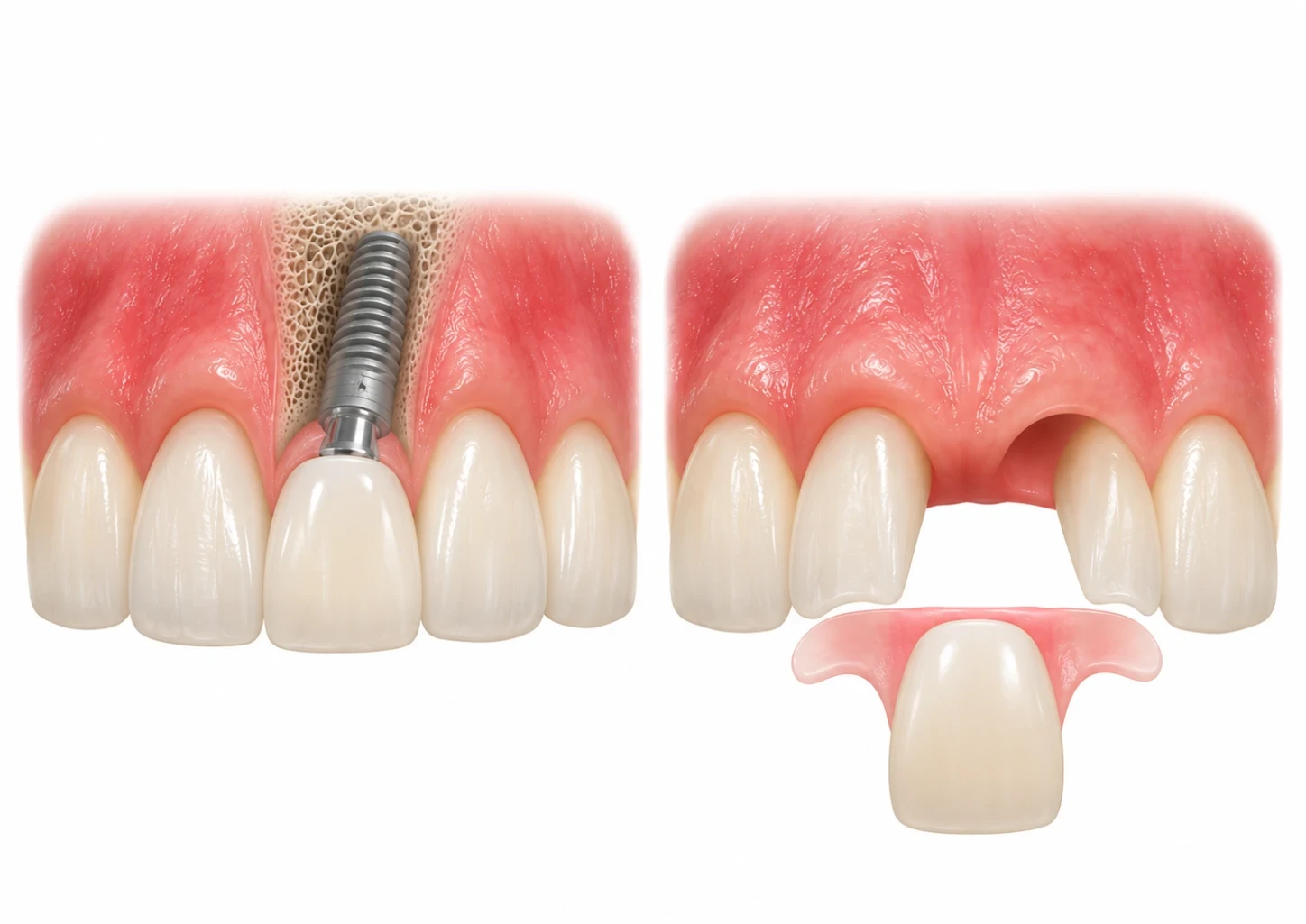
Getting a front tooth implant does not necessarily mean going without a tooth. There are several ways to use a temporary tooth, and the choice depends on the implant's stability and the gum conditions.
The main types of temporary teeth are as follows.
- Implant-supported provisional: Considered when primary stability is sufficient, and it can be adjusted so that chewing forces are not transmitted directly.
- Provisional bonded to the neighboring teeth: When it is difficult to put force on the implant, the surrounding teeth are used to temporarily maintain the shape of the tooth.
- Removable temporary tooth (flipper): A removable appliance covers the gap, and it needs to be adjusted so that it does not press on the gums.
There is one more thing I would like to mention here.
A front temporary tooth does more than just cover the gap.
In some cases, the shape of the part of the temporary tooth that emerges from the gums is adjusted to help create the gum contour where the final restoration will sit.
When I look at a temporary tooth, I do not simply check whether it looks like a front tooth is there. I also think about the length and width of the final tooth and the area where it meets the gums.
However, caution is needed if a temporary tooth is connected right after the implant is placed.
Until the implant has integrated with the bone, you should not bite into hard foods with your front teeth. Excessive force can cause problems with primary stability.
Even if a healing abutment that is exposed above the gums is connected to the implant instead of a temporary tooth, you should avoid chewing hard on that area.
Smoking can have a negative effect on wound healing and the tissues around the implant. We also advise avoiding alcohol during recovery.
4. Why Do Gums Recede or Show a Dark Tint After a Front Tooth Implant?
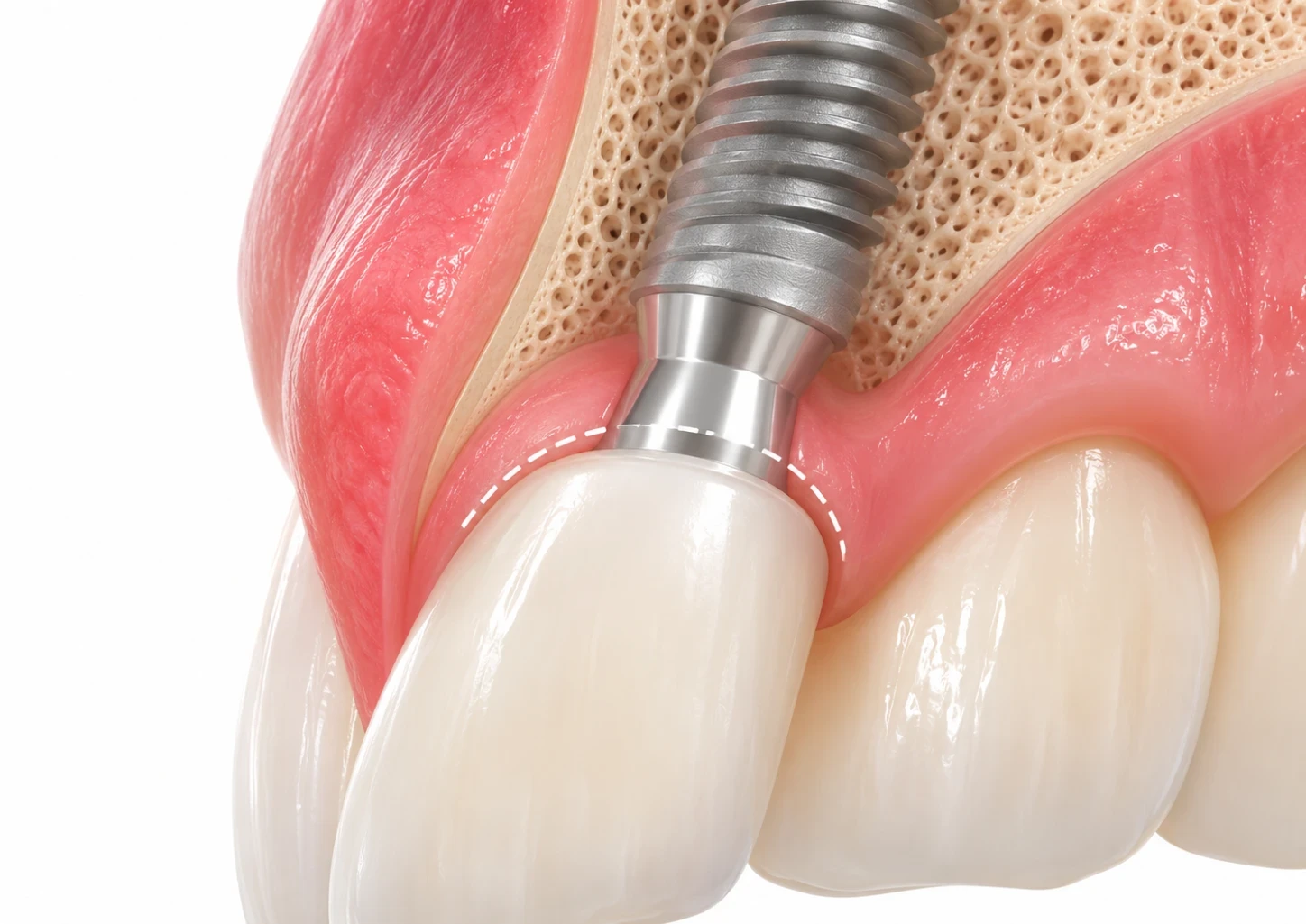
The gums around a front tooth implant can vary depending on the thickness of the bone and gums, where the implant is placed, and the shape of the restoration. If the gums are thin, the metal color inside may show through, or the gum line may change over time.
For front teeth, the depth at which the implant is placed must also be decided carefully.
If it is placed too shallow, the restoration connection may be exposed or the metal color may show through. Conversely, if it is placed too deep, the restoration connection structure and gum care can become difficult.
This is something oral and maxillofacial surgeon Dr. Park Ji-ho and I review together.
On the surgical side, he looks at bone thickness and placement position, while I think about how the final restoration will meet the gums.
When needed, a gum (soft-tissue) graft or bone graft may be considered. The color and material of the abutment, the connecting component beneath the restoration, and the shape of the part that passes through the gums can also have an effect.
However, even with these steps, not every change in the gums can be prevented.
Also, an implant may not feel loose at first even when the surrounding bone decreases. That is why the surrounding bone and gums are checked regularly even when there is no pain or looseness.
If your gum line has already receded, it is also helpful to understand the causes and treatment options for Gum Recession.
5. How Are the Color and Shape of a Front Tooth Implant Matched to the Neighboring Teeth?
A front tooth restoration is not simply made white; the color, size, and shape of the neighboring teeth must be examined together. Front teeth in particular can look different even in how much light passes through them and in fine surface details.
When I make a front tooth restoration, I mainly look at the tooth's color, shape, and bite.
To check the color, I use a professional DSLR camera and a polarizing filter.
A polarizing filter reduces reflection from the tooth surface, which helps record the internal color. Because teeth can look brighter and more opaque than usual when they dry, I tend to check the color before the teeth dry out.
Then I record the shape of the teeth and gums with a 3Shape TRIOS 5 intraoral scanner and examine the space for the restoration and its relationship with the surrounding teeth.
If conditions allow a temporary tooth to be used, we also check the length, width, and the shape where it meets the gums before the final restoration.
My goal is not to make the new tooth look pretty at all costs.
It is to follow the crown size and shape of the front tooth that was originally there as closely as possible, while making it harmonize with the neighboring teeth.
Of course, it is difficult to fully reproduce the unique translucency and color variations of a natural tooth. What can be expressed also varies depending on the condition of the gums and the restoration material.
That is why I try to explain from the start which parts are achievable and which are difficult.
6. If One Front Tooth Is Missing, Should I Choose an Implant or a Bridge?
Losing one front tooth does not mean you must choose an implant. Depending on whether the teeth on both sides are healthy, whether there is enough gum bone, and whether there are existing restorations, a bridge may be more suitable.
The two treatments differ starting with how they support the tooth.
| Criteria | Front Tooth Implant | Front Tooth Bridge |
|---|---|---|
| Neighboring teeth | Generally not reduced | A conventional bridge requires reducing the supporting teeth |
| Bone and gums | Depends on the bone and gum condition at the placement site | Considers the supporting teeth and the gum shape at the missing site |
| Treatment method | Surgical placement and restoration process | Connected using the neighboring teeth as supports |
| Selection criteria | Preserving neighboring teeth, placement conditions | Existing restorations, suitability for surgery, condition of the supporting teeth |
Unlike a conventional bridge, a resin-bonded (adhesive) bridge can sometimes be applied with less or no reduction of the neighboring teeth, but the bonding conditions and bite force must also be considered.
If the teeth on both sides are intact, I first consider approaches that avoid unnecessary reduction.
Conversely, if the neighboring teeth already have crowns, or if the bone and gum conditions for placing an implant are unfavorable, there is reason to consider a bridge.
Oral and maxillofacial surgeon Dr. Park Ji-ho also takes into account that, in a highly visible area like the front teeth, a treatment other than an implant may be more appropriate.
The cost of a front tooth implant varies depending on the implant and restoration materials used, whether a bone graft is needed, and the process of planning the position and performing the surgery.
The overall treatment sequence and the factors that determine cost are explained separately in Implant Treatment Process and Costs.
In Closing
Because an implant replaces a natural tooth, I want to make it resemble the original tooth's position and shape as closely as possible.
To do that, the surgical plan from oral and maxillofacial surgery and the final tooth plan from prosthodontics need to come together from the very beginning.
This has been Dr. Kim Kunmin, board-certified prosthodontist at Yonsei Gunho Dental Clinic in Jamsilsaenae.