
Some people feel self-conscious because only the tooth next to the front tooth looks unusually small every time they smile, yet hesitate to get treatment for fear of having to trim a healthy tooth.
Hello. I am Dr. Kim Kunmin, board-certified prosthodontist at Yonsei Gunho Dental Clinic in Jamsilsaenae.
Microdontia is not a condition that must be treated. However, if you want to change the tooth's shape, the first step is to look at whether composite resin or laminate veneers is more suitable, and how much of the original tooth can be preserved.
1. What is microdontia, and why does the lateral incisor grow small?
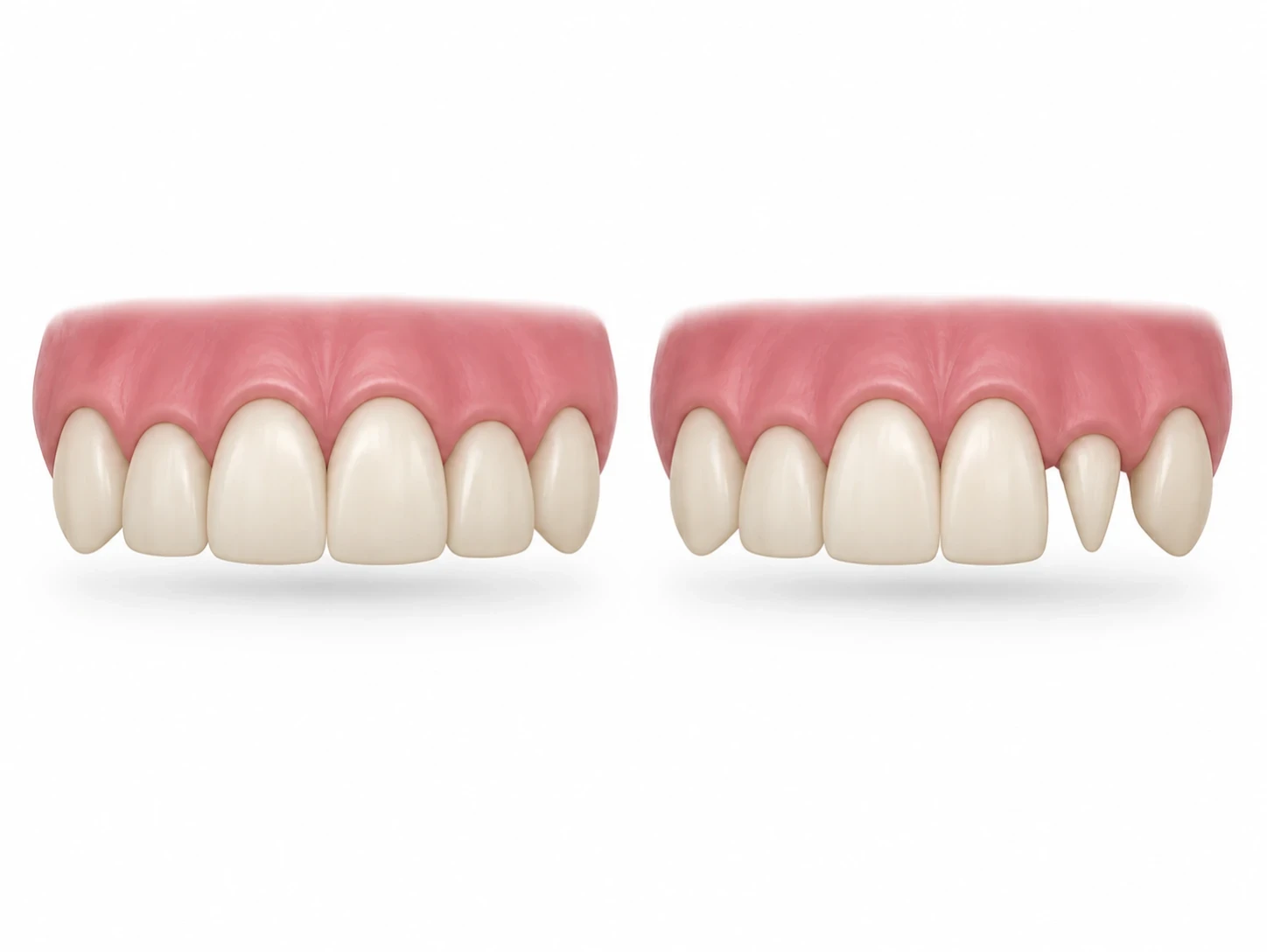
Microdontia refers to a tooth that has formed smaller than the surrounding teeth. It is especially common in the lateral incisor, the upper tooth right next to the central front tooth.
Microdontia is a developmental anomaly that appears while the tooth is forming. It is also associated with genetic factors, and the tooth sometimes narrows toward the tip into a pointed, peg-like shape. This is called a peg-shaped lateral incisor.
Occasionally, people with microdontia are also congenitally missing the lateral incisor on the opposite side or other teeth. Whether any teeth are missing is checked with X-rays.
The point to remember here is that microdontia is not a tooth that became small because of cavities, but a tooth that formed small from the start.
That is why, when I look at microdontia, I do not just look at size; I first examine where the tooth sits and the space around it.
2. Will problems occur if microdontia is left alone?
Having microdontia does not mean treatment is necessary. If there are no problems with chewing and the teeth are well cared for, keeping the current state is also an option.
However, a small tooth can make the space next to the neighboring tooth look open. Food may get caught in that gap or brushing may become difficult, and in some cases it affects the way the upper and lower teeth meet.
Even without functional discomfort, if the shape of the tooth keeps bothering you when you smile, cosmetic improvement can be considered.
In such cases, I do not start by deciding on treatment to make the tooth bigger. I first distinguish whether what actually bothers you is the size, the shape, or the gap between the teeth.
If the gap is more of a concern than the small tooth itself, there is also the option of reducing the space with composite resin. You can find related information on the Bioclear page.
3. Microdontia: should you choose resin, laminate veneers, or a crown?
I do not choose laminate veneers or a crown simply because a tooth is small. The suitable method depends on the tooth's condition, the change you want, the space relative to the surrounding teeth, and the bite.
| Method | Tooth trimming | Characteristics | Suitable cases |
|---|---|---|---|
| Composite resin | Can be done with no or almost no trimming | Shaped directly in the dental chair; repairs may be needed if it discolors or chips | Small size or localized shape changes |
| Laminate veneer | Minimal trimming, or no-prep depending on conditions | Adjusts color, shape, and size together; requires bonding and bite evaluation | When improving both shape and color |
| Crown | Requires trimming around the entire tooth | A restoration that covers the whole tooth | Large cavities, existing restorations, weakened tooth structure, etc. |
| Orthodontic evaluation | Separate from trimming for restorations | Evaluates tooth position and space first | When alignment or space problems are significant |
Yonsei Gunho Dental Clinic does not provide orthodontic treatment.
There are things I always check before deciding on laminate veneers.
First, I distinguish whether the concern is the tooth's color or its shape. Next, I check whether there are cavities, previous restorations, or nerve problems inside the tooth.
I also check the gum line and how much gum shows when you smile. Finally, I look at teeth grinding habits and how the front teeth meet.
Even teeth that look similarly small on the outside can call for different treatment directions depending on these conditions.
There is no reason to recommend a crown to someone who only needs a little correction of tooth shape. Conversely, if the tooth itself has weakened, treatment that only changes the outer appearance may not be enough.
You can find the detailed differences between each treatment in Front Tooth Resin (Bonding) and Veneers vs Crowns.
4. Can laminate veneers really be placed on microdontia without trimming the tooth?
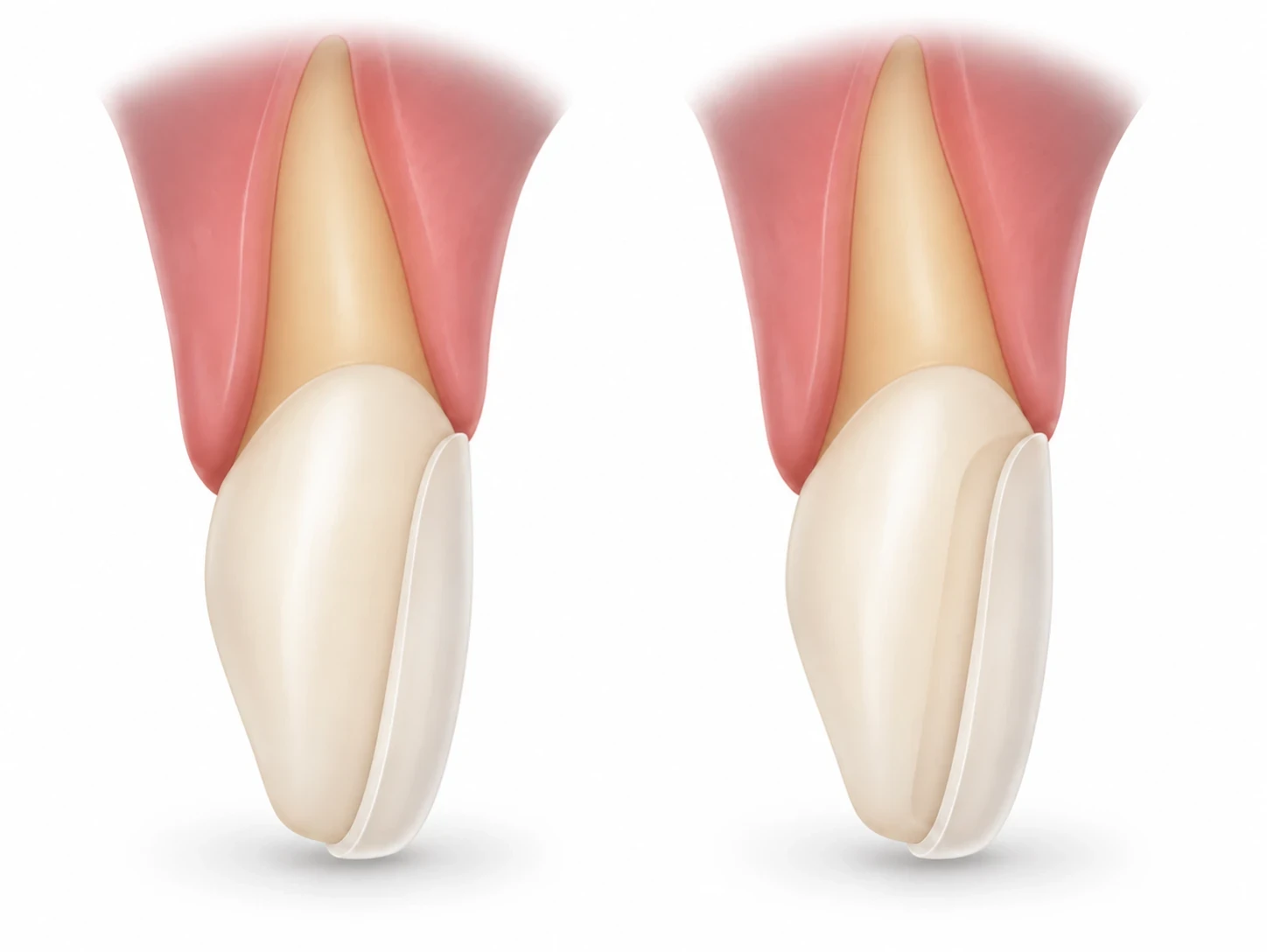
Because a microdontia tooth is small to begin with, a no-prep approach may be possible if there is enough space for the veneer. However, it is not possible for every case of microdontia, and not trimming the tooth does not necessarily mean a better result.
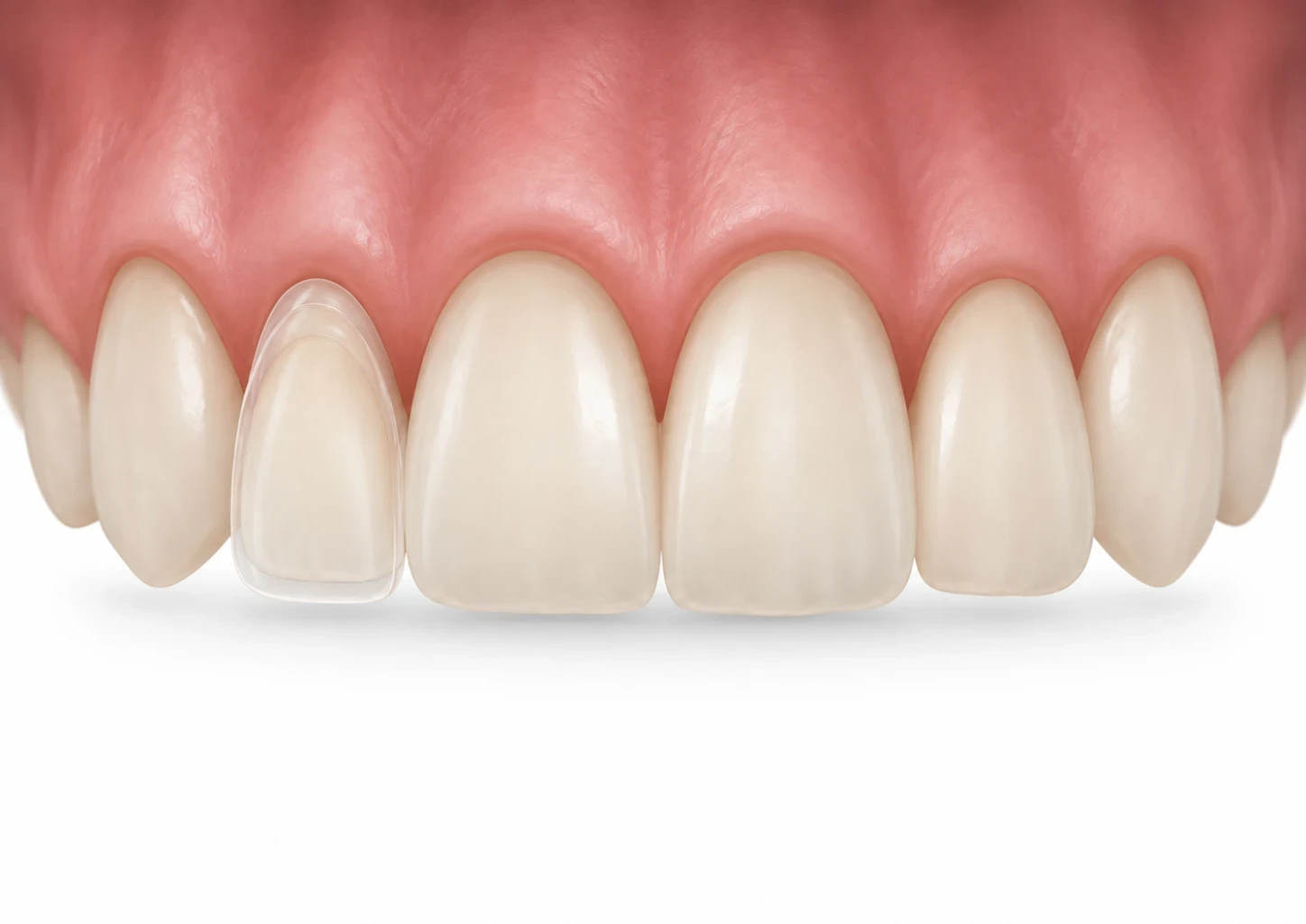
A laminate veneer is a treatment in which a thin restoration is bonded to the tooth surface.
If the original tooth is small, there may be room to add thickness where it is lacking and build the shape. Conversely, adding a restoration directly onto a tooth that is already an appropriate size can make it too thick.
In particular, if the margin where it meets the gum becomes thick, the shape may look unnatural or care may become difficult. It is also necessary to check whether the front teeth touch first and place strain on the restoration.
There is something I often say when explaining laminate veneers.
"If a part of the tooth does not need trimming, it should be left untouched. But if trimming is needed, it should be done."
I do not set the amount of trimming from the start. After creating the expected shape from photos and scans, I plan to trim only as much as that shape requires.
Focusing only on the word "no-prep" can cause you to overlook the thickness and gum margin of the finished tooth.
I have explained the structure and treatment process of laminate veneers in a bit more detail on the Laminate Veneers page.
5. How is it decided how much bigger to make a microdontia tooth?
With microdontia, the first step is not simply to make the tooth bigger but to find a size that harmonizes with the surrounding teeth. The proportions of the neighboring teeth, symmetry with the tooth on the opposite side, the gum line, and the bite must all be considered together.
When thinking about cosmetic tooth reshaping, you may want to copy a nice tooth shape you saw in a photo exactly.
But the front teeth are not seen on their own. The gums that show when you smile, the length of the teeth, and even the midline of the face are all seen together.
That is why I do not just describe the shape in words; we look at it together on screen.
Step 1. Checking the current tooth size and color
I examine the tooth's color and shape using a professional DSLR camera and a polarizing filter. I also check the size of the surrounding front teeth, the gum line, and symmetry with the tooth on the opposite side.
Step 2. Designing the expected tooth shape
I record the tooth's shape with an intraoral scanner and design the expected shape. If needed, a model is made with our in-house 3D printer to check the actual form.
Step 3. Checking the expected shape and the bite
When necessary, a temporary form is applied to the tooth to check its size and shape. At this stage, I also check whether any part touches first as the upper and lower front teeth move.
In fact, a shape that looks good on screen and a shape that meets comfortably in the actual mouth can differ.
I did Dr. Park Ji-ho's front-tooth laminate veneers myself. (Since he is a dentist I work with, I found myself paying even more attention to these details.)
There are also sensations you only learn by actually bonding the veneers. This includes adjusting the shade of the bonding cement to match the surrounding teeth, and finely trimming the areas that touch first as the front teeth move.
So when deciding how much to enlarge a tooth, I look not only at the shape but also at how comfortable it will be in actual use.
6. How should microdontia resin or laminate veneers be cared for to last a long time after treatment?
Both resin and laminate veneers can discolor, chip, or come off with use. To make them last, you need to understand the characteristics of the material and manage the forces repeatedly placed on the front teeth.
Over time, resin can develop staining at the boundary between the tooth and the material, or its surface can become rough. In such cases, depending on the condition, the surface may be maintained with polishing or partially repaired.
Since a laminate veneer is a thin restoration bonded to the tooth, you should be careful with habits such as biting through hard foods with your front teeth or applying excessive force.
There is one point I emphasize here.
The real reason laminate veneers break may lie less in the front teeth themselves than in the forces placed on them.
I also grind my teeth quite a lot. So when I look at other people's teeth, signs of wear are often the first thing I notice.
If the front teeth are worn down or there is a clenching habit, the possibility of repeated force on the restoration needs to be examined.
Depending on need, a night guard for teeth grinding may be considered, and the restoration's margins and bite are checked at regular checkups.
You can find detailed information on the causes of teeth grinding and appliance treatment in Teeth Grinding Treatment.
In the end, how you use the tooth and with what force matters as much as its shape right after treatment.
In Closing
Microdontia is neither a tooth that must be treated nor one that necessarily requires laminate veneers. In some cases resin is sufficient, and in others both the color and shape of the tooth need to be changed.
I think in terms of treatment that conserves rather than treatment that does more. That is why I look at how much of the original tooth can be kept, and also how the restored tooth will be used.
This was Dr. Kim Kunmin, board-certified prosthodontist at Yonsei Gunho Dental Clinic in Jamsilsaenae.