
When parents reach their 70s or 80s, many adult children worry about whether they should get dental implants, and whether surgery might be too much of a burden at their age.
Hello. I am Dr. Park Ji-ho, a board-certified oral and maxillofacial surgeon at Yonsei Gunho Dental Clinic in Jamsilsaenae.
Whether dental implants are possible for older adults is not decided by age alone. General health, the condition of the alveolar bone (gum bone), and the ability to care for the implants after surgery must be considered together, and for those aged 65 or older, it is also worth checking the National Health Insurance coverage criteria.
What I notice in my practice is that what patients find hardest is not simply pain or fear. The sense of loss that comes with losing teeth they have used for so long, the feeling that "my own tooth is gone," is also considerable.
That is why, rather than thinking first about how many implants to place, I first consider how many of the remaining teeth can be preserved and which treatment will best suit the patient's life going forward.
1. Can You Get Dental Implants in Your 70s or 80s?
Dental implants can be considered in your 70s and 80s. There is no need to give up on surgery just because you are older, but being older does not mean that everyone can undergo surgery either.
There is no uniform upper age limit for implant surgery.
A 2026 literature review on dental implants in older adults also describes factors such as general health, alveolar bone condition, lifestyle habits, and oral care ability, rather than age itself, as influencing treatment outcomes.
In practice, when I assess implants for an older patient, I look at the following conditions together.
- How well systemic conditions such as diabetes or cardiovascular disease are being controlled
- Whether there is enough alveolar bone to support an implant
- Whether the medications being taken affect surgery and recovery
- Whether there is any difficulty keeping the mouth open and holding the position for surgery
- Whether the patient can brush and care for the implants on their own after treatment
The last item in particular should not be taken lightly.
Unlike natural teeth, implants have no periodontal ligament, and inflammation can develop if food debris or plaque builds up around them. For people whose hand movement is limited or who find oral care difficult, help from a caregiver also needs to be considered.
In the end, what matters is not the age on one's ID card but one's current physical condition and the environment for caring for the implants in the years ahead.
2. What Should Be Checked First Before a Parent's Implant Treatment?
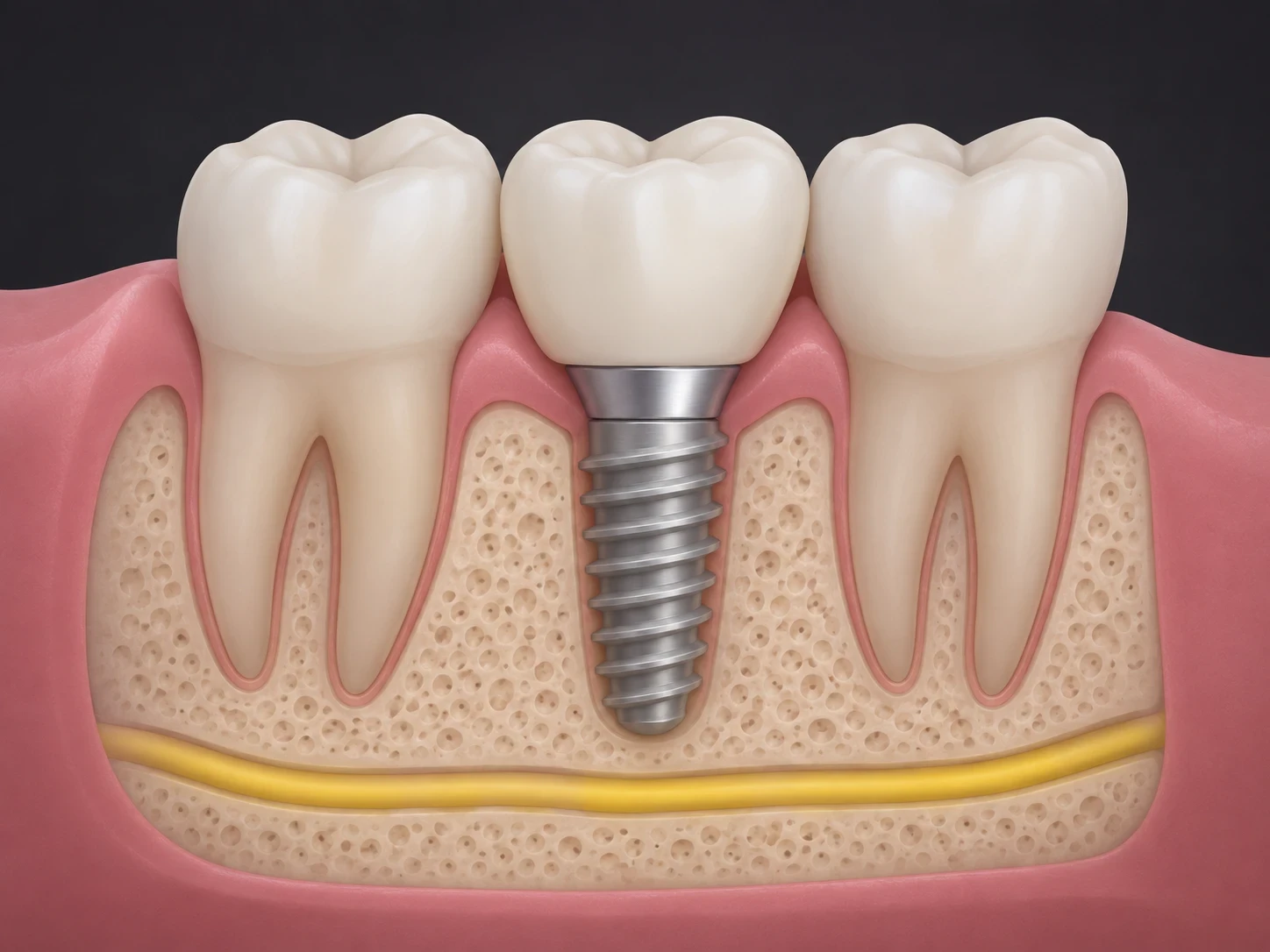
When planning implants for a parent, we start by checking the alveolar bone and the position of the nerve with CT. On top of that, systemic conditions, medications, remaining teeth, and ability to manage daily life must also be reviewed.
There are four main things I check before surgery.
Step 1. Checking the alveolar bone and nerve position with CT
At Yonsei Gunho Dental Clinic, we use CT to examine the width and height of the alveolar bone and its distance from the inferior alveolar nerve canal.
A lack of bone does not automatically mean a bone graft. We first determine whether the remaining bone can be used as fully as possible.
Step 2. Checking systemic conditions and medications
If there is diabetes, cardiovascular disease, osteoporosis, or a similar condition, its current level of control and the medications being taken must be checked.
Particular caution is needed with medications that affect blood clotting, commonly called "blood thinners."
These days, rather than unconditionally stopping such medications, we assess both the bleeding risk and the risk of stopping the medication. For some patients taking anticoagulants, the treatment approach may be decided in coordination with the oral and maxillofacial surgery department of a university hospital.
Do not stop taking your medications on your own.
Considerations for each condition are covered in detail in Implants with Chronic Conditions and Medications.
Step 3. Checking the remaining natural teeth
Not every loose or damaged tooth has to be extracted.
After checking the gum condition, the tooth roots, and the remaining tooth structure, we look at whether the tooth can be preserved.
Step 4. Checking daily functioning and caregiver support
If hand movement is limited or it is hard to keep the mouth open for long, the treatment plan may also change.
It helps in understanding a parent's general health if the children organize a list of the medications their parent takes and their previous medical records.
When planning surgery, I often ask myself, "If it were my own father, in what order would I treat him?"
Even when an extraction is needed, rather than always placing an implant right away, I often consider preserving as much bone as possible during the extraction and placing the implant after the gums have healed.
3. From What Age and for How Many Implants Does National Health Insurance Coverage for Older Adults Apply?
As of November 2026, insured persons or dependents under National Health Insurance who are aged 65 or older and still have some natural teeth can receive National Health Insurance coverage for dental implants. The number of covered implants is two per person per lifetime, and the patient co-payment rate for regular National Health Insurance subscribers is 30%.
The main criteria provided by the National Health Insurance Service (NHIS) are as follows.
| Category | As of November 2026 |
|---|---|
| Eligible age | Age 65 or older |
| Eligible patients | Partially edentulous patients among insured persons and their dependents |
| Number covered | Two per person per lifetime |
| Eligible locations | Upper or lower jaw, front teeth or molars, no distinction |
| Standard co-payment rate | 30% |
| Medical Aid recipients and near-poverty households | Lower co-payment rate than regular National Health Insurance subscribers |
| Additional procedures such as bone grafts | Mostly not covered by insurance |
| Application procedure | Treatment after registration as an eligible patient at the dental clinic |
| Discontinued for medical reasons | If treatment is unavoidably discontinued based on the dentist's judgment, it does not count toward the lifetime limit |
The term "partially edentulous" may sound a little unfamiliar.
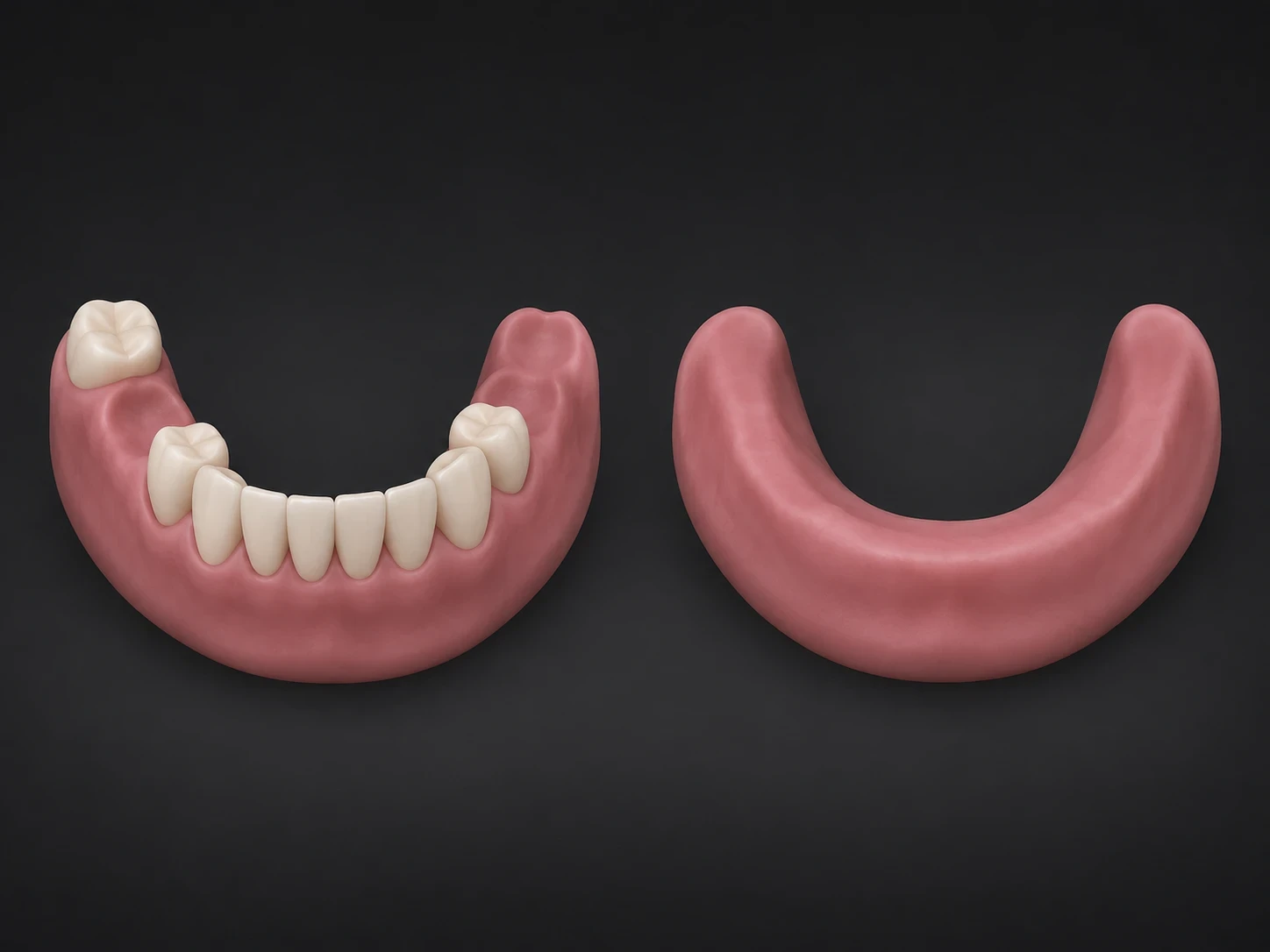
Simply put, it means some teeth have been lost but natural teeth still remain. As of November 2026, a completely edentulous state, with no teeth at all in the upper or lower jaw, is excluded from the existing implant coverage.
Also, National Health Insurance coverage does not mean that every treatment needed for an implant is covered.
Additional procedures such as bone grafts, and treatments that do not meet the coverage criteria, are classified separately. Eligibility for National Health Insurance is checked at the dental clinic during the registration step, and whether coverage actually applies depends on the treatment plan and the detailed criteria.
You can see the overall sequence of implant treatment in Implant Treatment Process and Costs.
4. Starting in 2027, Will National Health Insurance Cover Implants Even If You Have No Teeth Left?
In September 2026, the Health Insurance Policy Deliberation Committee approved an expansion of National Health Insurance implant support for completely edentulous older adults. It is scheduled to take effect in January 2027, but as of November 2026 it has not yet taken effect, so the detailed criteria in the final official ministry notice must be checked.
Under the existing system, it was difficult to receive National Health Insurance coverage for implants when there were no teeth at all in the upper or lower jaw.
The newly approved expansion plan broadens the scope of support to include these completely edentulous patients.
The main planned changes are as follows.
- Eligible patients: Completely edentulous patients aged 65 or older with no natural teeth at all in the upper or lower jaw
- Scope of support: National Health Insurance support planned for two implants
- Effective date: Planned for January 2027
- Previous complete denture coverage: If you received a complete denture through National Health Insurance, implant support is expected to be available only after 7 years have passed since that support
- Detailed conditions: The related official notice and final coverage criteria need to be checked
There is one point here that needs to be distinguished.
Support for two implants does not mean that every type of denture connected to the implants is also supported by National Health Insurance.
There are also reports that the "implant overdenture," a method in which a denture is attached to implants to improve retention, will remain not covered by insurance.
Therefore, coverage for implant placement and coverage for the denture connected on top of it should be considered separately.
Since the system has not yet taken effect, the specific conditions must be confirmed in the final official notice.
5. Which Is Right for My Parents: Implants or Dentures?
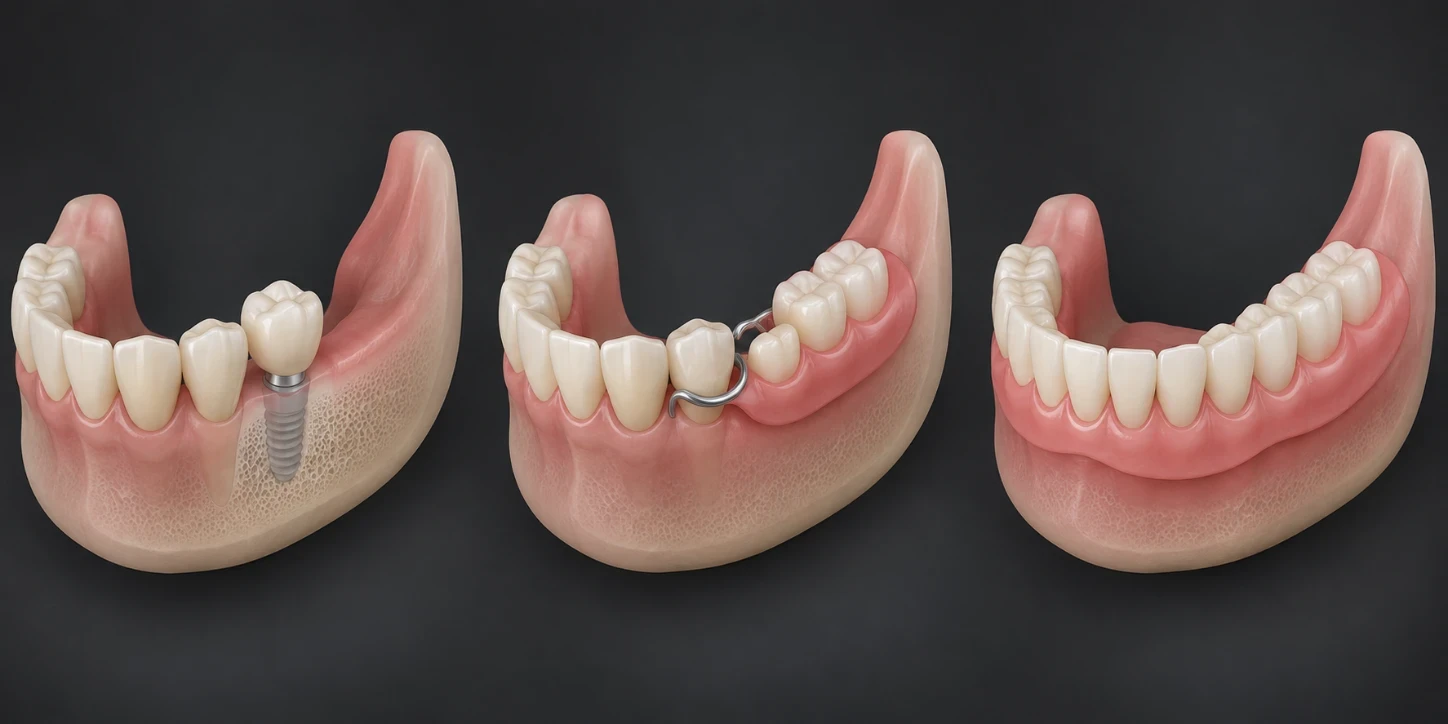
It is hard to say across the board whether implants or dentures are the better treatment. The choice should be made by looking at the number and position of the remaining natural teeth, the alveolar bone condition, general health, and care ability together.
For example, if some molars have been lost but the surrounding teeth and alveolar bone are in good condition, implants can be considered.
On the other hand, if many teeth have been lost or the burden of surgery is high, a removable partial denture or complete denture may be the more realistic choice.
Implants and a removable partial denture can also be used together. National Health Insurance criteria also allow coverage for both implants and a removable partial denture.
Dentures are also covered by National Health Insurance for older adults aged 65 or older as of November 2026, and in principle follow a coverage rule of once every 7 years. However, whether coverage actually applies depends on the type of denture and the condition of the mouth.
At Yonsei Gunho Dental Clinic, the oral and maxillofacial surgery team checks whether surgery is possible and the condition of the bone, and Dr. Kim Kunmin, a board-certified prosthodontist, considers the form of the final prosthesis, chewing force, and ease of care together.
Dr. Kim Kunmin says that no matter how much implants improve, they can never completely replace natural teeth.
I think the same way.
The basic principle is to first try to save natural teeth that can be saved, and to consider implants only for teeth that are difficult to keep.
You can find specific criteria for choosing between a removable partial denture and implants on the Partial Dentures or Implants page, and the types and structure of dentures on the Dentures page.
6. How Do Implant Surgery and Recovery in Older Adults Differ from Those in Younger People?
Being older does not mean that everyone recovers slowly. However, the recovery process and the burden of care after surgery can vary depending on systemic conditions, medications, and physical function, so the scope of treatment must be decided carefully.
For older patients in particular, we need to think not only about the surgery itself but also about eating after surgery, keeping the mouth clean, and checking for bleeding.
I approach it in the following order.
Step 1. Checking health status before surgery
We first check how well systemic conditions are controlled and which medications are being taken.
If there are concerns related to bleeding risk or systemic conditions, we adjust the treatment approach in cooperation with the relevant medical departments.
Step 2. Planning surgery only to the extent needed
Just because implants can be placed does not mean we automatically widen the scope of surgery.
If an extraction is needed, we preserve the surrounding bone as much as possible, and bone grafts are also planned only where needed and only as much as needed.
Treatments considered when bone is insufficient are explained in detail on the Implant Bone Graft page.
Step 3. Checking the condition the day after surgery
At Yonsei Gunho Dental Clinic, we check swelling, bleeding, mouth opening, and other aspects the day after surgery.
Pain and swelling can occur after surgery, and the course of recovery differs from person to person.
If bleeding continues, swelling and pain get worse, or symptoms such as fever or difficulty swallowing appear, prompt medical evaluation is needed.
Step 4. Caregiver support and regular maintenance
After surgery, attention to eating and keeping the mouth clean is needed.
For older adults who find it hard to care for themselves, it helps if a caregiver checks their oral hygiene and any discomfort.
Even while using implants, the surrounding gums, bone, and prosthesis must be checked regularly.
This is also why I keep the standard of "if it were my own father" in mind.
Being able to have surgery and being able for a parent to go through that treatment and care for it over the long term are two different matters.
If the burden of surgery is high or care is difficult, rather than insisting on implants alone, other options such as dentures should also be reviewed.
In Closing
When you are considering implants for your parents, I hope you will not decide on treatment based only on age or the number of implants covered by National Health Insurance.
The remaining natural teeth and general health should be checked first, and future eating and care should also be considered.
My standard for treatment is always "not the treatment that can be done, but the treatment that should be done."
This has been Dr. Park Ji-ho, board-certified oral and maxillofacial surgeon at Yonsei Gunho Dental Clinic in Jamsilsaenae.