
When a tooth starts to feel loose, the first worry that comes to mind is probably, "Do I have to have this tooth pulled?"
Hello. I am Dr. Park Ji-ho, a board-certified oral and maxillofacial surgeon at Yonsei Gunho Dental Clinic in Jamsilsaenae.
Not every loose tooth has to be extracted. Depending on how much jawbone remains and whether the tooth root is healthy, some cases can be saved and others are difficult to save.
1. Why Do Teeth Become Loose?
There are four main causes of tooth mobility. The cause most commonly examined is periodontitis, often called gum disease, a condition in which the jawbone that supports the teeth shrinks.
- Periodontitis and jawbone loss: when inflammation has damaged the bone and supporting tissues around the tooth
- Excessive chewing force and teeth grinding: when the teeth are under repeated strain
- Trauma: when an impact has damaged the tooth and the surrounding tissues
- Root-tip inflammation and root fracture: when the cause is an infection inside the tooth or a crack in the root
I often compare the relationship between a tooth and the jawbone to a tree and the ground. Just as even a sturdy tree will sway if the ground sinks, a tooth becomes loose when the jawbone holding its roots shrinks.
With a loose molar, we need to look at both the strong chewing forces and the condition of the bone around its multiple roots. With a loose front tooth, we also check the relatively thin surrounding bone and whether the tooth has shifted.
Gum disease in particular can progress without pain. That is why many people only notice the problem around the time a tooth becomes loose.
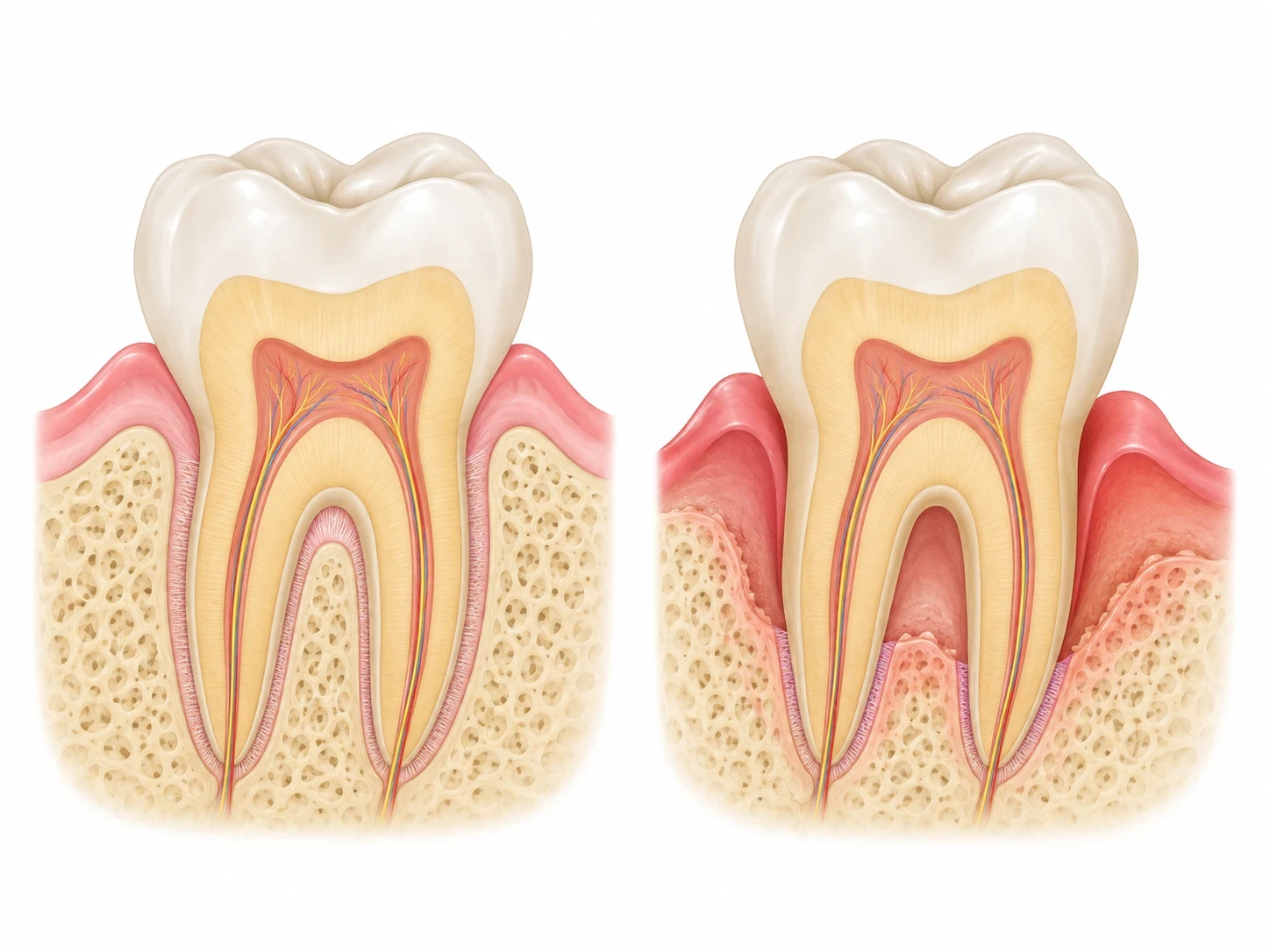
2. Can a Loose Tooth Be Saved? What Is the Decision Based On?
Even if some jawbone has been lost, preserving the tooth can be considered if enough supporting tissue remains and the inflammation can be controlled. Conversely, if the root has split lengthwise or the supporting bone has been extensively lost, preservation may be difficult.
If you have been told a tooth needs to be extracted, I check three main things: how much healthy tooth structure remains above the gum, whether a crack in the tooth extends into the root, and how much jawbone remains to hold the tooth.
The basic examination includes a panoramic X-ray, periapical X-rays, and a gum examination, and if needed, cone-beam CT (CBCT) is used to check the three-dimensional structure of the bone and roots. How much the tooth actually moves also needs to be checked directly.
| Cases where saving the tooth is considered | Cases where preservation may be difficult |
|---|---|
| Some jawbone remains and supports the tooth | The jawbone has been extensively lost |
| No mobility, or relatively mild mobility | Severe mobility that makes it difficult to maintain function |
| The tooth root is intact and the infection can be controlled | Vertical root fracture, where the root has split lengthwise |
| Gum care is possible and the inflammation is under control | Inflammation keeps recurring and the supporting tissues are severely damaged |
These criteria are not absolute rules that immediately decide whether a tooth is extracted. Even when bone is somewhat lacking, a tooth can sometimes be treated and monitored, and even when mobility is not severe, extraction may be needed because of the condition of the root.
Whether there is room to preserve the tooth with root canal treatment or root canal retreatment is reviewed together with Dr. Han Seung-won of Conservative Dentistry, and whether a saved tooth can be maintained with a crown or other prosthesis is reviewed together with Dr. Kim Kunmin of Prosthodontics.
3. In What Order Is Loose Tooth Treatment Carried Out?
Loose tooth treatment begins with identifying the cause and controlling gum inflammation. A loose tooth is not automatically splinted or taken straight to regenerative surgery.
The general treatment flow is as follows.
Step 1. Examining the cause and gum treatment
Tartar (calculus) and bacterial deposits are removed and gum inflammation is managed. Afterwards, we re-evaluate how the gum condition and the mobility have changed. You can find the details of this process on the Gum Treatment page.
Step 2. Considering periodontal regeneration therapy if needed
If a deep bone defect remains even after the inflammation has been managed, we look at whether regeneration therapy is suitable. Not every case of jawbone loss requires regenerative surgery.
Step 3. Managing mobility and chewing force
If the tooth is under excessive force, bite adjustment is considered, and if the mobility causes significant discomfort, splinting the tooth to the adjacent teeth may also be considered. However, these measures alone do not regenerate lost jawbone.
Step 4. Re-evaluating whether the tooth can be preserved
If the inflammation is controlled and the tooth can be kept functional, we continue care and monitor its progress. Conversely, if the supporting tissues are too damaged to keep the tooth, extraction and a subsequent treatment plan are reviewed.
I believe that re-evaluating the condition of the tooth along the way is just as necessary as the treatment order itself. Rather than deciding every treatment from the start, it means looking at the actual response and choosing only as much treatment as is needed.
4. Can Regeneration Therapy Save a Tooth Even If the Jawbone Has Been Lost?
Even when the jawbone has shrunk, regeneration therapy may be considered depending on the shape of the bone defect. However, not all of the lost jawbone returns to its original state.
When considering regeneration therapy, I pay attention not only to how much bone has been lost but also to the shape in which it has been lost.
A vertical (intrabony) bone defect, where the jawbone is hollowed out narrowly and deeply in a vertical direction while the surrounding bony walls remain, is a shape for which regeneration therapy can be considered. On the other hand, when bone height has decreased horizontally over a wide area, regeneration may be difficult to expect.
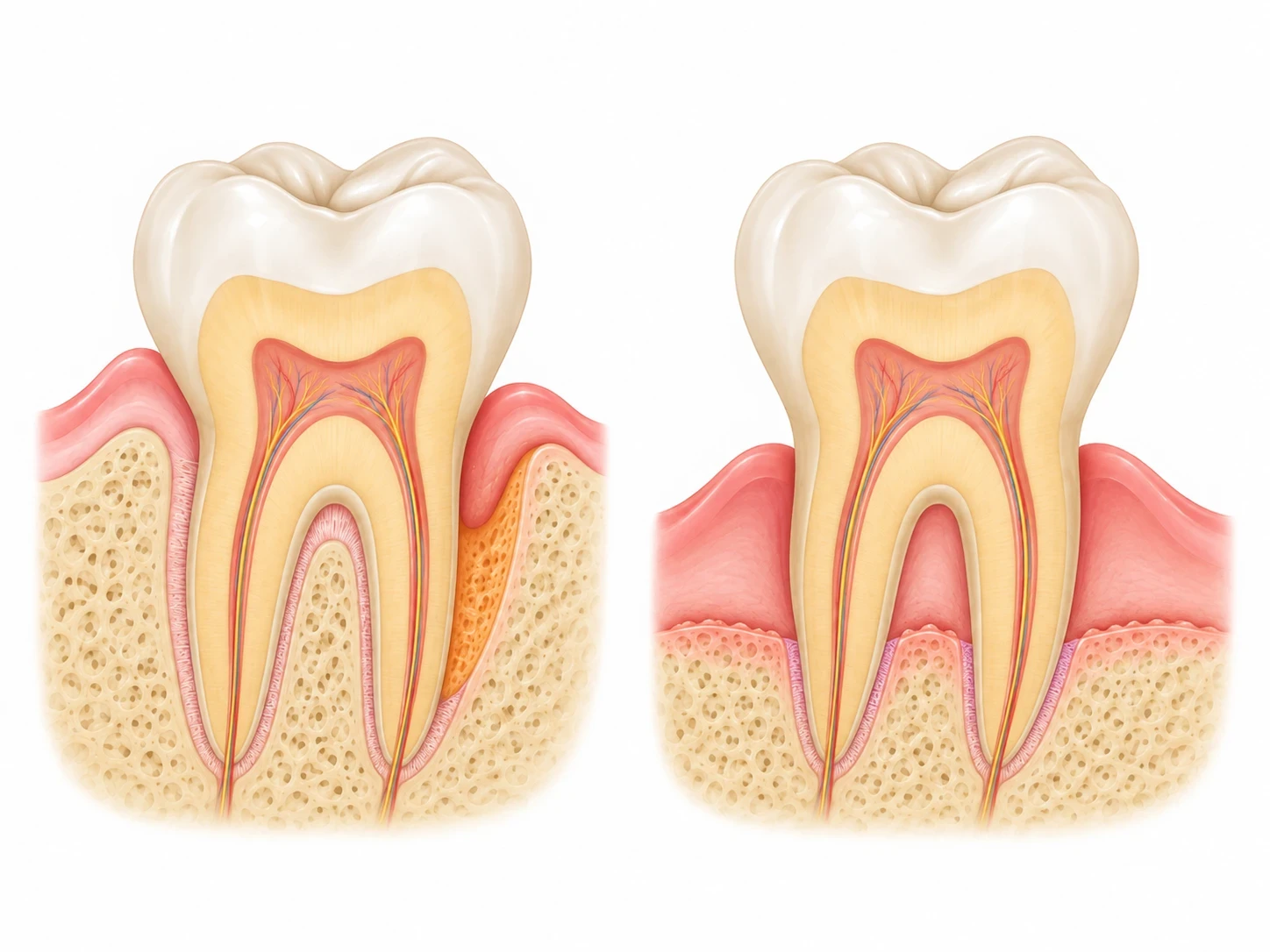
Emdogain is a material used in periodontal regenerative surgery to induce regeneration of the tissues around the tooth. The conditions for its use and the specific treatment method are summarized on the Periodontal Regeneration · Emdogain page.
What I want to emphasize is that this is inducing regeneration, not a complete cure. Even with regeneration therapy, I cannot promise that all of the original bone will be restored.
And it is maintenance, not the material, that completes regeneration. Without consistent care to keep inflammation from coming back, it is difficult to maintain the condition achieved through treatment.
5. Can Jawbone Regeneration Supplements or Toothpaste Improve Tooth Mobility?
It is difficult to regenerate jawbone that has already been lost with supplements or toothpaste alone. Oral hygiene is necessary for preventing gum disease and controlling inflammation, but it cannot replace the professional treatment that restores damaged periodontal tissues.
Brushing and cleaning between the teeth help reduce bacterial plaque. However, tartar that has already hardened or inflammation deep in the gums is difficult to resolve with brushing at home alone.
Some people search for jawbone regeneration ointments or injections, but Emdogain is not an ordinary ointment that you apply to your gums at home. It is a material used in periodontal regenerative surgery when needed, after the condition of the jawbone and periodontal tissues has been evaluated.
Situations in which repeated force strains the teeth, such as teeth grinding, also need to be considered. In such cases, we can look at whether management methods related to Bruxism Treatment would help.
Ultimately, we first need to distinguish whether the cause of the mobility is inflammation, excessive force, or damage to the tooth itself. If the cause is different but only the care routine is changed, the underlying problem behind the mobility may remain.
6. What Happens If I Leave a Loose Tooth Alone Because It Doesn't Hurt?
A loose tooth that does not hurt does not mean the jawbone is healthy. As periodontitis progresses, the tissues supporting the tooth shrink further, and eventually it may become difficult to keep the tooth.
By the time gum disease hurts, it has sometimes already progressed considerably. That is why I explain that the time spent thinking "It doesn't hurt, so it's probably fine" can be the most painful time of all for the jawbone.
As inflammation continues, the jawbone shrinks further, and gaps may open between the teeth or the teeth may tilt. Because chewing force is no longer distributed evenly, this can also put strain on the surrounding teeth.
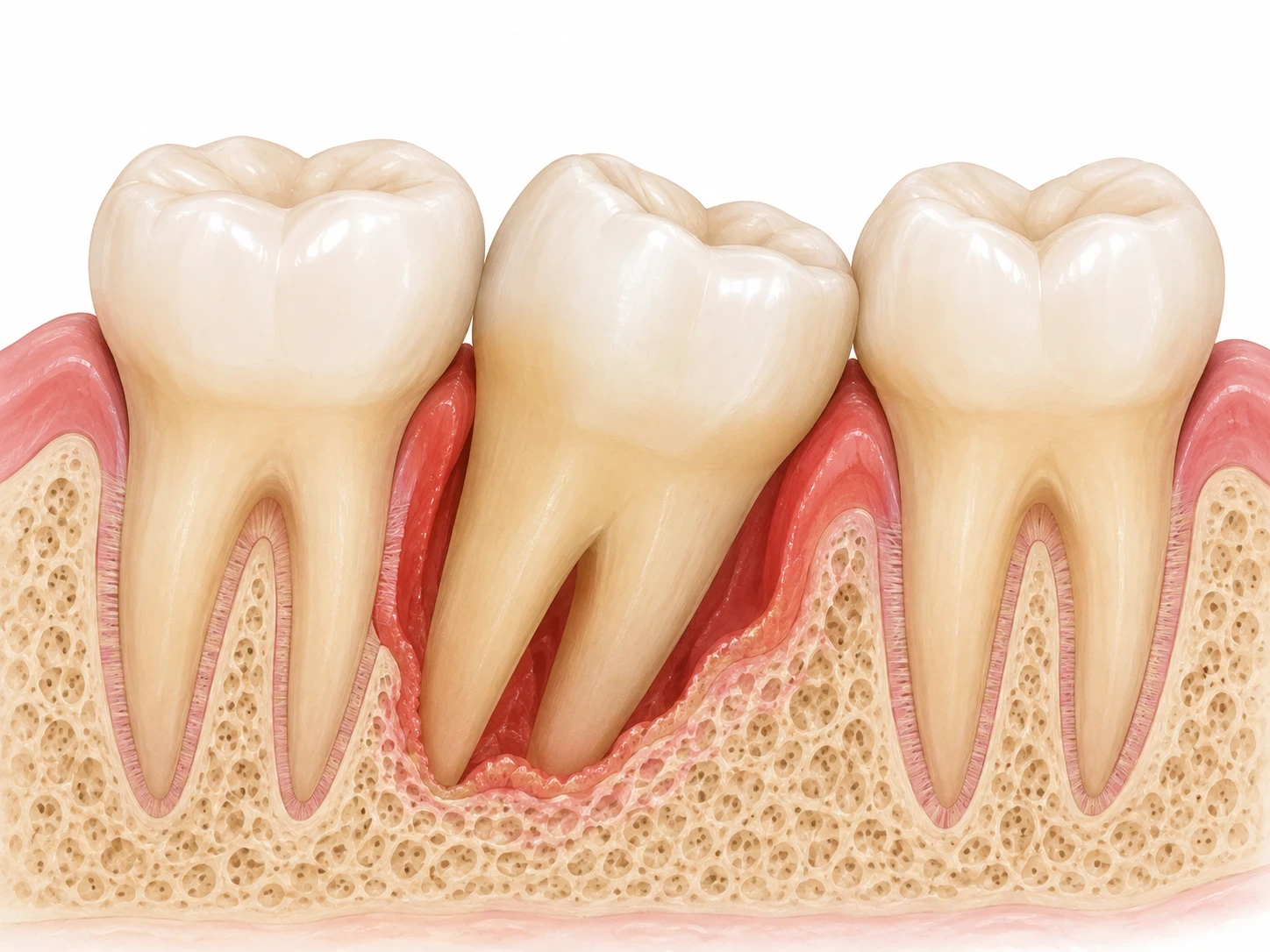
If your gums bleed or you see pus, or if a tooth has changed position or chewing has become uncomfortable, you should not dismiss it as simple, temporary looseness. In particular, if a tooth becomes loose or shifts right after an impact, its condition needs to be evaluated promptly.
Supporting tissue that has been damaged does not fully recover even with treatment. That is why it is necessary to identify the cause as soon as you notice mobility and to evaluate the remaining tooth and jawbone.
In Closing
Precisely because I perform many surgeries as an oral and maxillofacial surgeon, I find myself weighing all the more carefully, "Does this tooth really need to be extracted right now?"
My treatment principle is to choose the treatment that should be done rather than the treatment that can be done. A natural tooth cannot be put back once it is extracted, so the decision should be made only after carefully examining the conditions under which it can be saved and the reasons it may be difficult to preserve.
This has been Dr. Park Ji-ho, board-certified oral and maxillofacial surgeon at Yonsei Gunho Dental Clinic in Jamsilsaenae.