
Some patients worry because their tooth still hurts when they chew or feels uncomfortable when pressed, even after root canal treatment.
Hello. I'm Dr. Kim Kunmin, a board-certified prosthodontist at Yonsei Gunho Dental Clinic in Jamsilsaenae.
Pain that lingers for a few days after root canal treatment can be a normal reaction during recovery. However, if the pain gets worse or your gums swell, the cause should be checked again.
1. How Long Is Pain After Root Canal Treatment Normal?
For a few days after root canal treatment, your tooth may feel uncomfortable when you press on it or chew. Generally, if the pain is gradually easing, it can be seen as part of recovery, although this varies from person to person.
Root canal treatment removes infected tissue from inside the tooth, disinfects it, and then seals it. Even after the nerve inside the tooth is removed, the alveolar bone (gum bone) and periodontal ligament around the root still have sensation.
That is why the tooth may feel sore when tapped or when you chew after treatment.
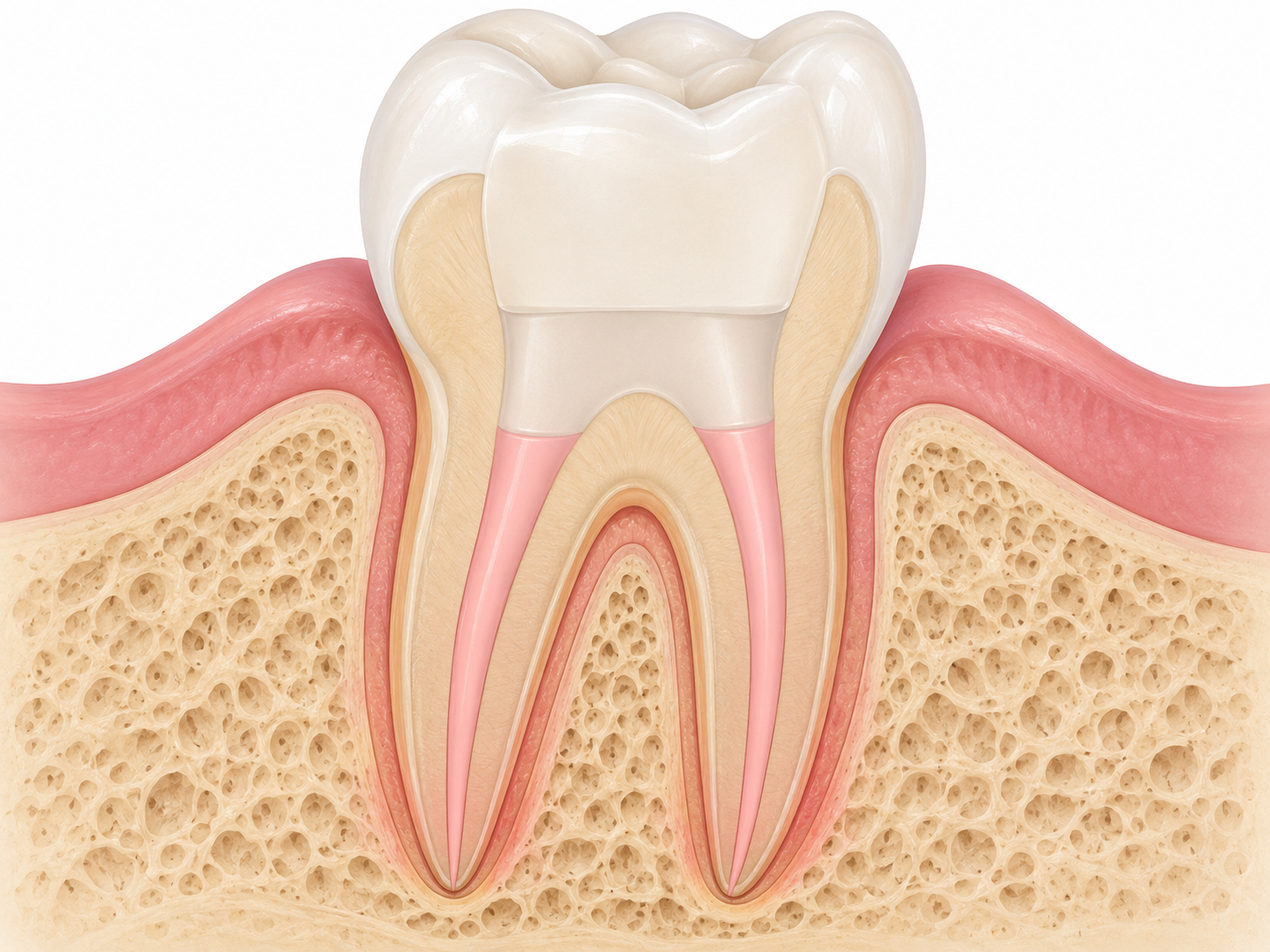
The length of root canal treatment and the time it takes for the pain to go away do not necessarily match. Even after treatment is finished, the surrounding tissues need time to recover.
However, if a root canal-treated tooth keeps feeling sensitive to cold water, neighboring teeth and other possible causes should also be examined.
2. What If Pain Returns or Gets Worse After Root Canal Treatment?
If the pain eases and then gets worse again, or your gums swell, it should not be dismissed as simple recovery pain. Inflammation around the root, problems with biting force, and other causes need to be distinguished.
There are four main signs that especially need to be checked.
- The pain gradually gets worse, or a strong feeling of pressure continues
- The gums swell or a pimple-like bump forms
- Pain similar to what you felt before root canal treatment comes back
- The tooth touches before the other teeth, or chewing feels unusually uncomfortable
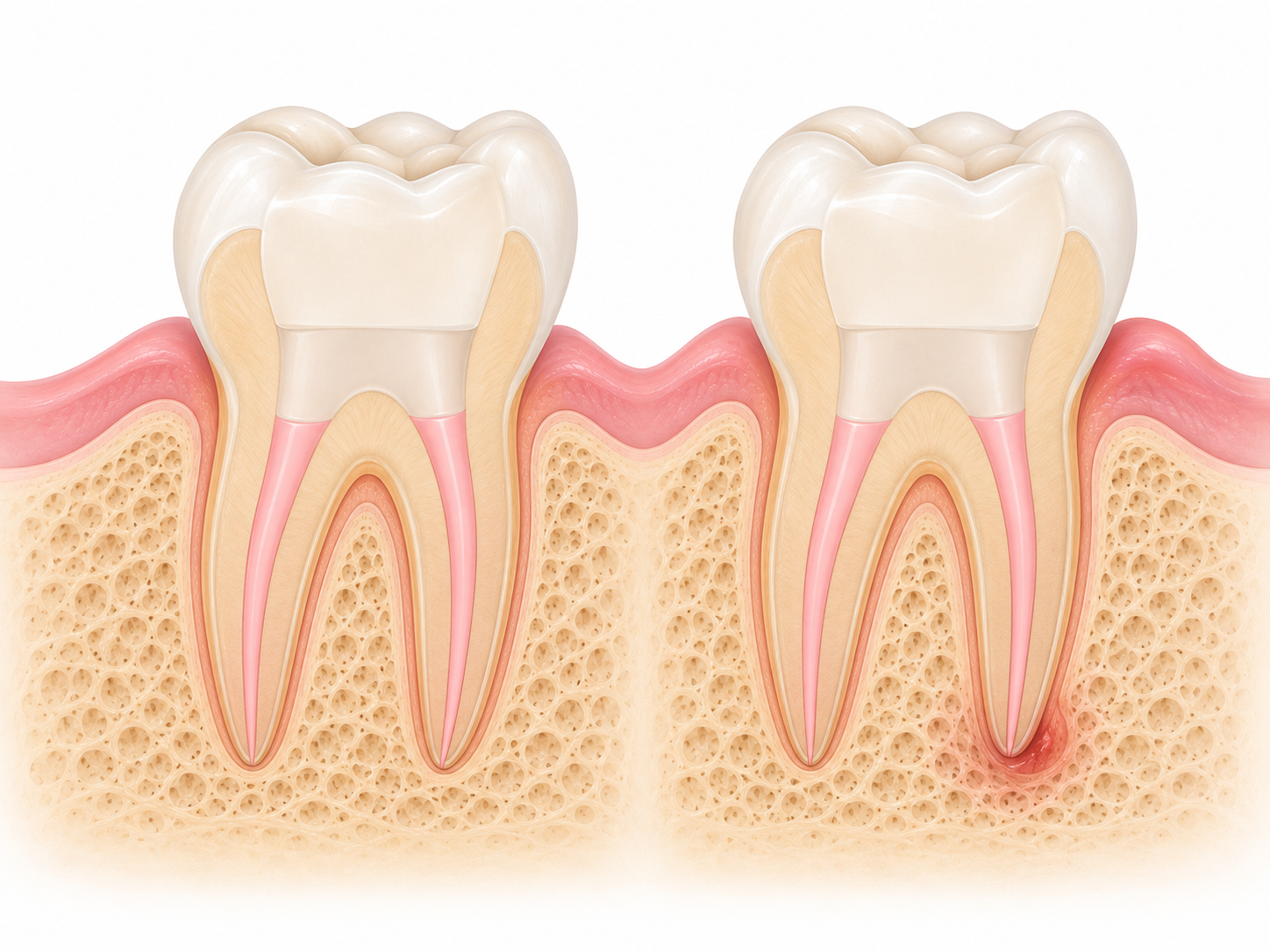
Having these symptoms does not necessarily mean the root canal treatment went wrong. It may be a bite (occlusion) problem, or inflammation around the root may remain.
When needed, we use X-rays and cone-beam CT (CBCT) images to check the extent of inflammation at the root tip and the surrounding tissues. The cause of the pain has to be identified first before the next treatment can be decided.
3. Eating, Drinking, Smoking, and Brushing After Root Canal Treatment
Eat after the anesthesia wears off, and avoid chewing hard foods with the treated tooth until the final restoration is placed. Keep brushing as usual, but treat the area gently.
There are four main points to remember in daily care.
- Eating: Wait until the anesthesia has fully worn off, then start with soft foods. It is best to avoid hard or sticky foods.
- Alcohol: Avoid it as much as possible while you recover, and if you have been prescribed medication, follow the alcohol precautions for that medication.
- Smoking: It is best to avoid smoking, as it can interfere with tissue healing.
- Brushing: Do not scrub the treated area too hard, and keep it clean with a toothbrush and floss.
If you have pain, take the pain reliever you were advised to take according to the dosing instructions.
What I also emphasize in prosthodontic treatment is creating conditions that let the tooth last a long time. Right after treatment in particular, be careful not to concentrate your biting force on one tooth.
4. What If a Temporarily Sealed Tooth Loses Its Filling or Breaks After Root Canal Treatment?
A temporary filling protects the inside of the tooth from food and saliva during root canal treatment. If the filling comes out entirely or breaks significantly, it should be checked again.
A temporary filling serves a different purpose from the final restoration. It is a material meant to protect the inside of the tooth until the next visit, so its surface may wear down slightly or a thin layer may come off.
However, if the filling has fallen out completely and the inside of the tooth is exposed, it is best not to leave it as it is.
Also, a temporarily sealed tooth may have difficulty withstanding strong biting forces.
When I plan a restoration after root canal treatment, I first look at the remaining tooth structure. If the tooth breaks while it only has a temporary filling, the restoration options available afterward may also change.
5. Do You Need a Crown After Root Canal Treatment? When Is It Placed?
Not every tooth needs a crown just because it has had root canal treatment. The key is to judge how much sound tooth structure remains and whether the tooth can withstand biting forces.
Patients often ask me this:
"My tooth doesn't hurt anymore after the root canal treatment. Do I really need to have something put on it?"
There is something I explain first here. A root canal-treated tooth does not become weaker simply because the nerve was removed.
In many cases, much of the tooth structure has already been lost to large cavities, cracks, or repeated treatment.
Molars in particular take a lot of biting force. If the cusps, the pointed raised parts of the tooth, or the remaining walls are thin, there is a risk of the tooth breaking during chewing.
The criteria I look at when deciding on a restoration are as follows.
| Tooth condition | Restoration options to consider |
|---|---|
| Enough sound tooth structure remains and there are no cracks | Consider conservative options such as a direct restoration |
| The tooth walls remain relatively intact, but the cusps need protection | Consider an overlay |
| The tooth is heavily damaged or several cusps are weakened | Consider a crown |
| So much tooth structure is lost that support for the restoration is insufficient | Consider a post and core if needed |
An overlay covers only the necessary part of the tooth rather than the whole tooth. However, removing less tooth structure does not automatically make it the better treatment.
A long-term design that keeps the remaining tooth from breaking again matters more.
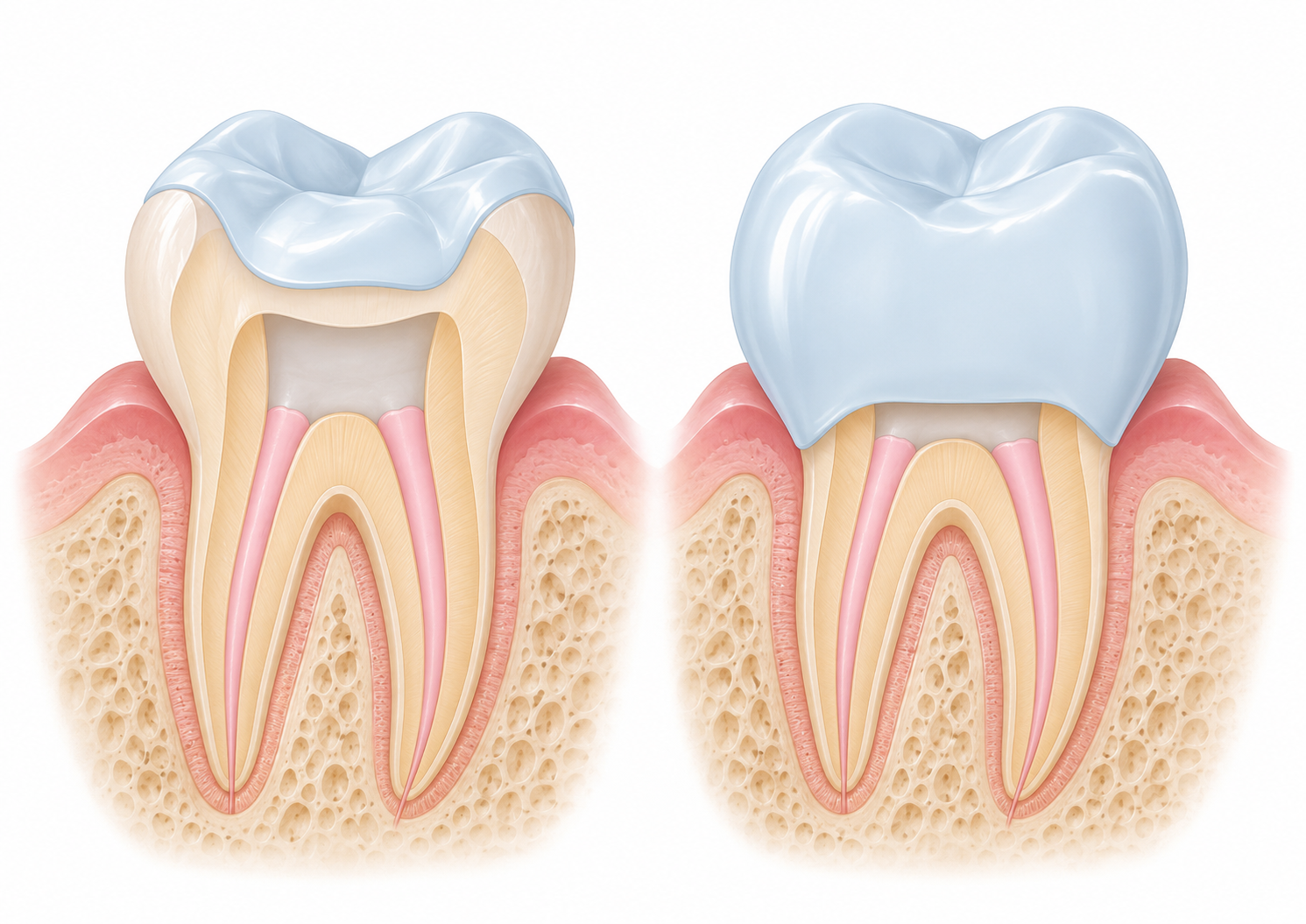
The final restoration is generally done without unnecessary delay after root canal treatment is completed and the tooth's condition has been evaluated. The specific timing depends on the tooth's condition and the treatment plan.
Leaving a tooth without a restoration for a long time after root canal treatment can create a risk of tooth fracture or recontamination of the inside of the tooth.
The Crowns, Inlays & Onlays page explains the differences between restoration methods in more detail.
6. Can Pain Remain After Root Canal Retreatment? How Is Progress Checked?
Temporary tenderness to pressure can remain even after root canal retreatment. Less pain does not mean the inflammation at the root tip has fully healed.
Root canal retreatment re-examines the inside of a tooth that previously had root canal treatment and cleans out areas where infection is suspected.
At Yonsei Gunho Dental Clinic, for difficult root canal cases, Dr. Han Seung-won, a board-certified endodontist (conservative dentistry specialist), performs root canal treatment and retreatment using a dental operating microscope.
Afterward, we look at changes in pain or swelling together with changes in the tissue at the root tip seen on X-rays. How recovery progresses depends on the extent of the existing inflammation and the condition of the tooth and alveolar bone.
From a prosthodontic perspective, I also assess whether the tooth can withstand biting forces and last a long time after treatment.
You can learn about the reasons root canal retreatment may be needed and the role of the dental operating microscope on the Microscope Root Canal & Retreatment page.
In Closing
Lingering pain after root canal treatment does not necessarily mean something has gone wrong. However, it is important to watch both how the pain changes and the condition of the tooth.
Rather than doing more treatment, I think in terms of treatment that preserves, and I first consider how to protect your remaining natural teeth.
This has been Dr. Kim Kunmin, board-certified prosthodontist at Yonsei Gunho Dental Clinic in Jamsilsaenae.