
You know you need to see a dentist, but just thinking about it frightens you, so you keep putting it off. Some people feel exactly this way.
Hello. I am Dr. Park Ji-ho, a board-certified oral and maxillofacial surgeon at Yonsei Gunho Dental Clinic in Jamsilsaenae.
What you really need to overcome dental phobia is not the courage to simply endure it. The first step is to identify what you are afraid of and reduce the burden of treatment with methods suited to that fear. Conscious sedation is just one of several options, and it is not a method everyone needs.
1. Why does dental phobia develop, and why is the dentist so frightening?
Dental phobia does not arise simply from fear of pain. The feeling that you cannot control the situation during treatment is also an important cause.
There are four main reasons people fear the dentist.
- Past experience: memories of painful treatment or a past traumatic dental experience
- Sensory stimuli: the sound of instruments, the distinctive smell, the feeling of something foreign in the mouth
- Loss of control: the anxiety of lying back without knowing what comes next
- Physical reactions: gag reflex, severe tension, panic symptoms
In particular, if you have been through difficult treatment in the past, simply sitting in the dental chair can make your body tense up.
People with panic disorder may also worry that anxiety symptoms will appear during treatment. In such cases, it is important to tell the dental team about your symptoms and treatment history in advance.
2. What should you ask for at the dental clinic to overcome dental phobia?
The first step in overcoming dental phobia is not to hide your fear, and to discuss with the dental team how much you can handle during treatment.
There are three main methods that are generally used.
1. Ask for an explanation before treatment
Hear in advance which instruments will be used and what will be done
2. Agree on a stop signal
Agree beforehand on a method such as pausing briefly when you raise your hand
3. Split treatment into stages
If possible, start step by step with short, simple procedures
If severe fear persists, psychological approaches such as cognitive behavioral therapy may also help.
The important thing is not to think that every treatment has to be finished from the very first visit. You can also start by checking your current condition through an examination and consultation.

3. If your gag reflex is strong and you start gagging, can you still get dental treatment?
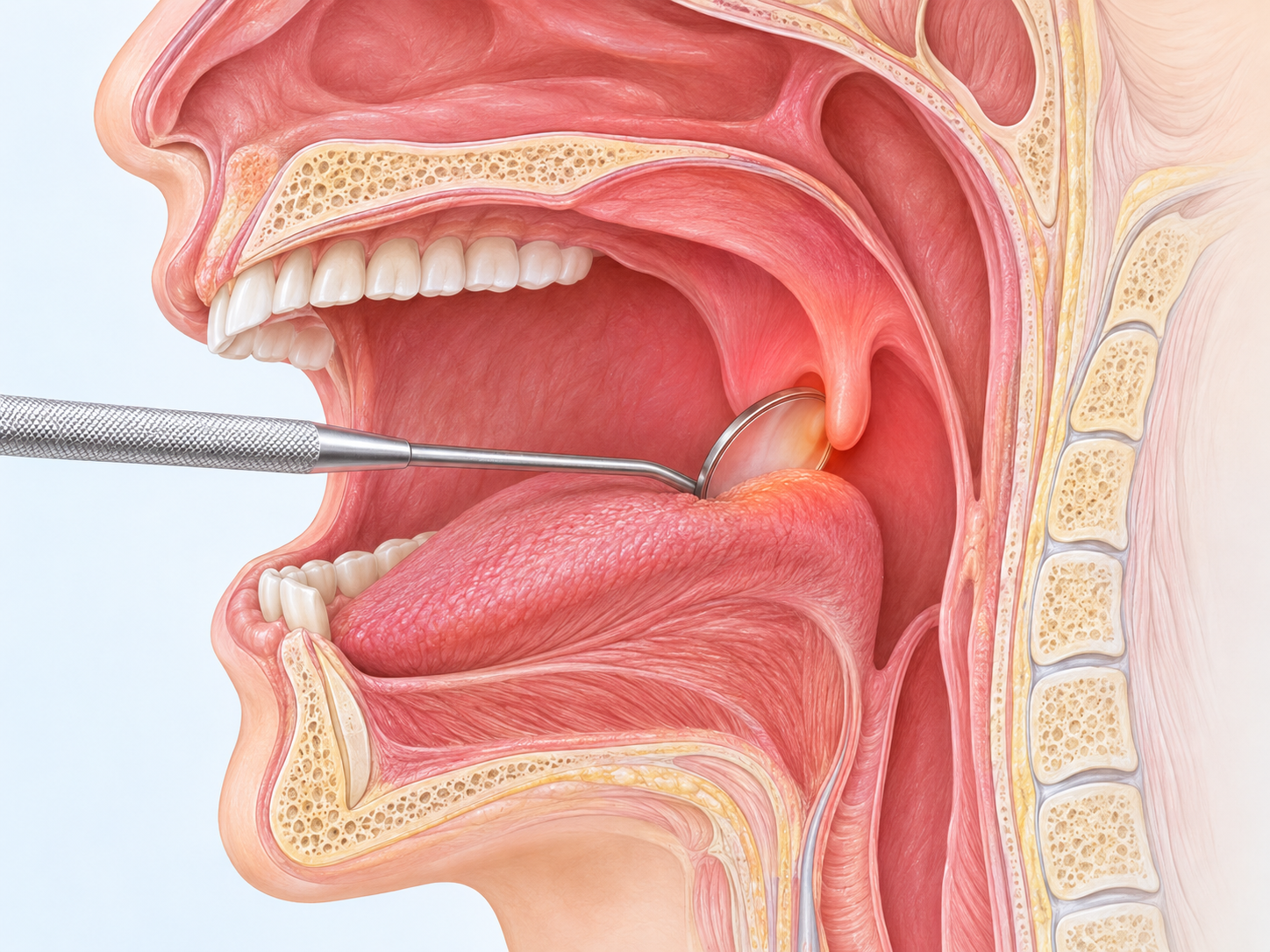
A strong gag reflex does not make dental treatment impossible. However, the treatment method may need to be adjusted depending on where and how strongly the reaction occurs.
The gag reflex is a natural defensive response that prevents foreign objects from entering the back of the throat.
At the dentist, gagging can occur when instruments touch the back of the tongue or the back of the roof of the mouth. When tension is high, the reaction may even start before an instrument touches anything.
In such cases, the way instruments are used can be adjusted, or behavioral methods such as gradual desensitization training can be considered. However, which method works differs from person to person.
If the gag reflex makes even a checkup or treatment itself difficult, conscious sedation may also be considered.
4. Anesthetic injections scare me. Is there a way to reduce the discomfort?
If the anesthetic injection itself is what frightens you, you can consider ways to reduce the discomfort, such as a topical anesthetic before the injection and adjusting how the anesthetic is delivered.
The discomfort of an anesthetic injection can occur not only when the needle goes in but also when the anesthetic solution is injected into the tissue.
Our clinic has anesthesia equipment designed to reduce discomfort during injections. However, using this equipment does not make every sensation disappear.
If your fear of injections is severe, or if anesthesia did not work well for you before, it is best to let us know in advance. The anesthesia method can vary depending on the treatment area and your individual condition.
5. If dental phobia is severe, is conscious sedation always necessary?
No. Having dental phobia does not mean everyone needs conscious sedation. For short, simple procedures, local anesthesia alone is often sufficient.
What I consider important in my practice is looking at both the degree of fear and the actual scope of treatment.
| Cases where conscious sedation may help | Cases that can be managed mainly with local anesthesia |
|---|---|
| Necessary treatment has been put off for a long time because of severe fear | There is anxiety, but the patient can cooperate with treatment |
| A severe gag reflex makes it difficult to use instruments | The gag reflex is mild and can be controlled |
| Long treatments such as placing multiple implants or a bone graft | Scaling or relatively simple cavity treatment |
| Blood pressure rises sharply when tense | Anxiety and general health are appropriately managed |
The above are general examples for decision-making; whether it actually applies is determined through examination and a medical interview.
Conscious sedation is a method that greatly reduces tension while keeping you in a state where you can respond when called. It is not suitable for every patient, and a prior evaluation is required.
In particular, if you have taken psychiatric medications or tranquilizers for a long time, your response to medication may differ, so your medication history and past sedation experience need to be checked.
You can find more details in the Conscious Sedation guide.
6. What problems can arise if you keep putting off treatment because you fear the dentist?
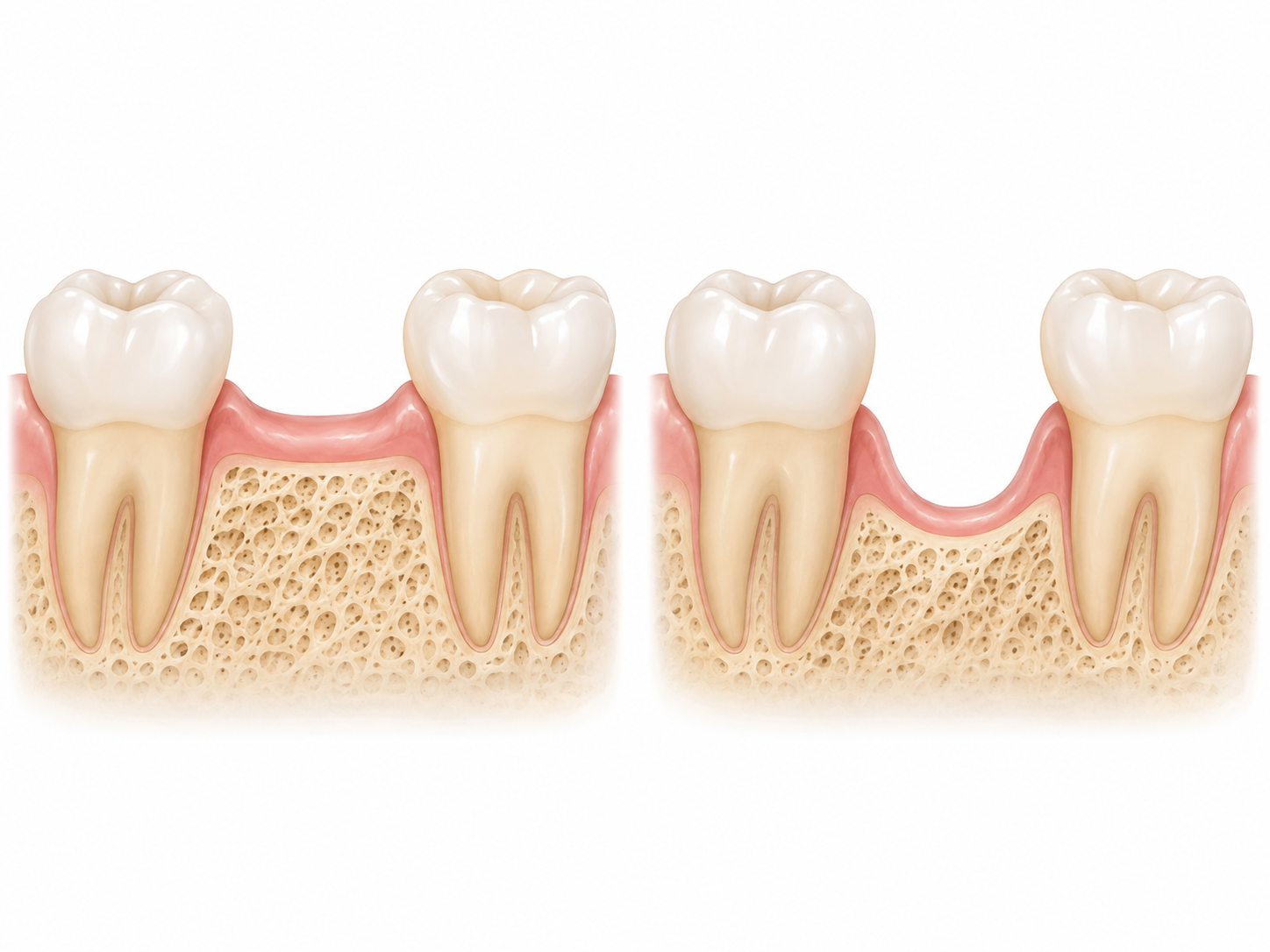
If you put off treatment for a long time because of dental phobia, the scope of treatment can become larger than it would have been at first. In particular, if the space left by a lost tooth is neglected, the jawbone can shrink.
In the clinic, I often meet people who have left the gap of a missing molar as it is for years, not because of pain, but because they were afraid of the dentist.
I compare this to a tree and the ground.
If a tooth is the tree, the jawbone is the ground that supports it. Where the tree has disappeared, the shape of the ground can also change over time.
When the jawbone in the area where a tooth was lost shrinks, implant treatment that might have been relatively simple at first can sometimes require an additional bone graft.
Of course, not everyone needs a bone graft. This can only be determined after checking the condition of the remaining bone. I explain this in more detail on the Implant Bone Graft page.
In Closing
I believe that 'treatment that should be done matters more than treatment that can be done.'
Applying conscious sedation to every treatment is not right. Its purpose lies in helping people who, overwhelmed by fear, could not even take the first step toward necessary treatment, to begin care with a method that suits them.
If the dentist frightens you, simply knowing first what it is you fear can make the next step a little easier.
This has been Dr. Park Ji-ho, board-certified oral and maxillofacial surgeon at Yonsei Gunho Dental Clinic in Jamsilsaenae.